Peace, Fort Hamilton — History & Analysis
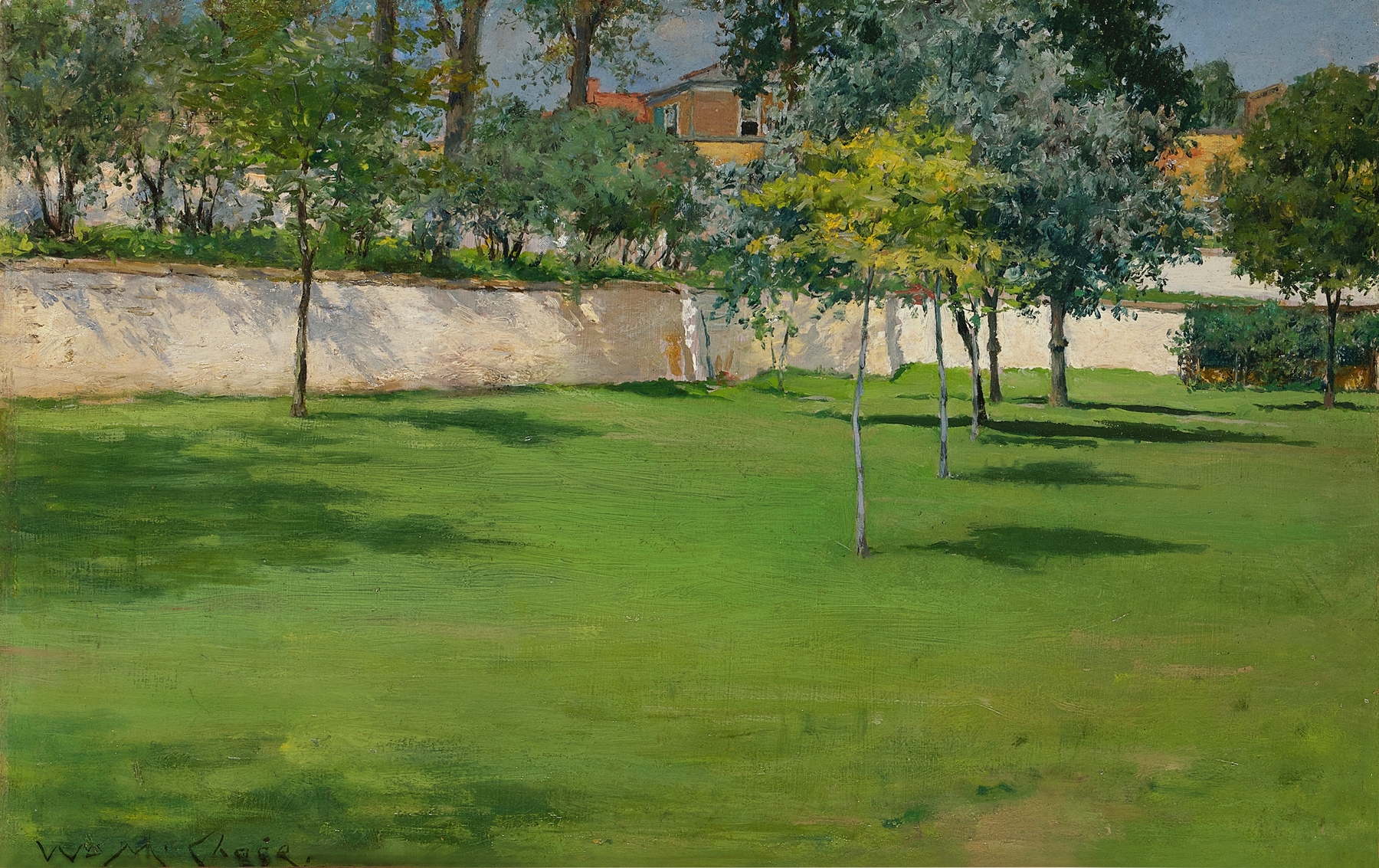
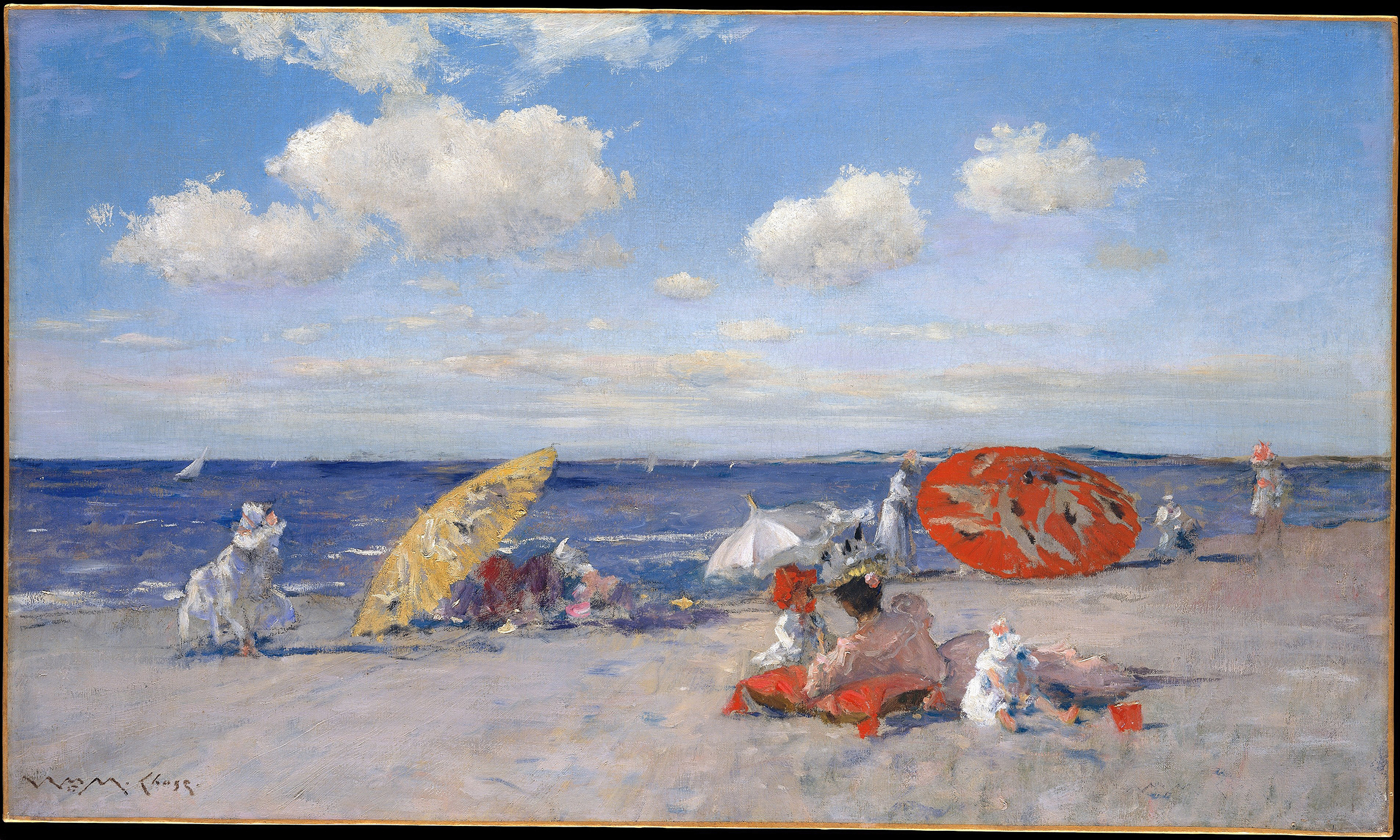
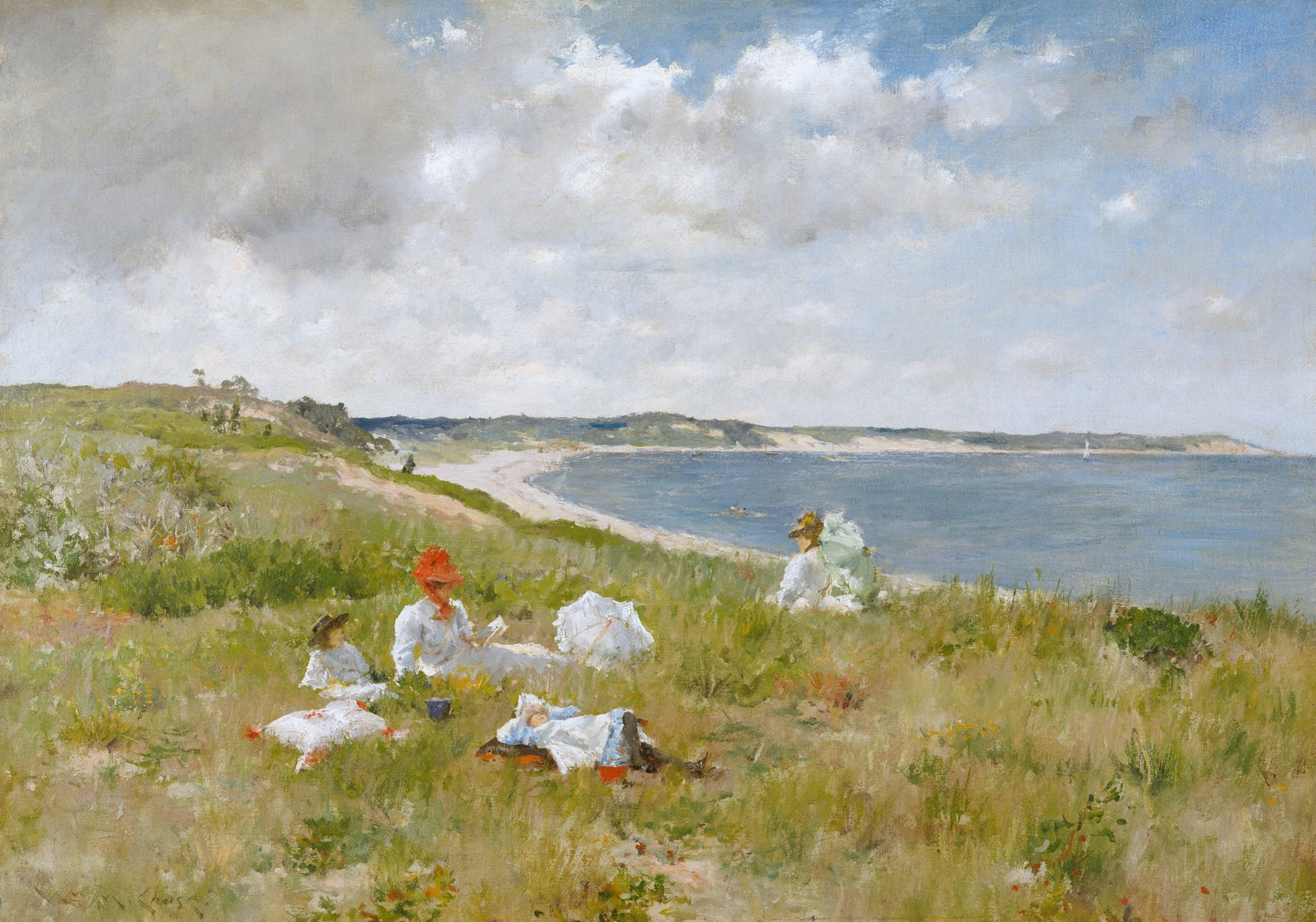
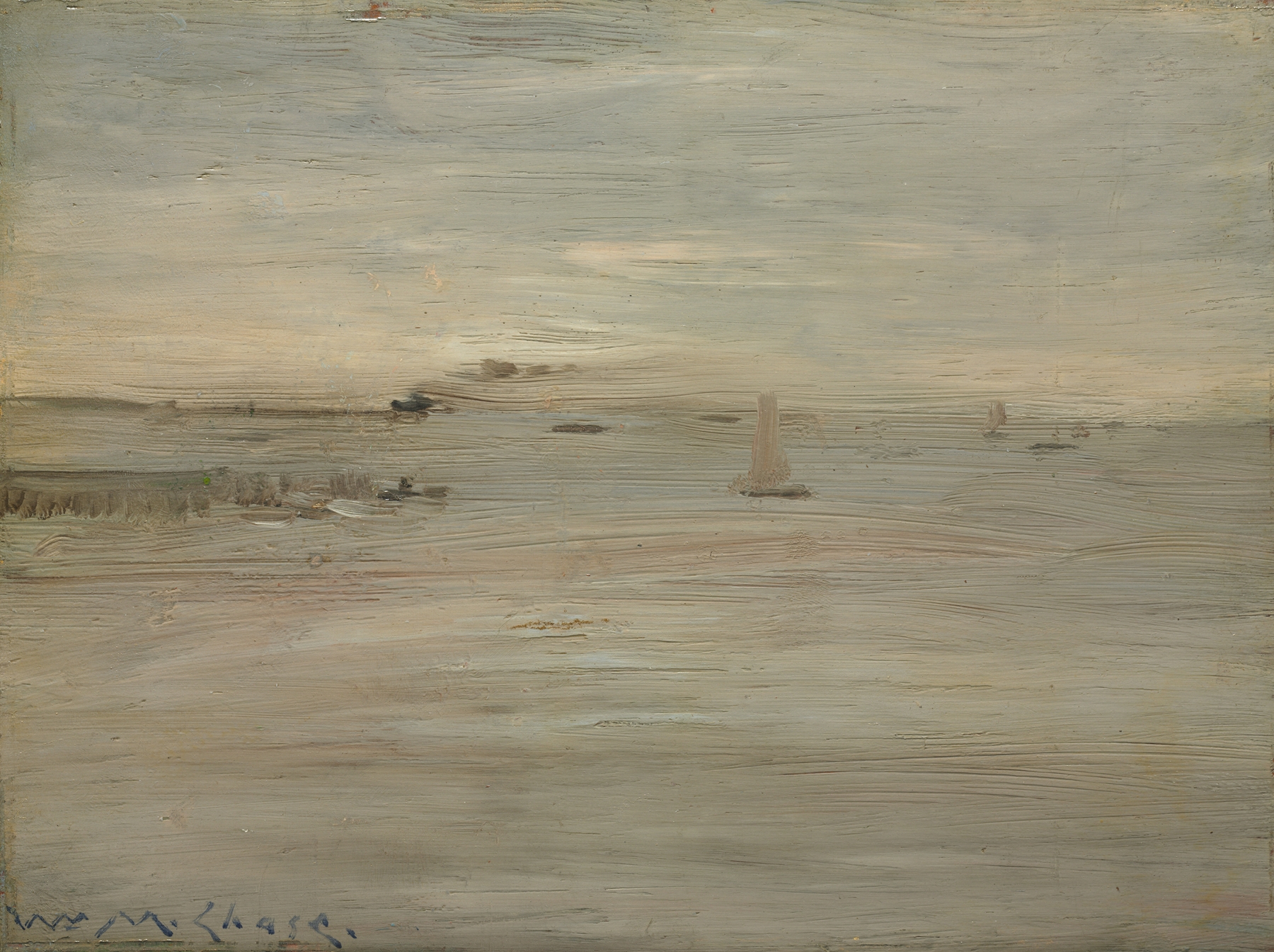
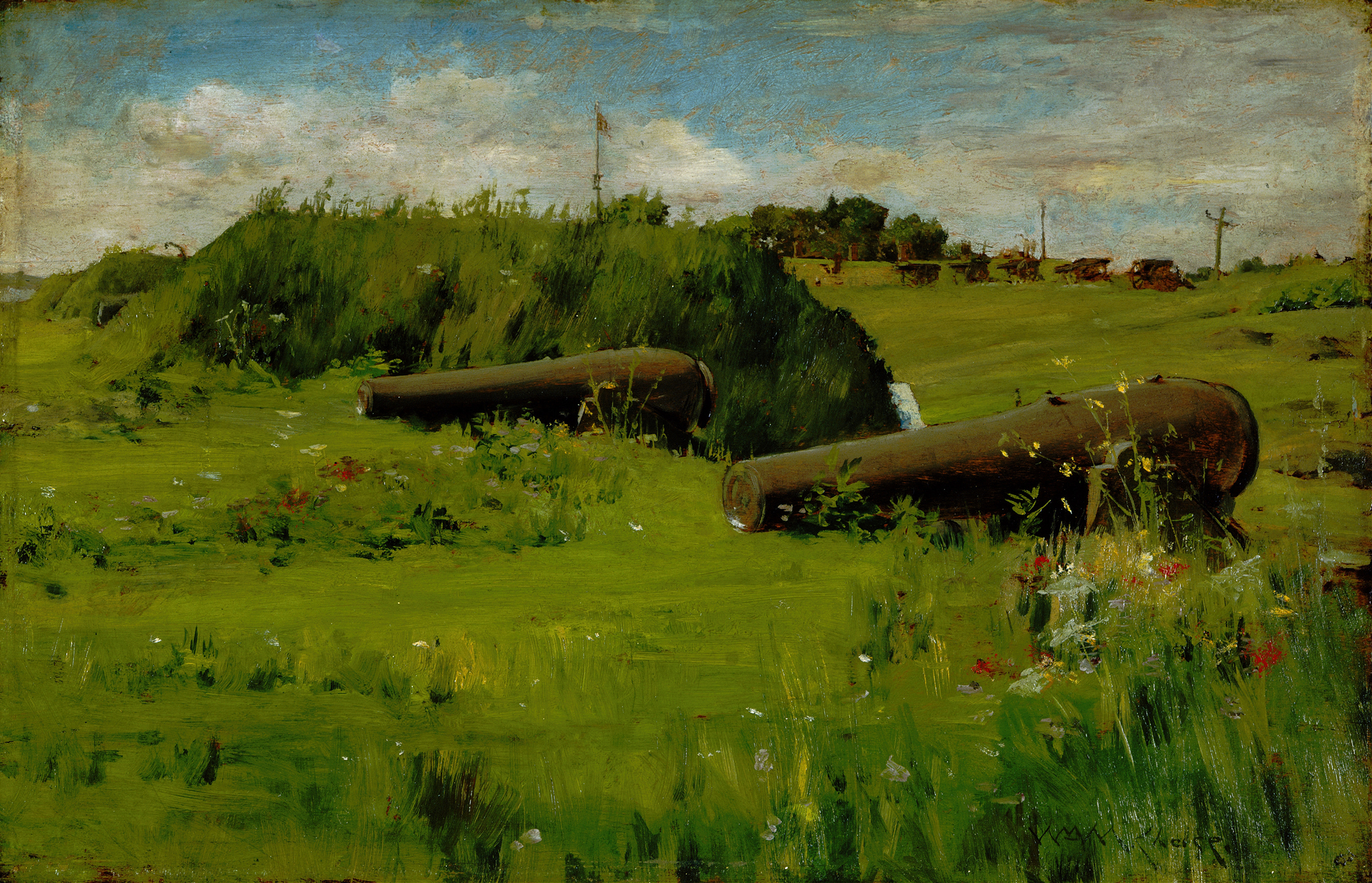
“Every silence here is a confession.” The stillness of a moment can echo deeper than words, revealing truths about our existence and the fragility of life. This contemplation resonates strongly as you immerse yourself in the essence of the canvas. Direct your gaze to the serene waters reflecting the soft hues of an early evening sky. Notice how the palette dances between delicate blues and subtle pinks, creating a tranquil ambiance that invites introspection.
The composition guides your eye toward the distant horizon, where the gentle brushstrokes suggest both the calm of nature and the passage of time, as if each ripple in the water whispers secrets of life and mortality. In this peaceful setting, the contrast between the vibrancy of the world and the solitude of the viewer emerges. The lushness of the foreground foliage hints at vitality, while the empty bench, slightly askew, serves as a poignant reminder of absence and loss. Here, Chase encapsulates the tension between the beauty of life and the inevitable silence that follows, prompting reflections on what remains when we’re gone.
William Merritt Chase painted Peace, Fort Hamilton around 1888, during a period of personal and artistic growth. Working in New York and influenced by Impressionist techniques, he sought to capture transient moments of light and color. At this time, America was embracing a new wave of artistic expression, and Chase’s work contributed significantly to the evolving landscape of American art, blending traditional values with innovative approaches to subject matter.