Potsdam mit Garnisonskirche — History & Analysis
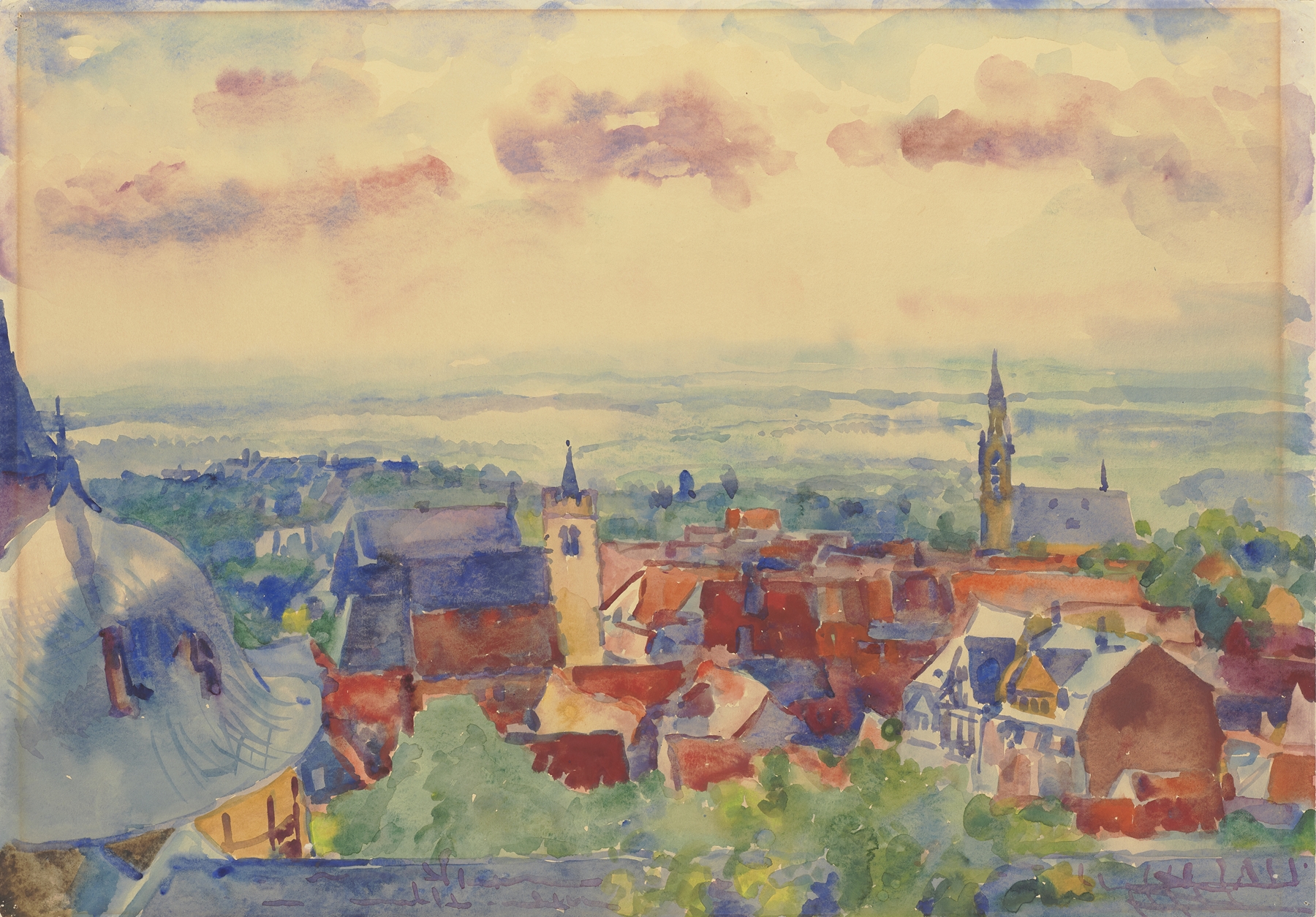
Did the painter know this moment would outlive them? The fleeting beauty of life captured on canvas often evokes our own transience, reminding us that every brushstroke is a whisper against the vastness of time. Look to the foreground, where shadows stretch long across the cobblestone streets, interrupting the soft glow of a fading sun. The imposing silhouette of the Garnisonskirche stands center-stage, its towering spire reaching towards the heavens, a monument of both architecture and history. Notice how the warm hues of orange and gold contrast with the cool tones of blue that envelop the horizon, creating a sense of serene melancholy that permeates the scene.
The subtle play of light reveals the intricate details of the church, inviting contemplation on both its grandeur and the ephemeral nature of human endeavors. Delve deeper into the painting, and you'll find whispers of contrast and emotion. The church, a symbol of resilience, stands firm amidst the gentle encroachment of dusk—an image of permanence in a world that constantly shifts. Yet, the soft brushwork and fading hues suggest the inevitability of change, hinting at the mortality that frames our existence.
Each element, from the delicate clouds overhead to the distant figures traversing the streets, underscores the balance between the urgency of life and the stillness of memory. In 1934, during a tumultuous period for Europe, the artist found himself in a society grappling with the shadows of political upheaval. Creating this work in Potsdam, Franck was surrounded by a world on the precipice of change, and the resonance of this moment captured his contemplation of legacy and permanence. It was a time when art served as both refuge and reflection, encapsulating the collective human experience against the backdrop of uncertainty.