Rosenlaube im Richter´schen Garten — History & Analysis
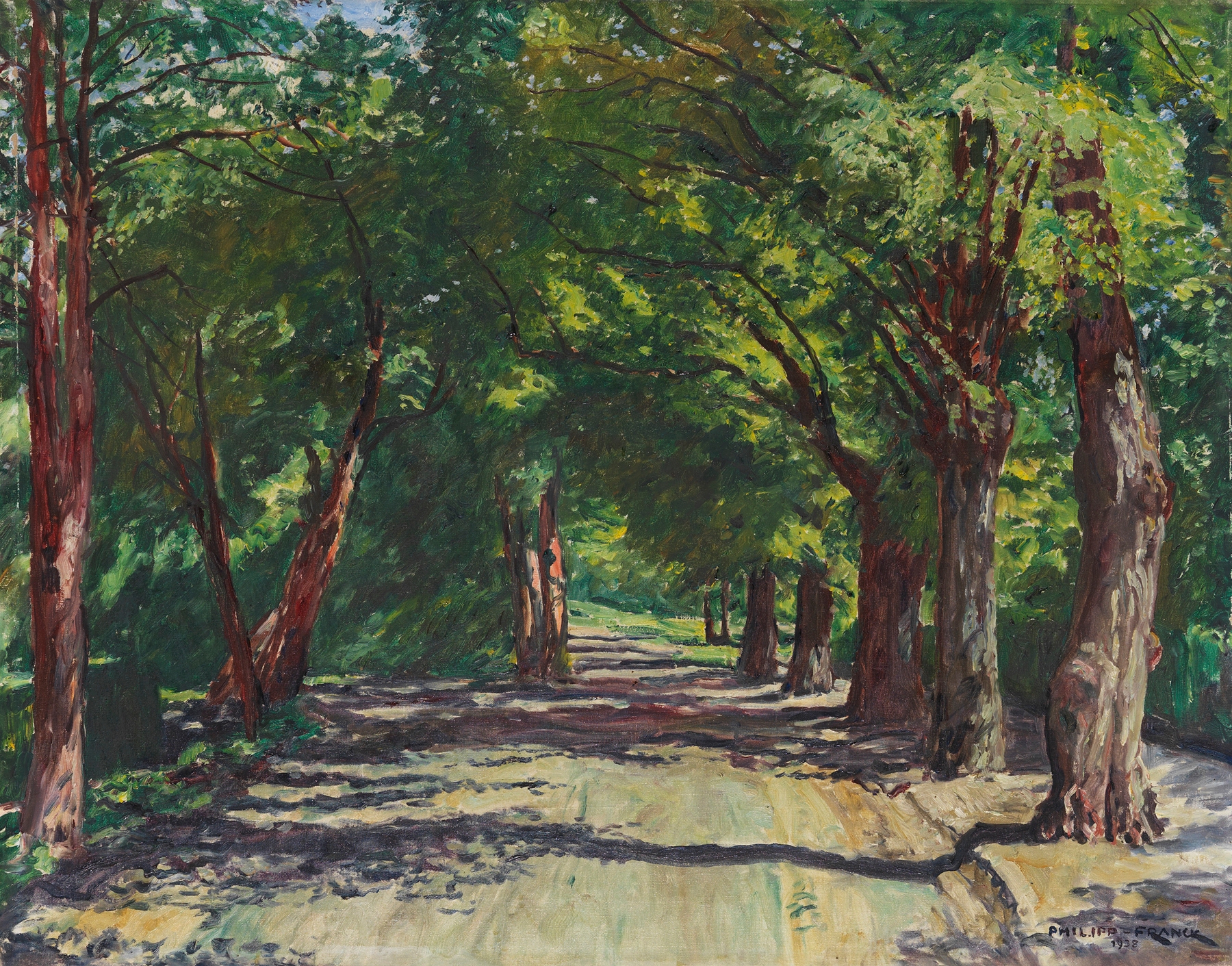
Did the painter know this moment would outlive them? A fleeting glimpse of rebirth, encapsulated in a tranquil garden, speaks to the resilience of life amid transience. Look to the center where a lush rosebush emerges, bursting with vibrant hues of crimson and soft pink. Notice how the delicate petals seem to dance in the gentle breeze, illuminated by the warm afternoon light filtering through the foliage. The painter employs a rich palette, contrasting the deep greens of the surrounding leaves with the vivid blooms, creating a harmonious tension that draws the eye to this sanctuary of color.
The composition, framed by a lush archway, invites viewers to step into this peaceful haven, offering a moment of pause and reflection. Beneath the surface of this idyllic scene lies a deeper narrative of transformation. The roses, often symbols of love and renewal, bloom brightly against the backdrop of a complex garden, suggesting life’s continuous cycles. The harmony of nature dwells in the careful brushwork and the interplay of shadow and light, revealing a world where growth persists despite the encroaching darkness of the past. Each petal whispers of hope and resilience, a subtle reminder of the beauty found in rebirth.
Philipp Franck painted this work in 1910, during a time marked by significant change in the art world and the onset of modernism. Living in Germany, he was influenced by the burgeoning expressionist movement, seeking to capture emotional truths rather than mere representations. This painting reflects his dedication to portraying nature's beauty and resilience, a response to the tumultuous realities surrounding him. The garden thus becomes a sanctuary, echoing a collective yearning for solace and renewal in an uncertain time.