Rainy Miyajima — History & Analysis
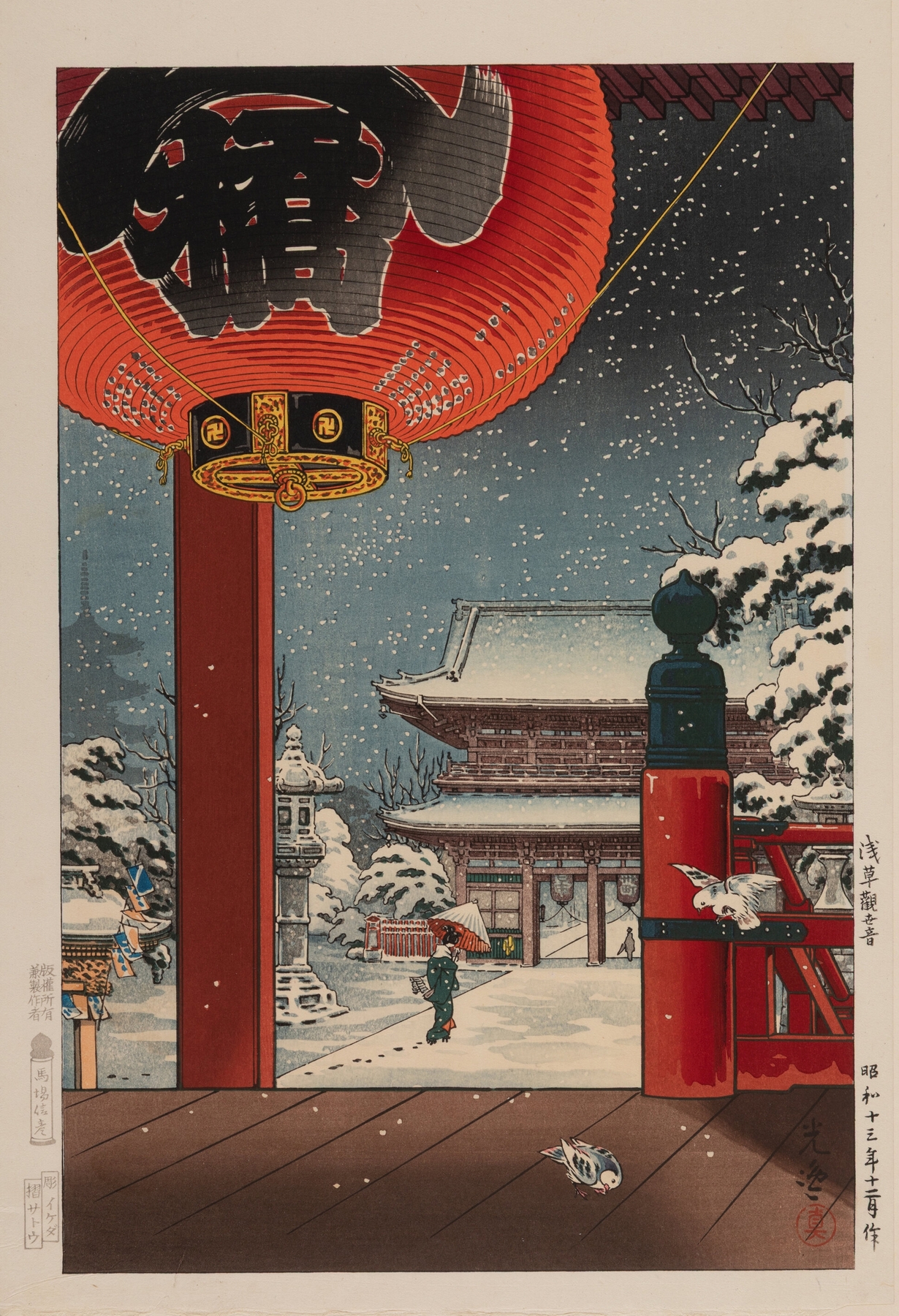
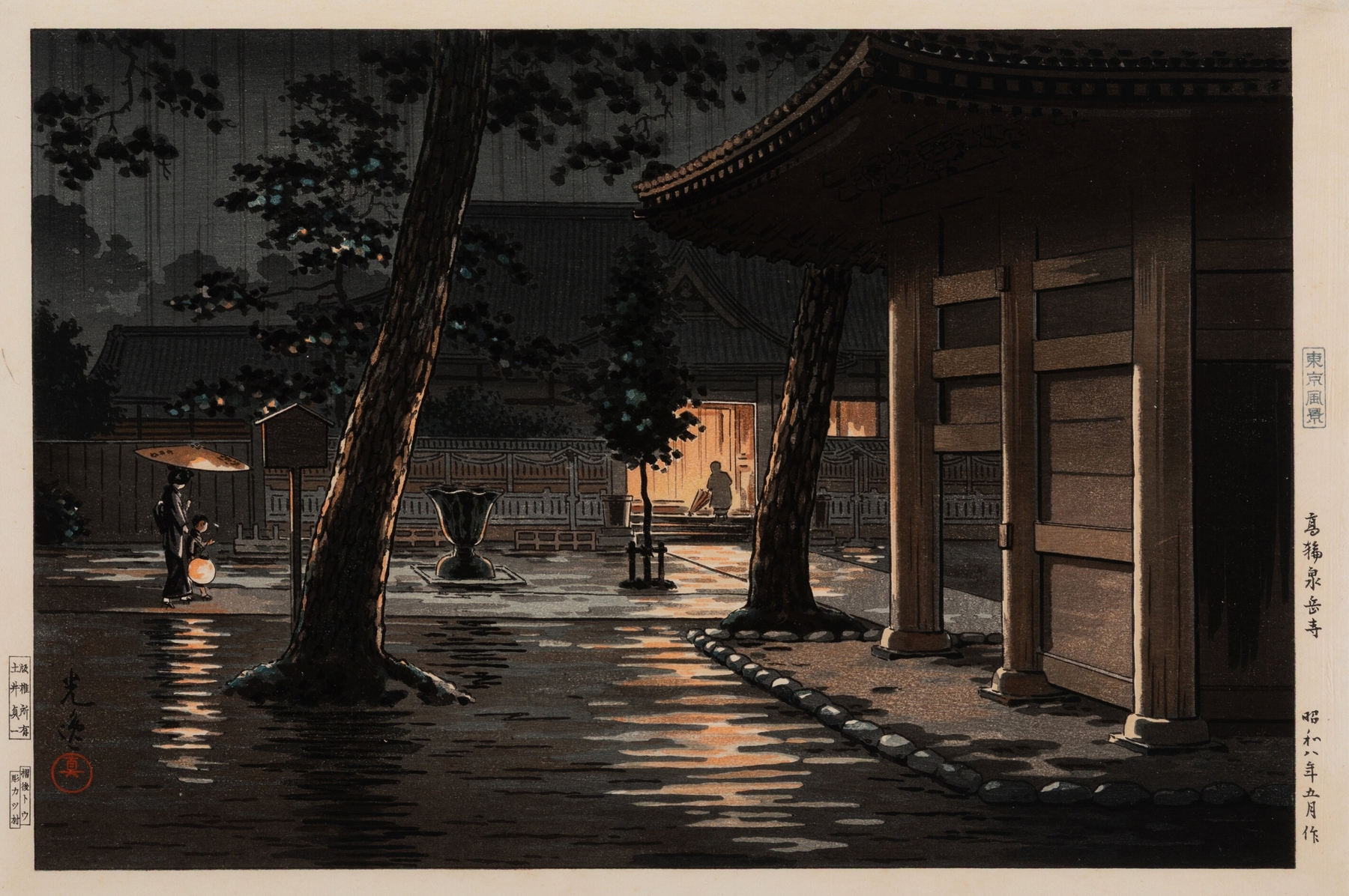
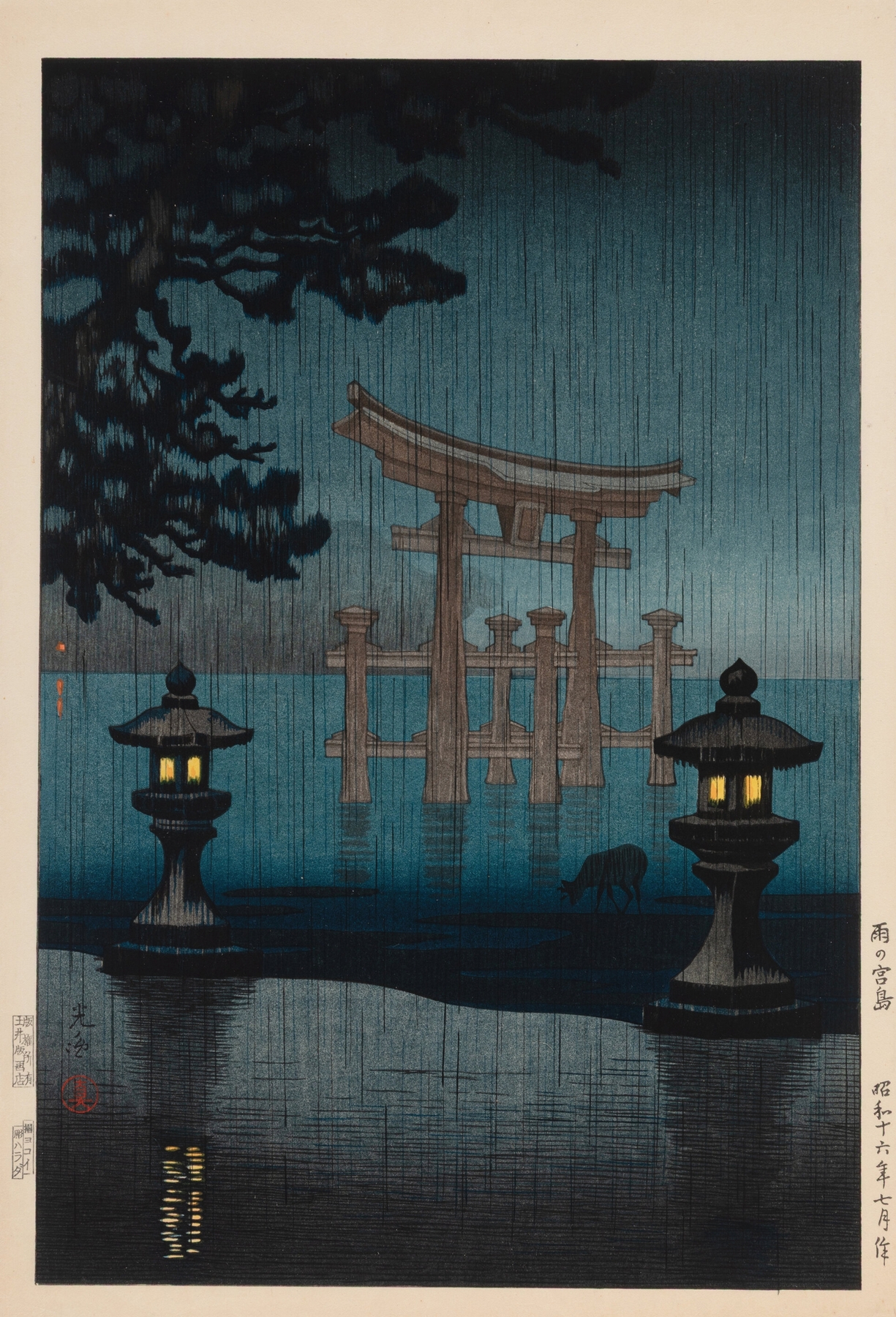
“Every silence here is a confession.” It evokes a profound stillness, a dreamscape where reality and imagination intertwine like delicate brushstrokes on paper. In these moments of quiet reflection, we find ourselves enveloped in the gentle embrace of memory and longing. Look closely at the foreground; notice how the vibrant greens of the trees meld with the soft grays of the rain-soaked air. The delicate, almost translucent figures of figures carry umbrellas, their forms partially obscured, as if they inhabit a world just beyond our grasp.
The composition is carefully structured, leading the eye from the foreground through layers of mist and rain to the serene shrine in the background, a beacon of tranquility amidst the storm. The contrast between the swirling rain and the stillness of the shrine reveals deeper emotional currents. This duality invites contemplation on the relationship between nature’s unpredictability and human serenity. The droplets create a rhythmic pattern, symbolizing both the chaos of life and the quietude found in places of worship.
Each figure, though isolated beneath their umbrellas, suggests a shared experience, a collective longing for solace in tumultuous times. In 1941, Tsuchiya Kōitsu painted this piece during a period marked by political upheaval and social change in Japan. As a pivotal figure in the shin-hanga movement, he sought to blend traditional Japanese art with Western influences, capturing the essence of fleeting moments in everyday life. This work reflects not only his artistic evolution but also the shifting dynamics of a nation on the brink of war.