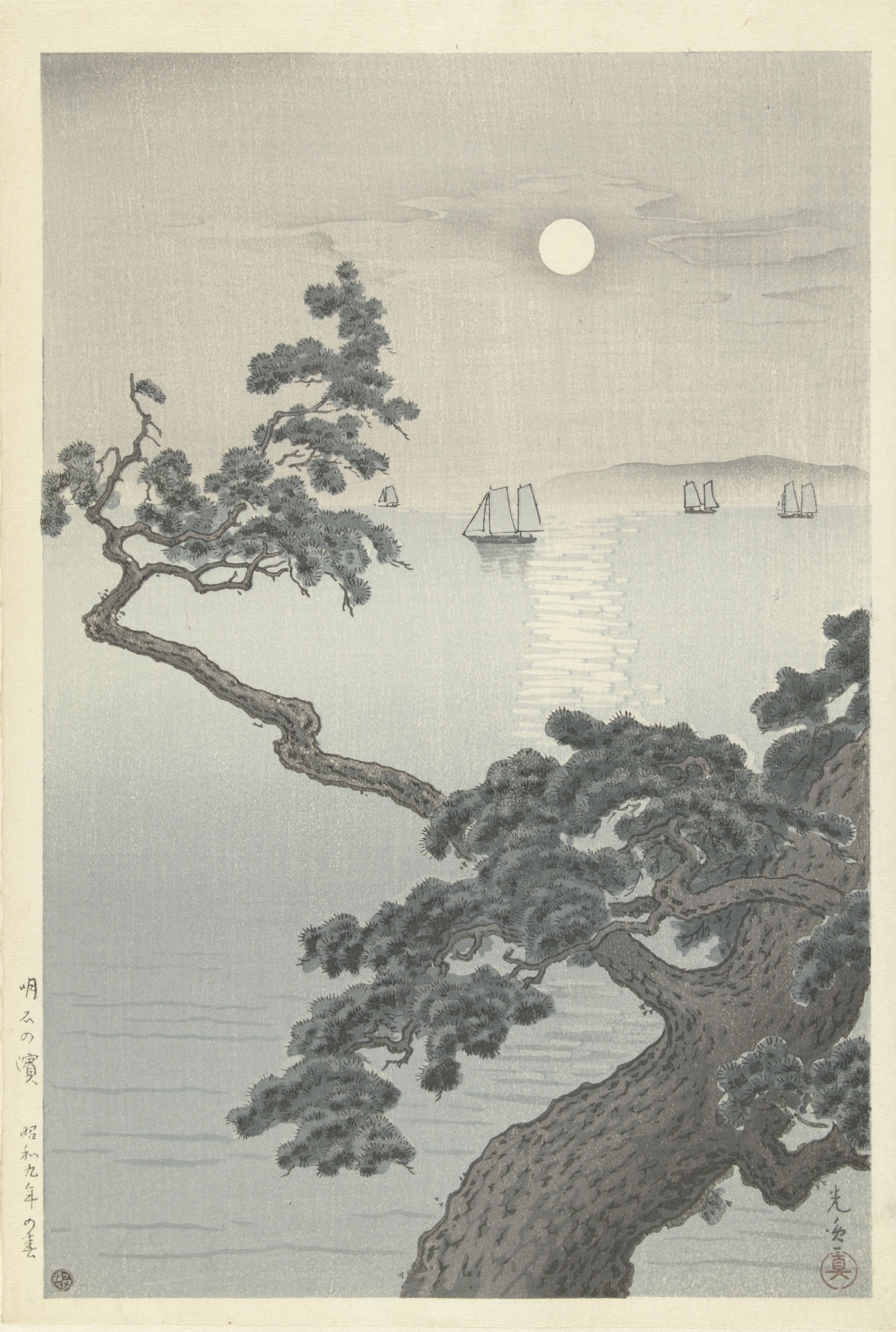
The River Banyu in Spring Time — History & Analysis
“The canvas doesn’t lie — it simply waits.” In the quiet stillness of a spring morning, a world unfolds, vibrant yet elusive, balancing between reality and reverie. Look to the center, where the river meanders gracefully, a silken ribbon reflecting the soft blush of cherry blossoms above. The artist employs delicate hues of pink and green, drawing you into the lush landscape, while the intricate brushwork captures the shimmering water's surface, inviting an almost hypnotic contemplation. Notice the gentle sweep of the trees, their branches arching gracefully as if caught mid-dance, harmonizing with the ripples of the river below.
Hidden beneath the serene facade lies an emotional undercurrent — the contrast between fleeting beauty and the ephemeral nature of life itself. The vibrant blossoms signify renewal, yet their transience reminds us of the inevitability of change. The ethereal light enveloping the scene evokes a sense of longing; it whispers of memories cherished and lost, crafting a poignant narrative that unfolds beyond the canvas.
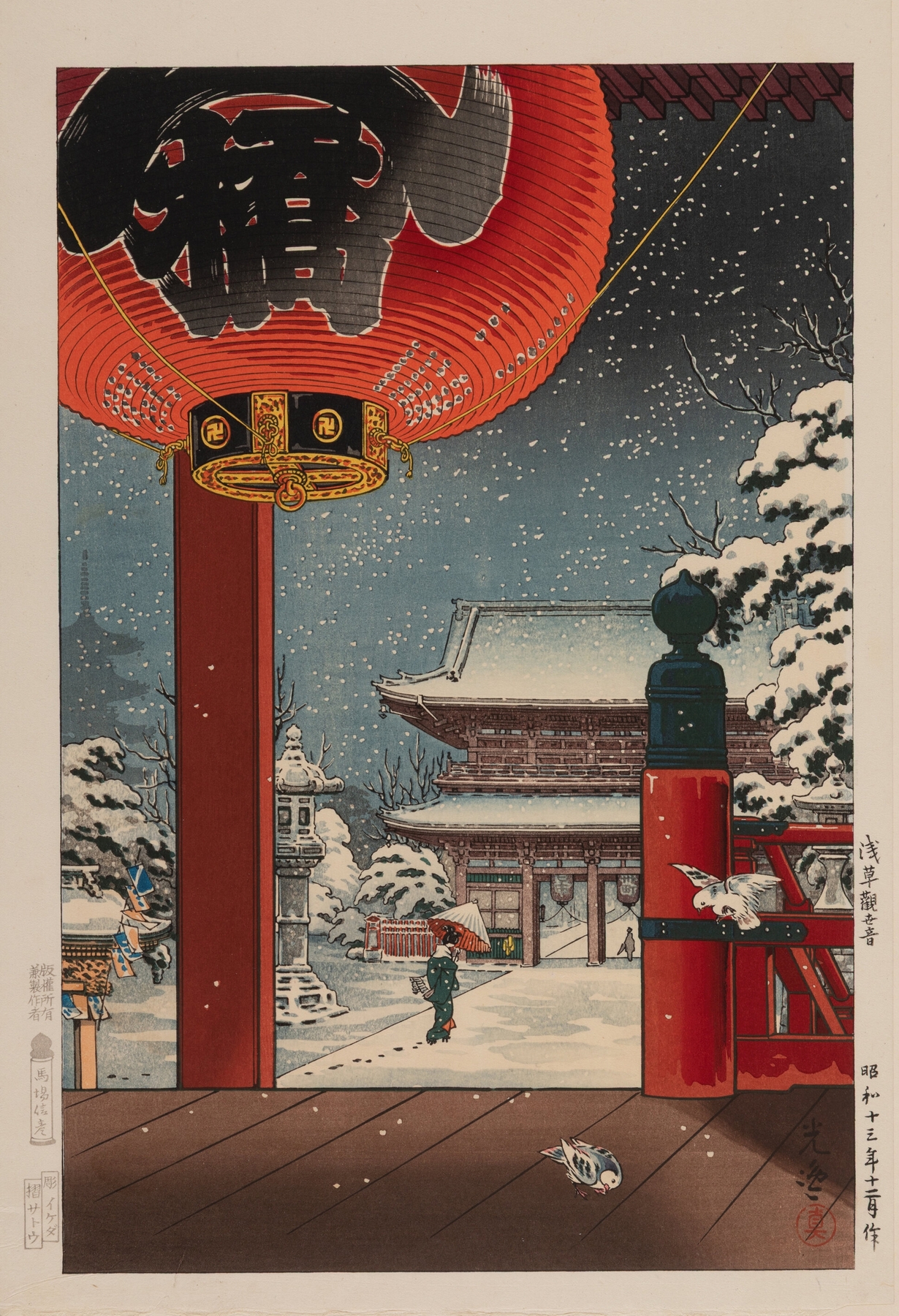
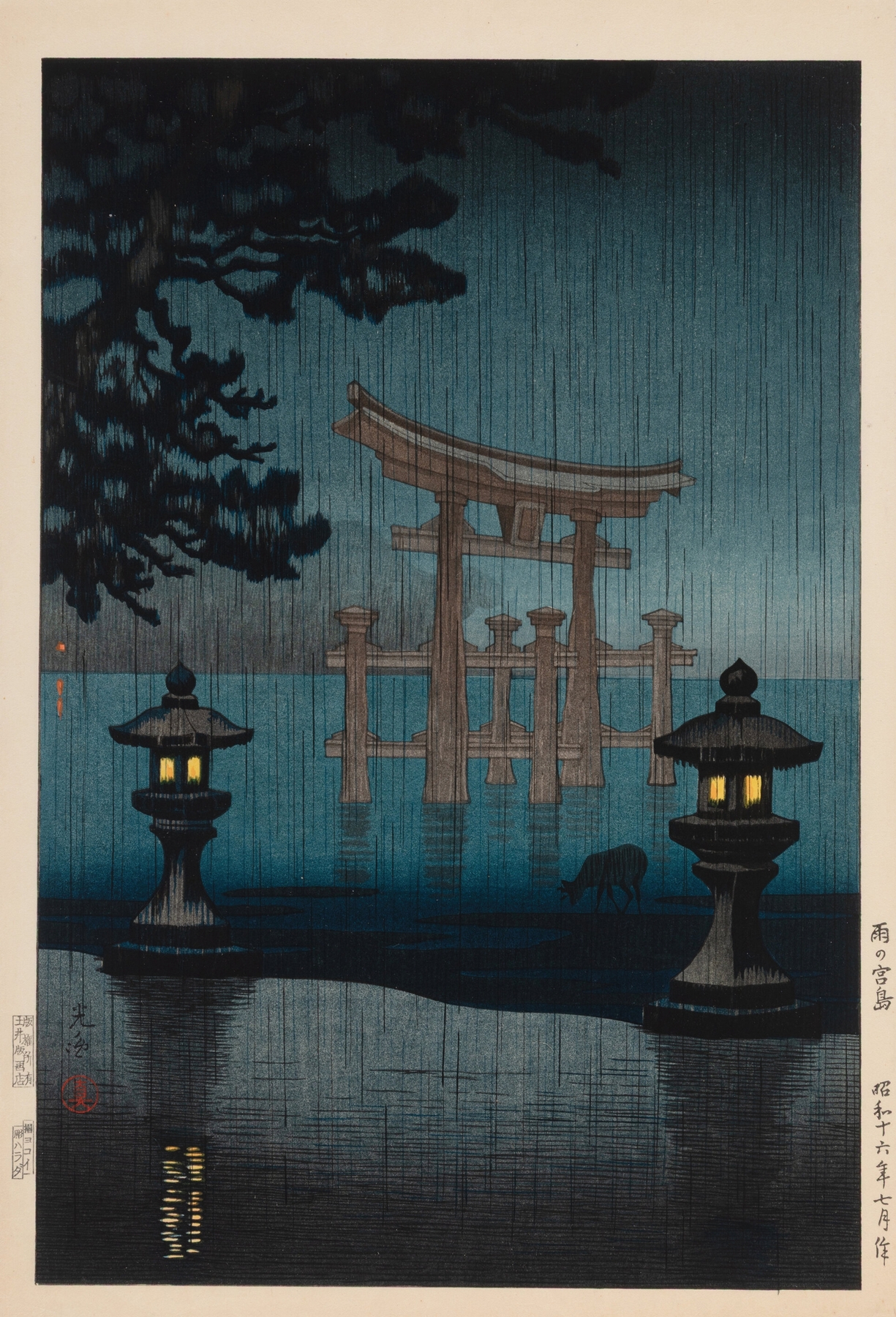
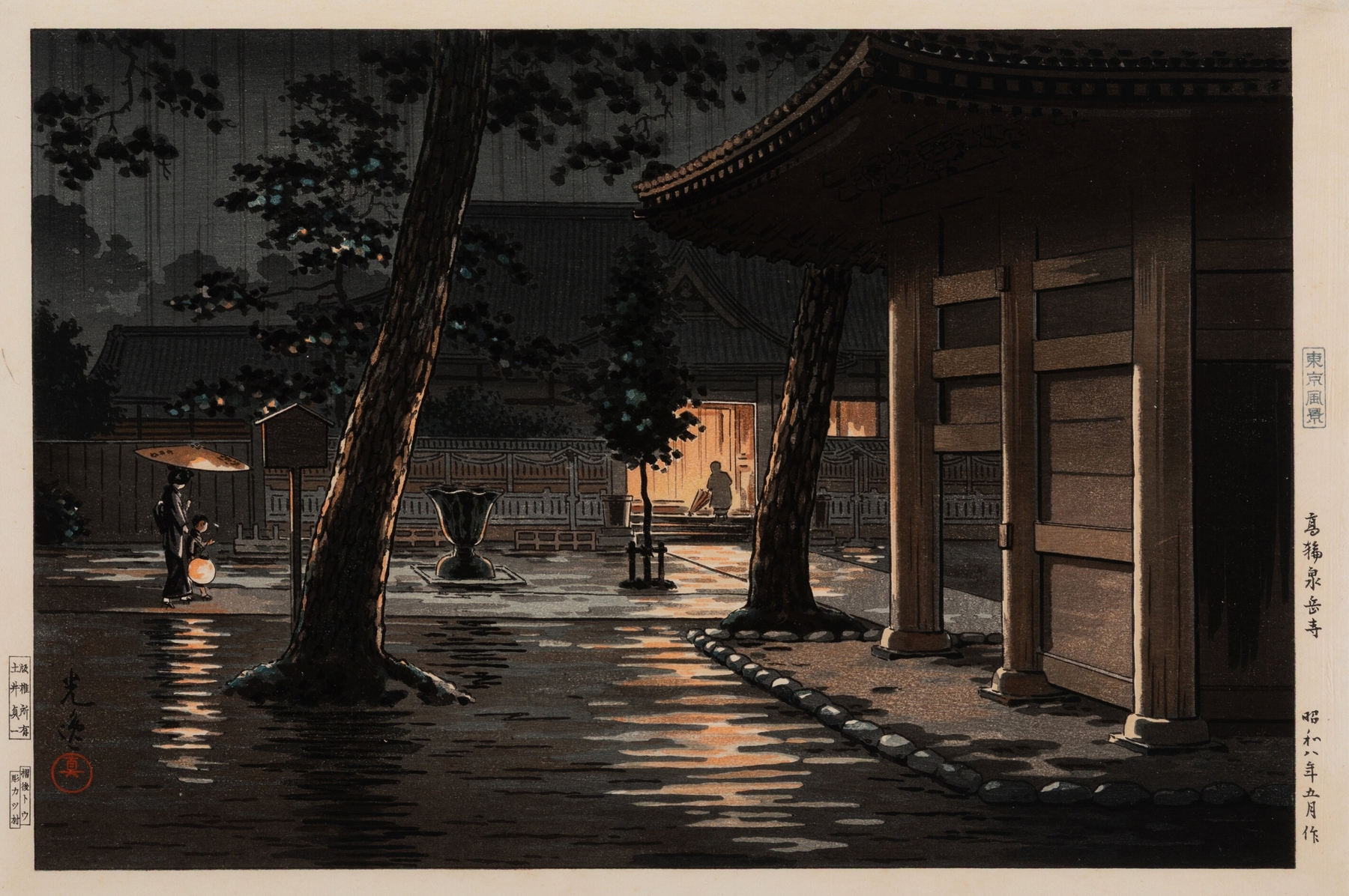
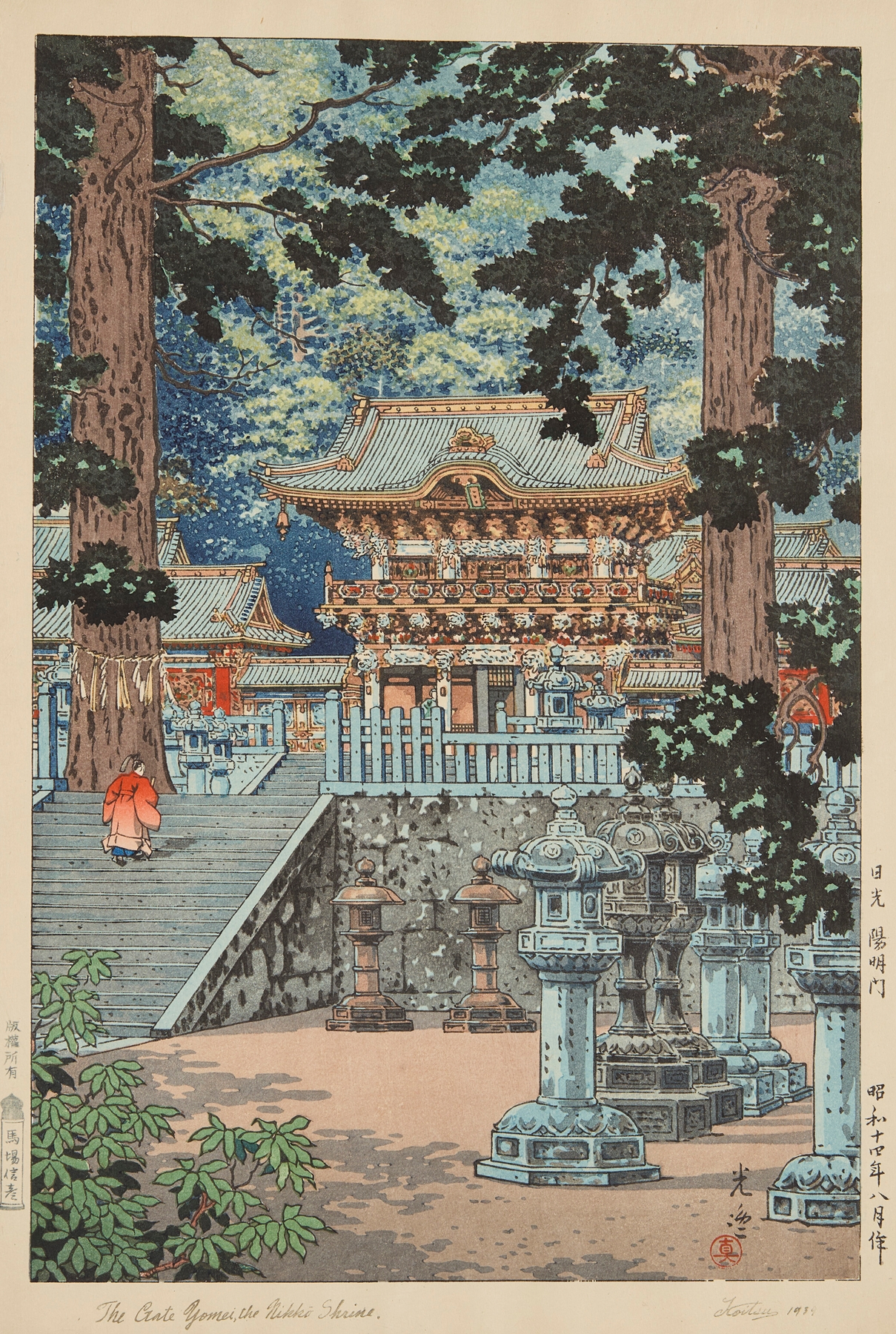
In 1938, Tsuchiya Kōitsu painted this work amid Japan’s shifting cultural landscape, as traditional art forms faced the pressures of modernization. His focus on landscapes and nature reflected a deep appreciation for his heritage, capturing the spirit of the time while embracing the contemporary challenges of his world. This piece stands as a testament to his mastery of the woodblock printing technique, blending realism with a dreamlike quality that continues to resonate today.