Reparaties aan de romp van een schip — History & Analysis
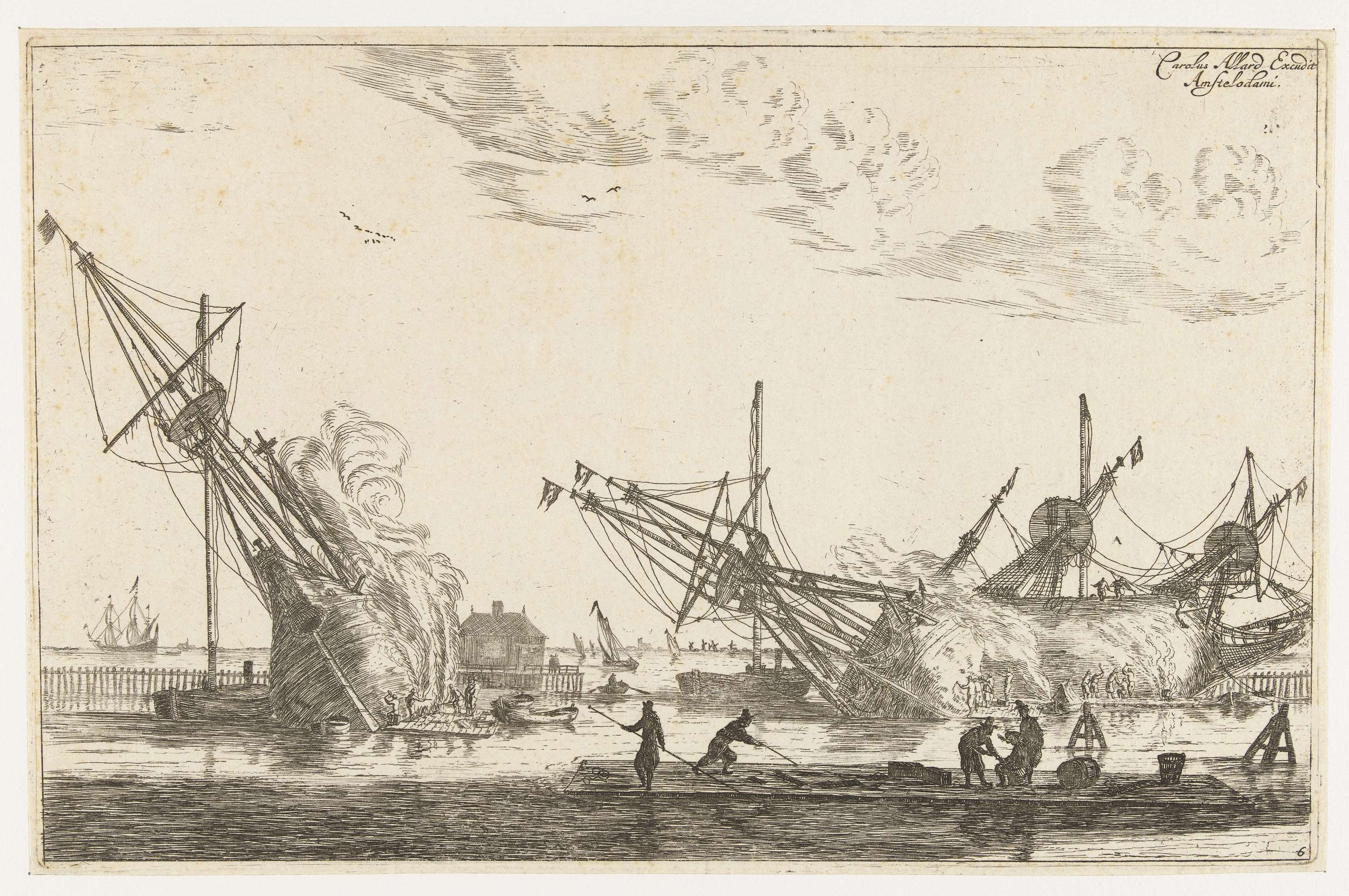
Where does light end, and longing begin? In the delicate interplay of shadow and illumination, innocence emerges from the depths of despair. Focus your gaze on the vibrant hues of blue and green that dance across the canvas. The ship, with its weathered hull, commands attention at the center, the meticulous details of the wooden planks speaking to the labor of repair. Notice how the soft, golden light cascades from the upper left, highlighting the workers’ earnest expressions and tense gestures as they toil.
Each stroke of the brush captures the texture of the scene, revealing both the labor's intensity and the serenity of the harbor setting that envelops them. Amid the industriousness lies a narrative of vulnerability and hope. The ship, representing both a vessel and a dream, stands half-repaired, evoking a sense of fragility. The workers’ focused attention suggests a deep connection with their task, hinting at resilience in the face of uncertainty.
The ethereal light bathes the scene with a sense of innocence — a poignant reminder that restoration takes time and care, not just in the physical sense, but also within the heart. In 1652, Reinier Nooms painted this work against the backdrop of a rapidly evolving maritime industry in the Netherlands. As a skilled marine painter, Nooms found himself navigating the complexities of a society enamored with trade and exploration. His career flourished amidst the golden age of Dutch art, where the interplay of light and shadow became essential in conveying both realism and emotion, shaping the way we perceive labor and aspiration on canvas.