Road toward the Farm Saint-Siméon, Honfleur — History & Analysis
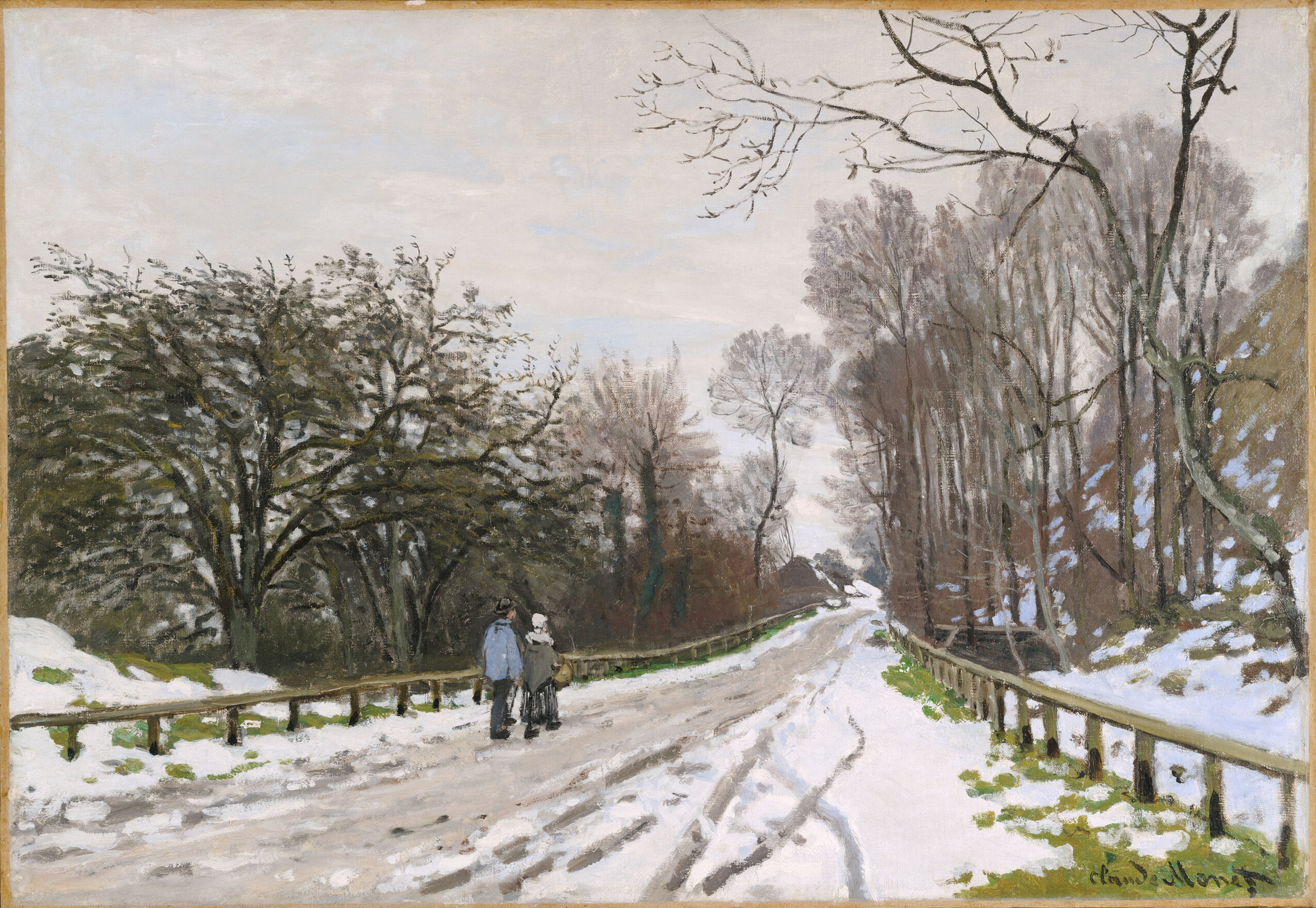
“Between color and silence, truth hides.” In the quiet embrace of a landscape, emptiness speaks volumes, calling us to reflect on what lies beyond the visible. Look to the left at the winding path that beckons the viewer deeper into the scene. Monet’s brushwork is expressive, with broad strokes of green and gold defining the road while delicate touches of light illuminate the foliage. The horizon is awash in soft blues and grays, hinting at the transition from day to dusk, and the viewer is drawn to the gentle interplay of color that dances across the canvas, guiding their eyes from the foreground to the distant fields.
The painting captures a profound sense of solitude and anticipation. The empty road suggests a journey, yet it remains devoid of figures, allowing the viewer to ponder their own narrative. The subtle contrast between the vibrant greenery and the somber sky evokes a feeling of longing, perhaps underscoring the tension between isolation and connection. In this tranquil yet vast landscape, the simplicity of the scene belies the complexity of emotional resonance.
In 1867, Claude Monet painted this work during a formative time in his career, exploring the effects of light and atmosphere in the landscapes of Normandy. Striving to break free from traditional academic painting, he was influenced by the burgeoning Impressionist movement. This piece exemplifies his focus on color and form, emerging as a precursor to the radical ideas that would soon transform the art world.