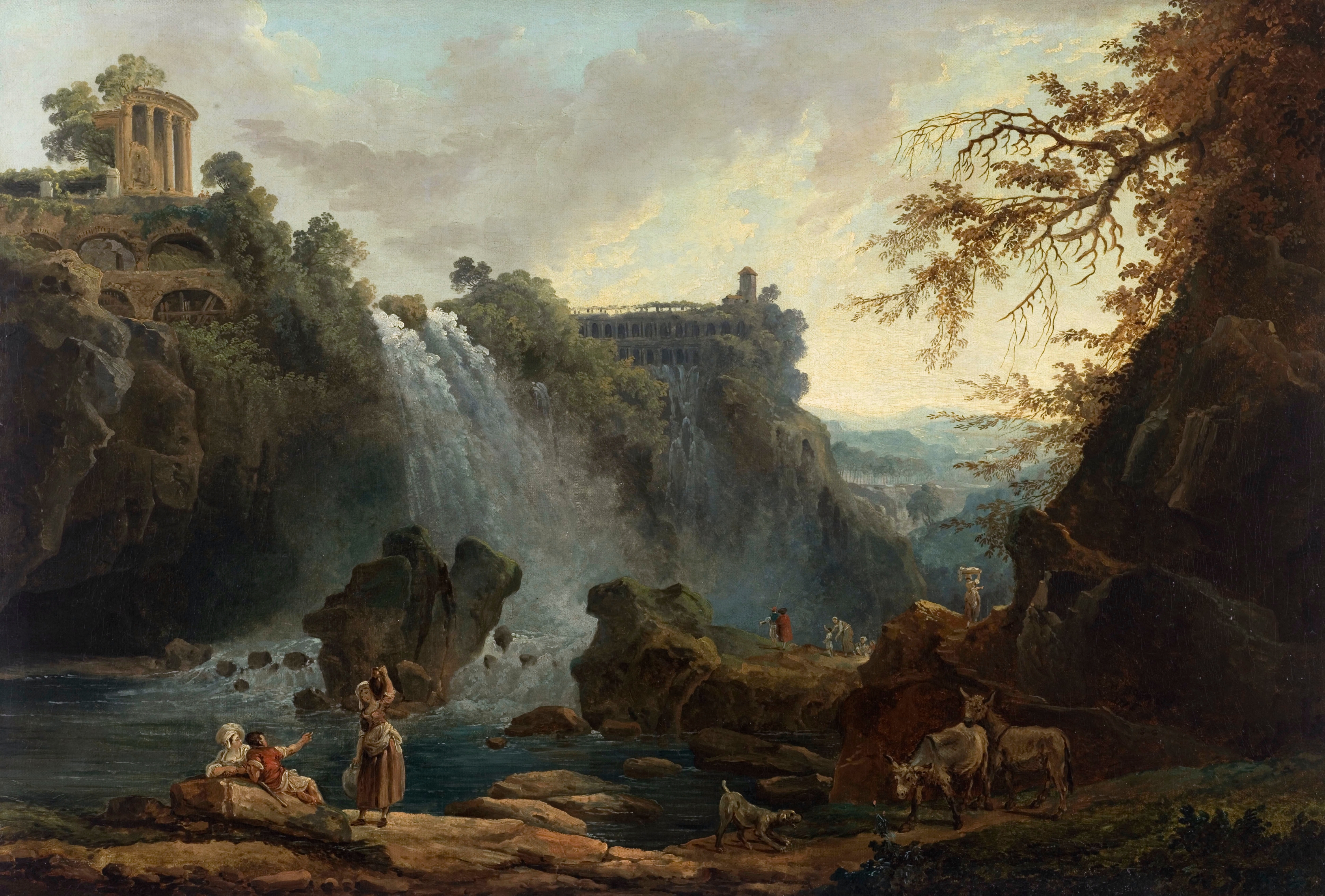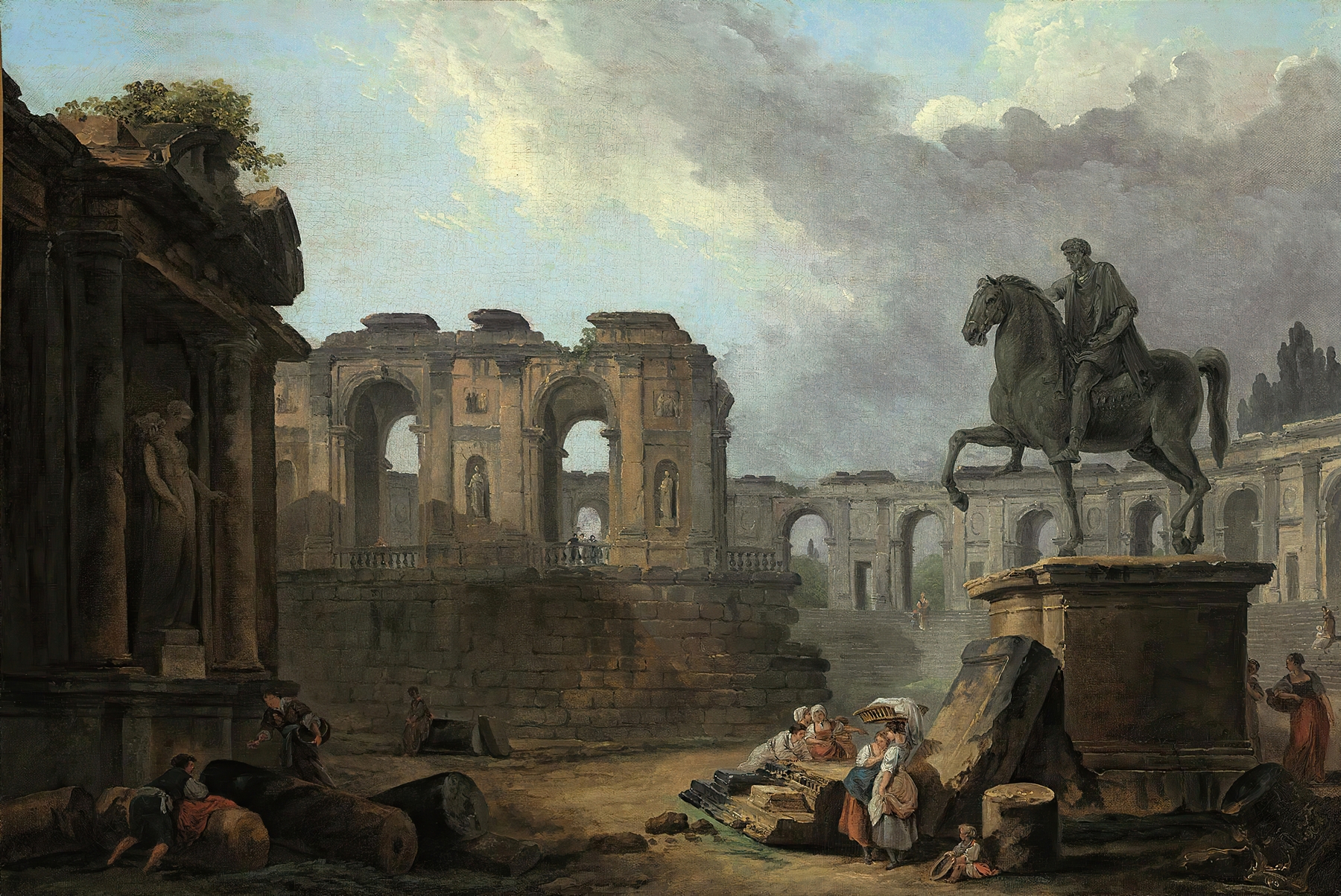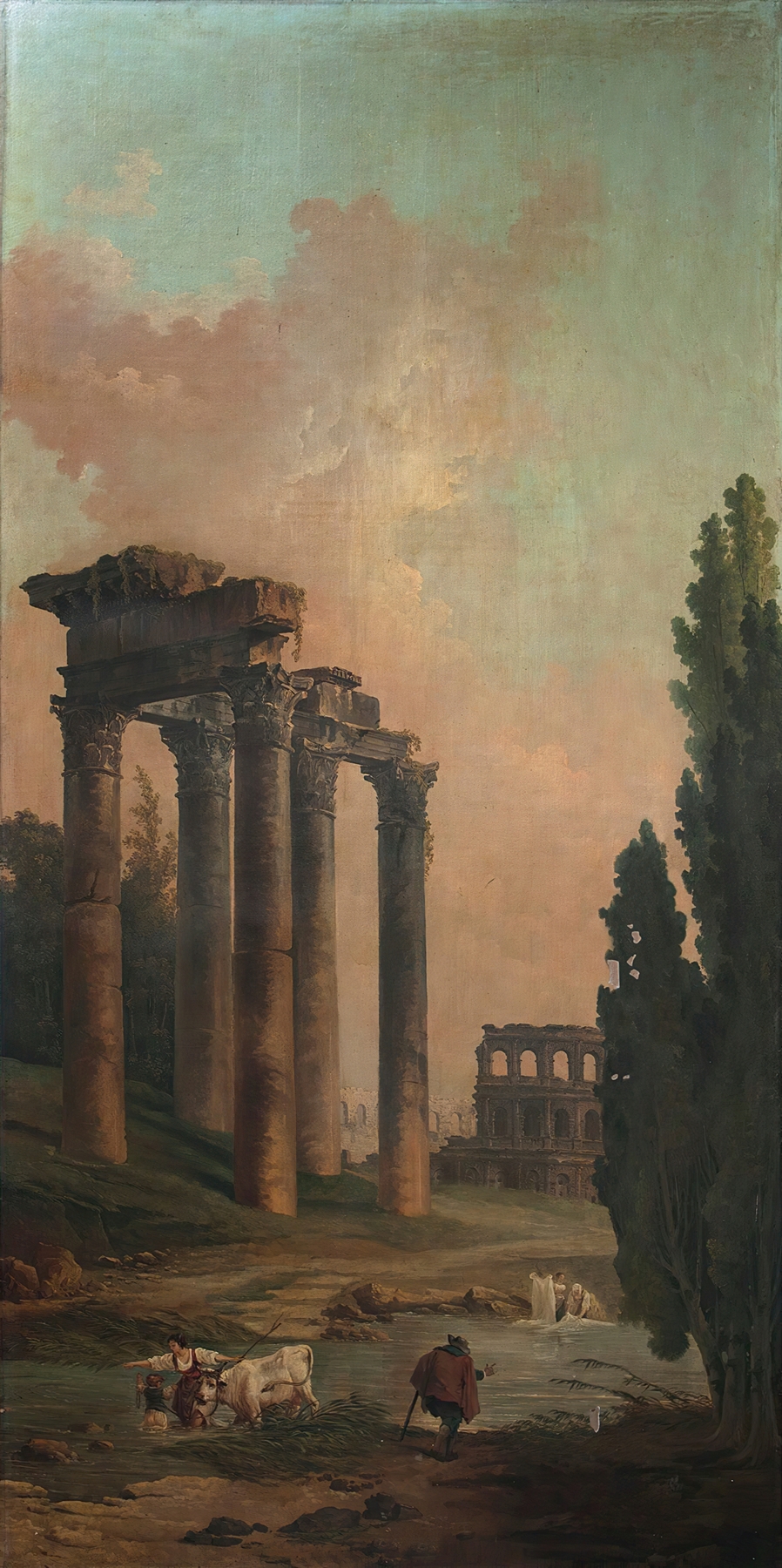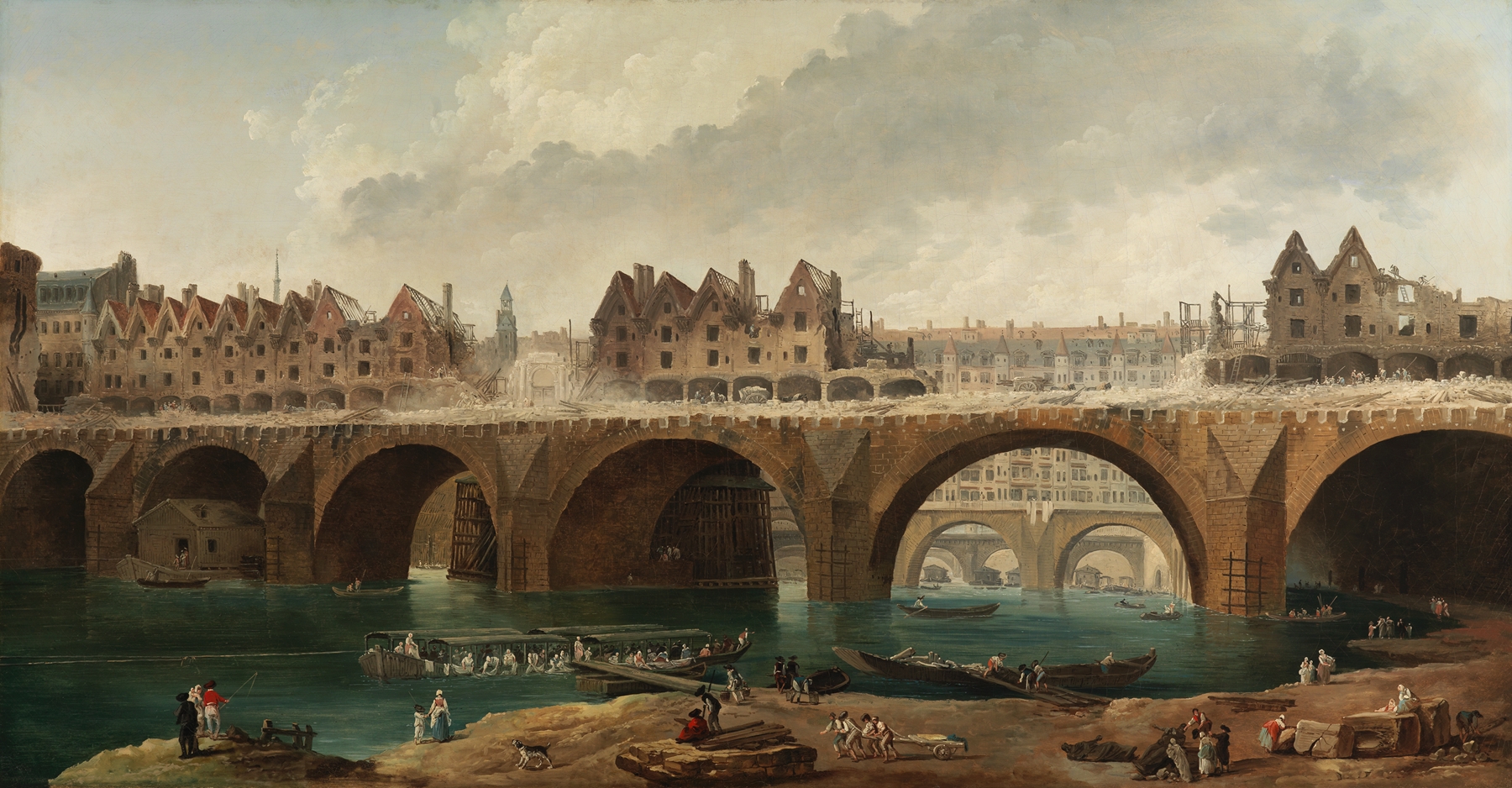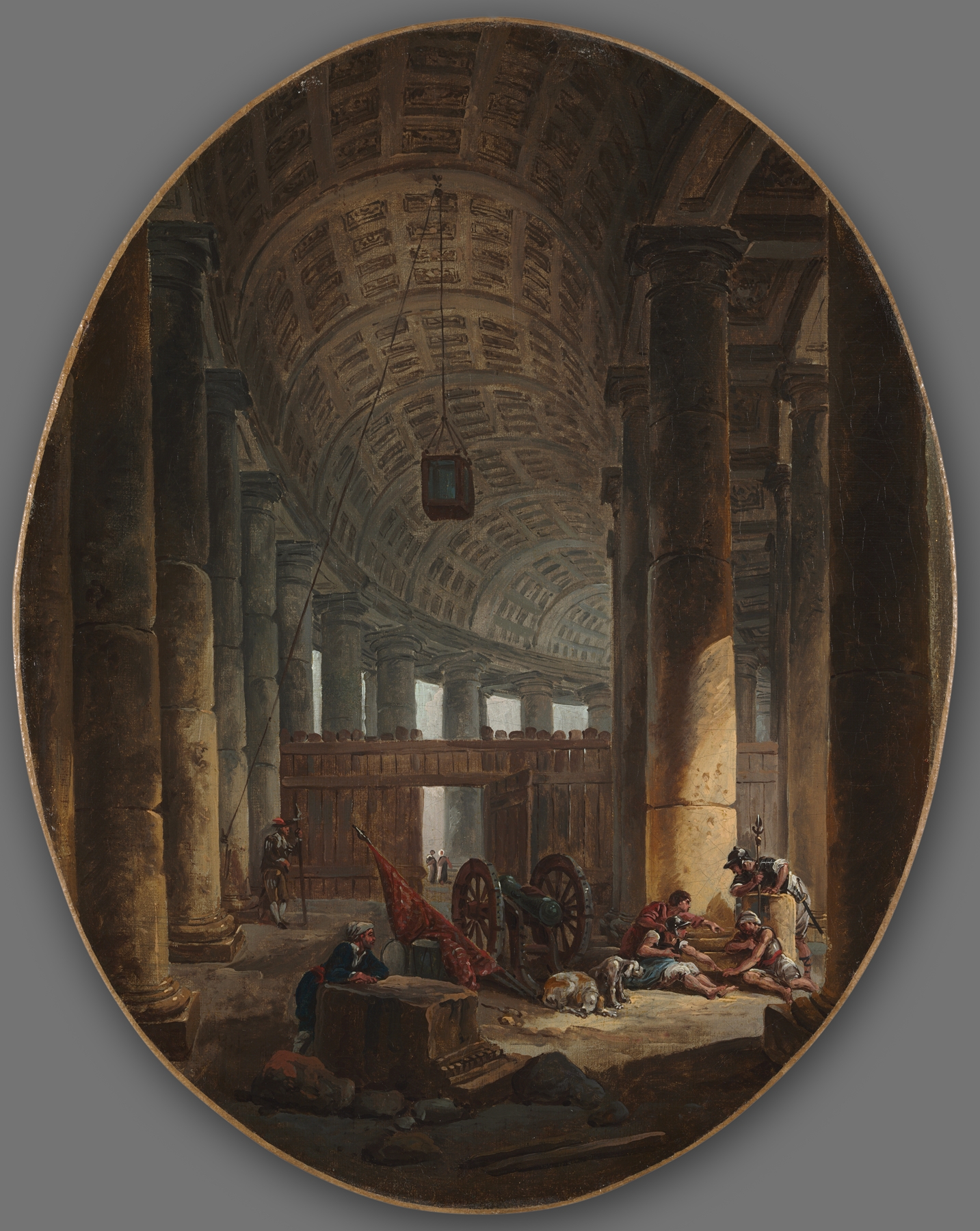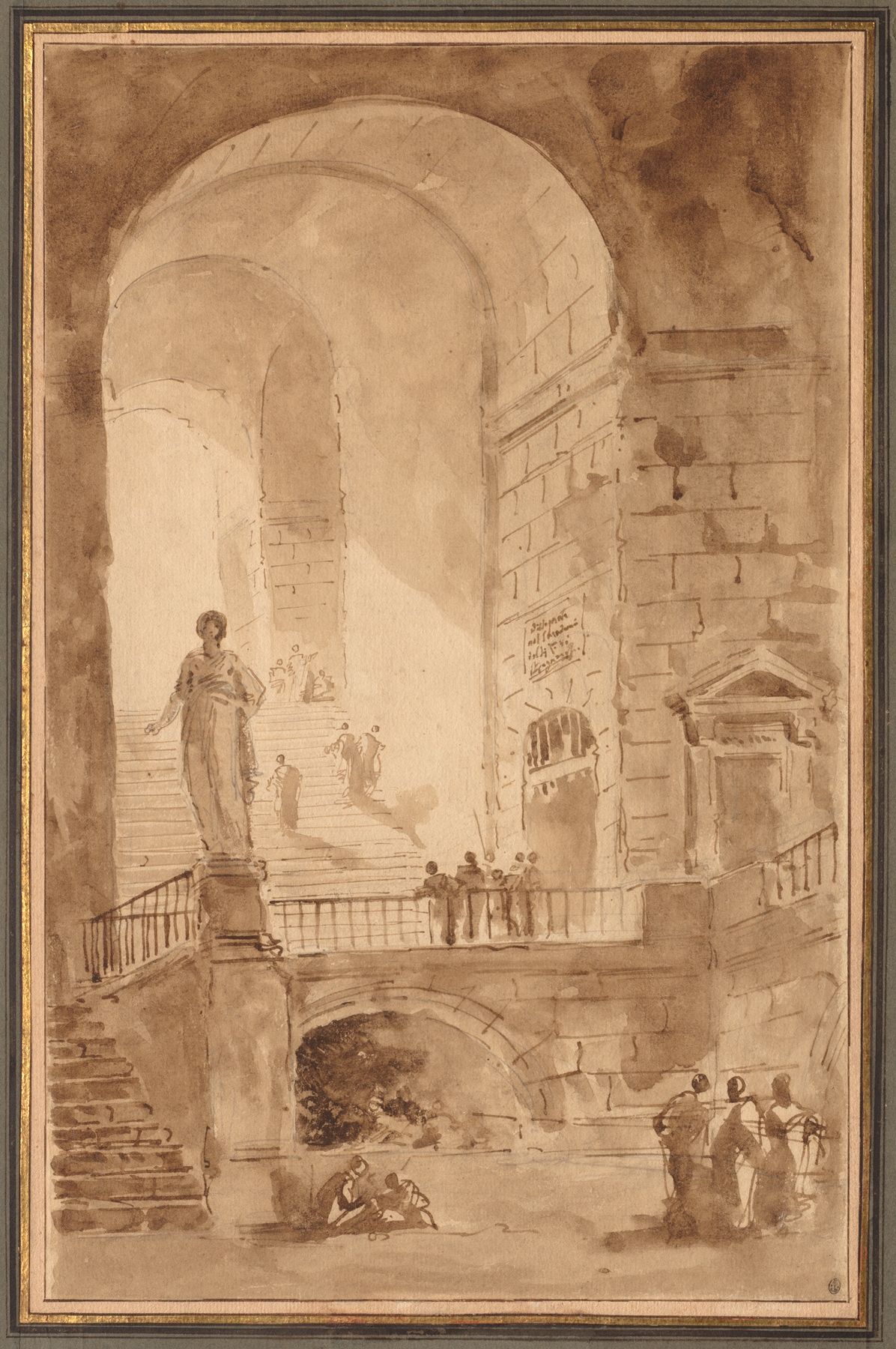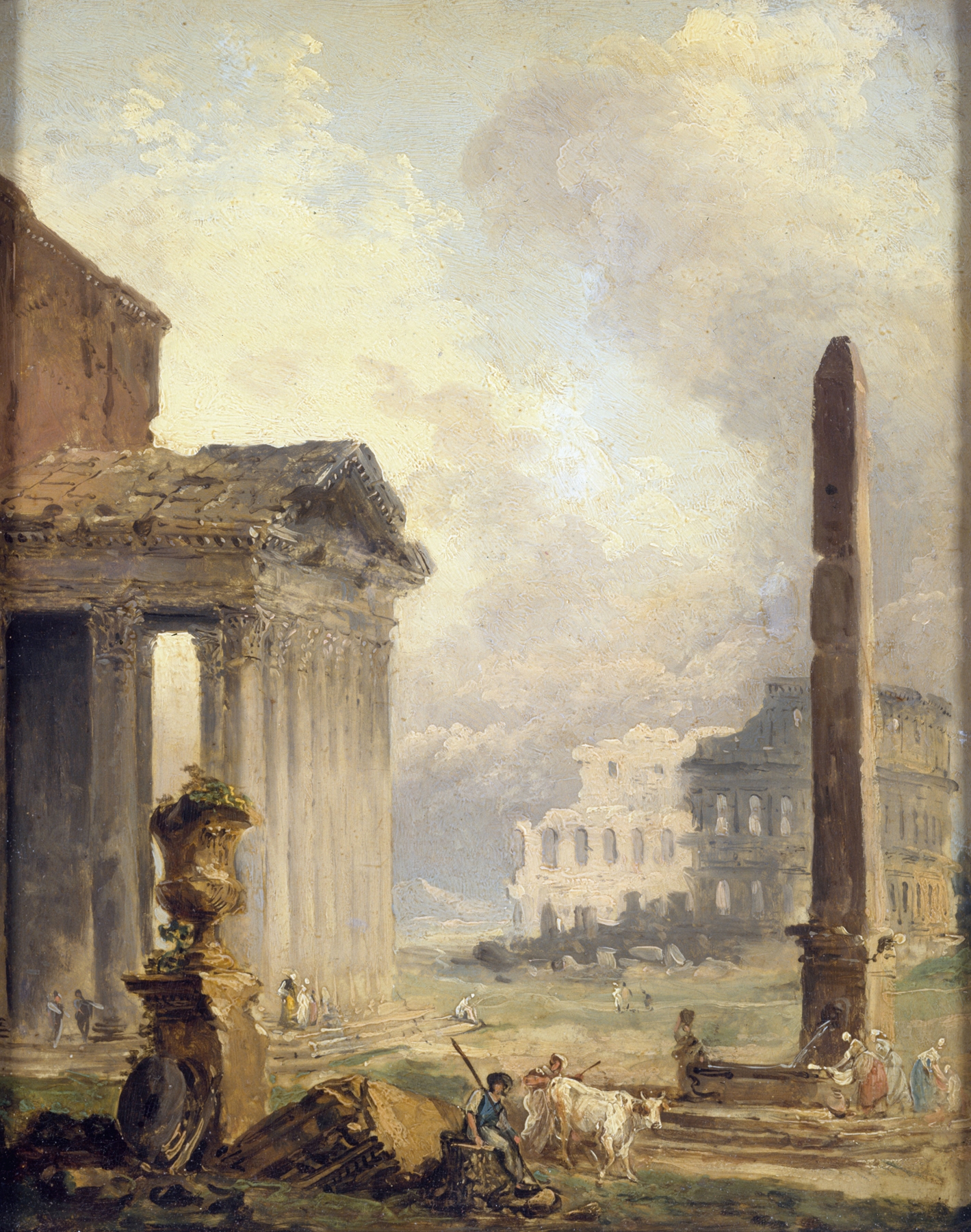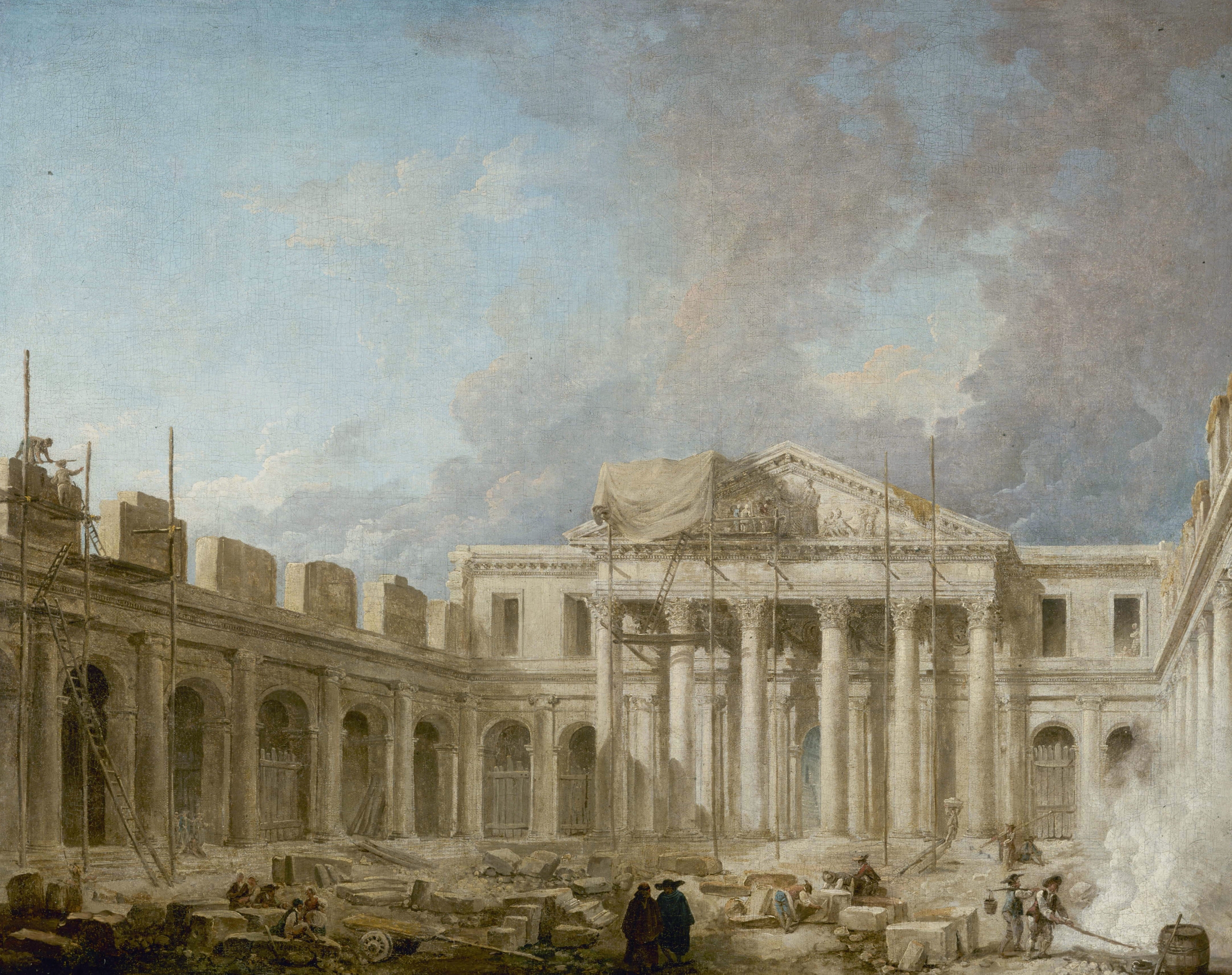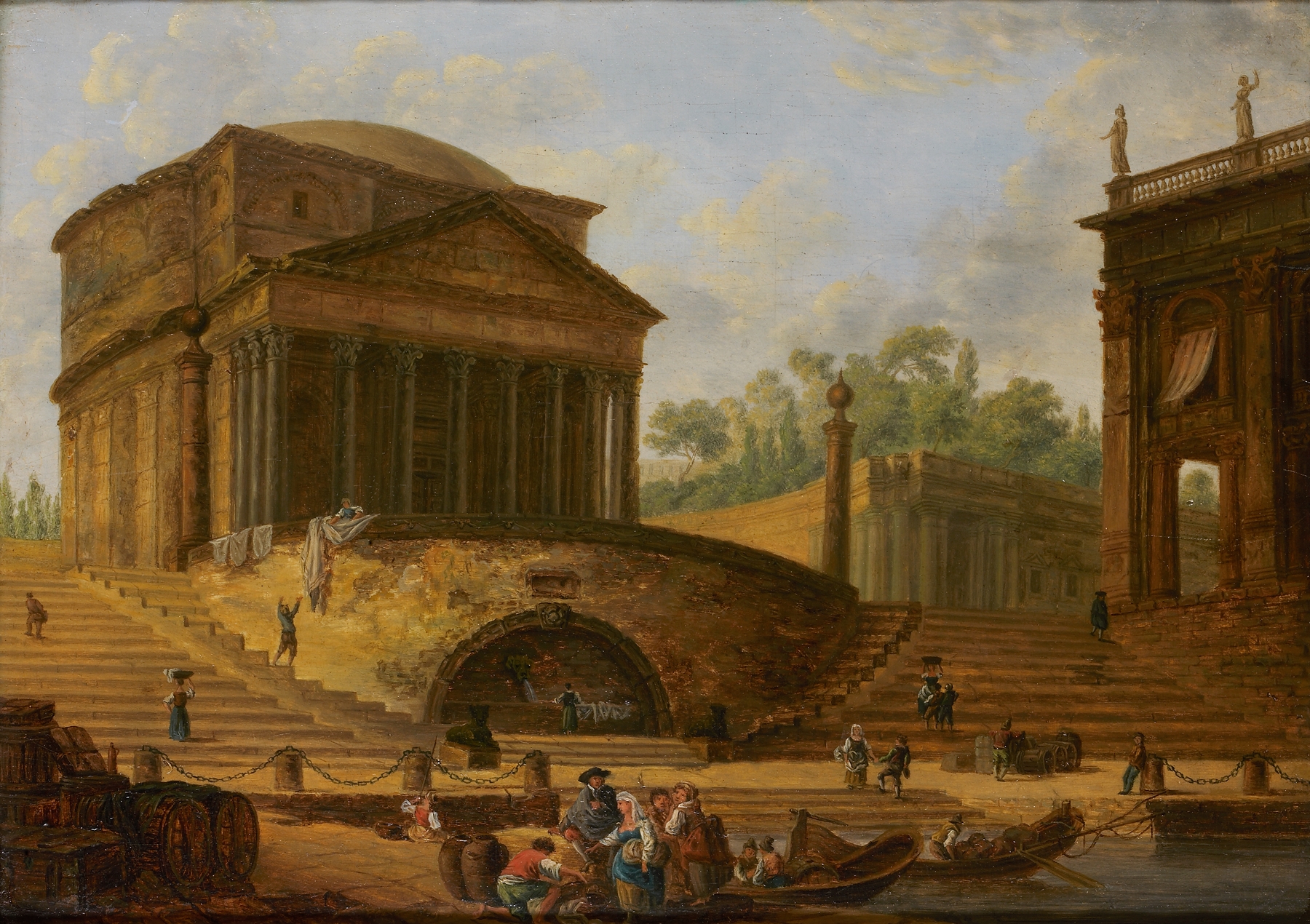
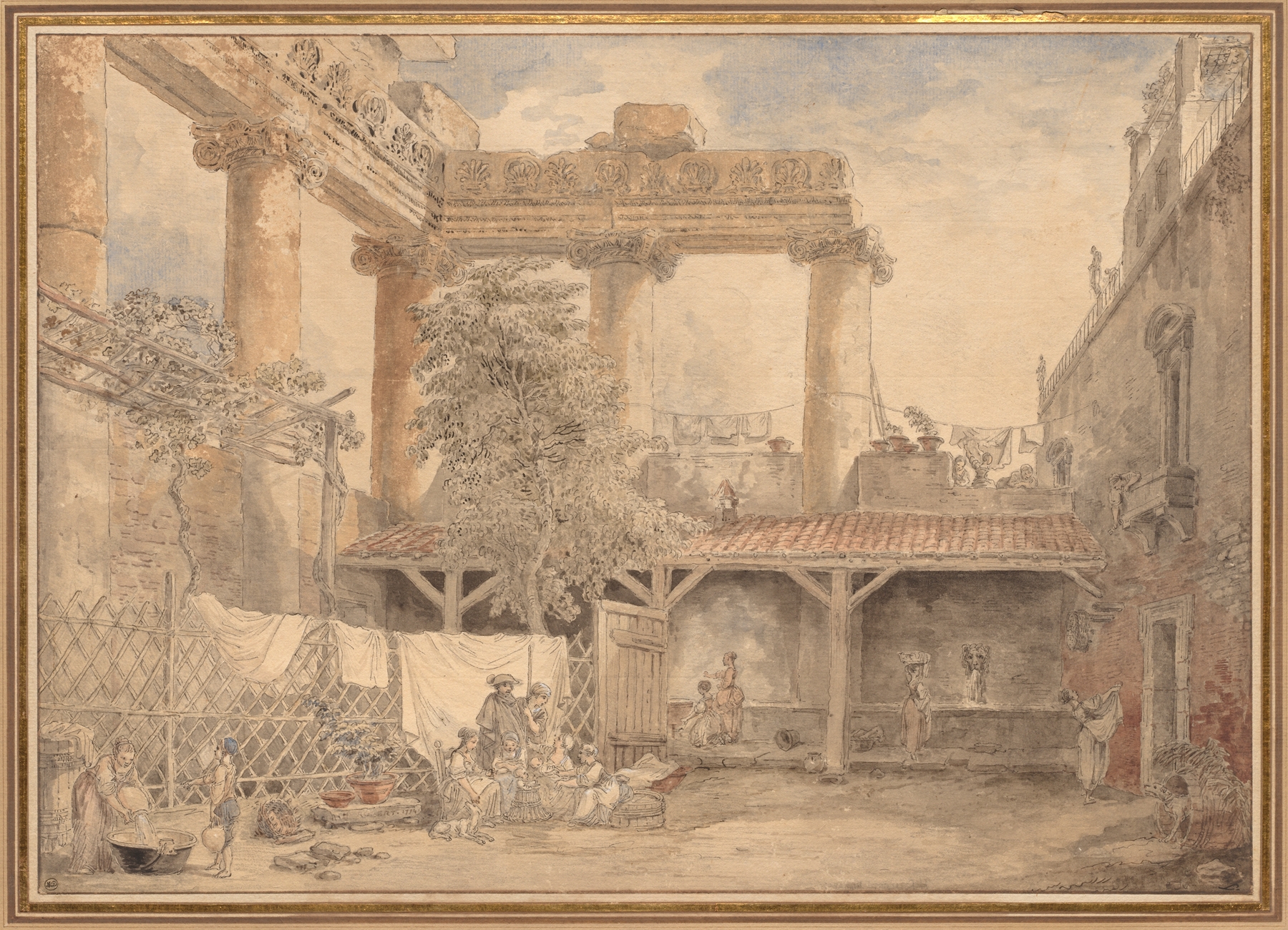
Can beauty exist without sorrow? In *Roman capriccio*, the answer unfurls like a dream, inviting contemplation of harmony and decay. Look to the left at the crumbling ruins, where fragments of an ancient arch are kissed by the soft glow of dusk. The juxtaposition of light and shadow envelops the scene, highlighting the vibrant greens of nature reclaiming man’s creations. As your gaze travels across the canvas, notice how the serenity of the landscape contrasts with the deliberate chaos of architecture; the balance between wild beauty and human ambition is palpable. Each brushstroke reveals a meticulous technique that brings depth to the ethereal quality of the moment. Beneath the surface, there exists a tension between nostalgia and the passage of time. The tranquil river reflects not only the fading sunlight but also the remnants of a civilization steeped in history. The figures, seemingly at ease in their surroundings, evoke a bittersweet reminder of human transience amidst the permanence of nature’s embrace. Their presence hints at the fleeting nature of both life and beauty, a silent acknowledgment of the sorrow that often accompanies our most cherished moments. Created during a period marked by the Enlightenment, the artist captured this vision in the late 18th century, when he was deeply engaged with themes of ruin and regeneration. Living in Paris, he was influenced by the growing appreciation for the picturesque, and the tumult of political change ignited an exploration of memory and imagination in his work. This piece encapsulates his unique blend of fantasy and reality, reflecting not only his artistic innovation but also the broader cultural dialogues of his time.