Rowan Tree — History & Analysis
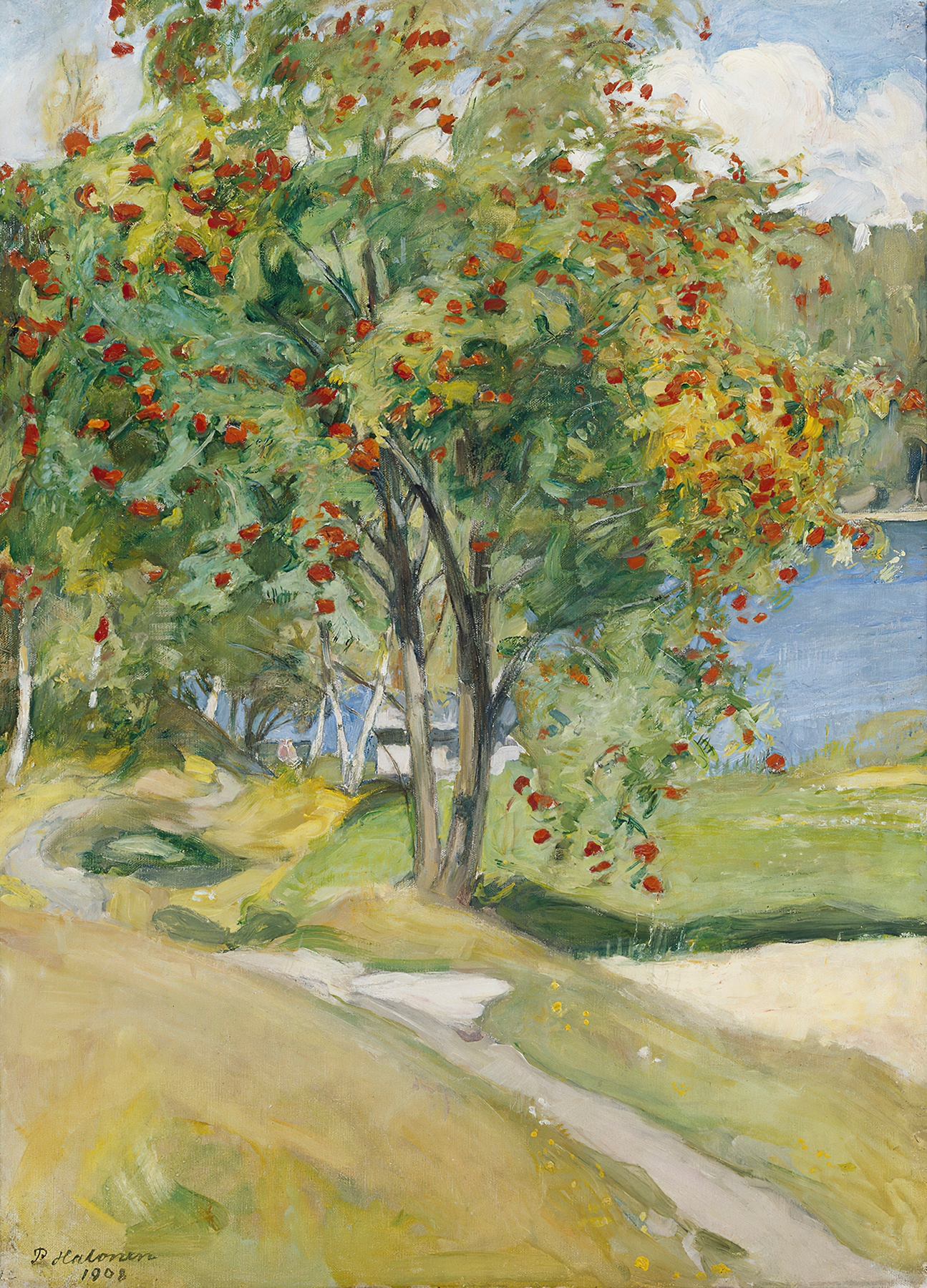
Could beauty survive in a century of chaos? In the heart of a world teetering on the brink, this question resonates through every brushstroke and color choice. Look to the center where a solitary rowan tree stands proud against a backdrop of soft, muted hues. The vibrant reds of its berries create a striking contrast with the cool greens and blues surrounding it, drawing the eye. Notice how the light dances delicately across the leaves, illuminating them with a gentle glow as if celebrating their existence.
The composition, with its sweeping curves and organic forms, invites contemplation and quietude, a moment of peace captured in time. Yet, beneath the surface beauty lies a tension—an undercurrent of longing for connection and stability. The rowan tree, often associated with protection and hope, stands alone, suggesting both resilience and isolation. The juxtaposition of its vibrant berries against the muted landscape speaks to the fragility of beauty amidst life's turmoil.
Each detail, from the textured bark to the drifting clouds, evokes a sense of yearning for a world where such beauty could flourish without threat. Pekka Halonen created this work in 1908, during a period of profound change in Finland and the art world at large. Emerging from the influence of Symbolism and the rise of National Romanticism, he sought to capture the Finnish landscape's essence, reflecting both personal and national identity. This was a time when Finland was grappling with its own cultural heritage, striving to define itself amid external pressures, a theme that resonates powerfully in this evocative piece.