From the Garden — History & Analysis
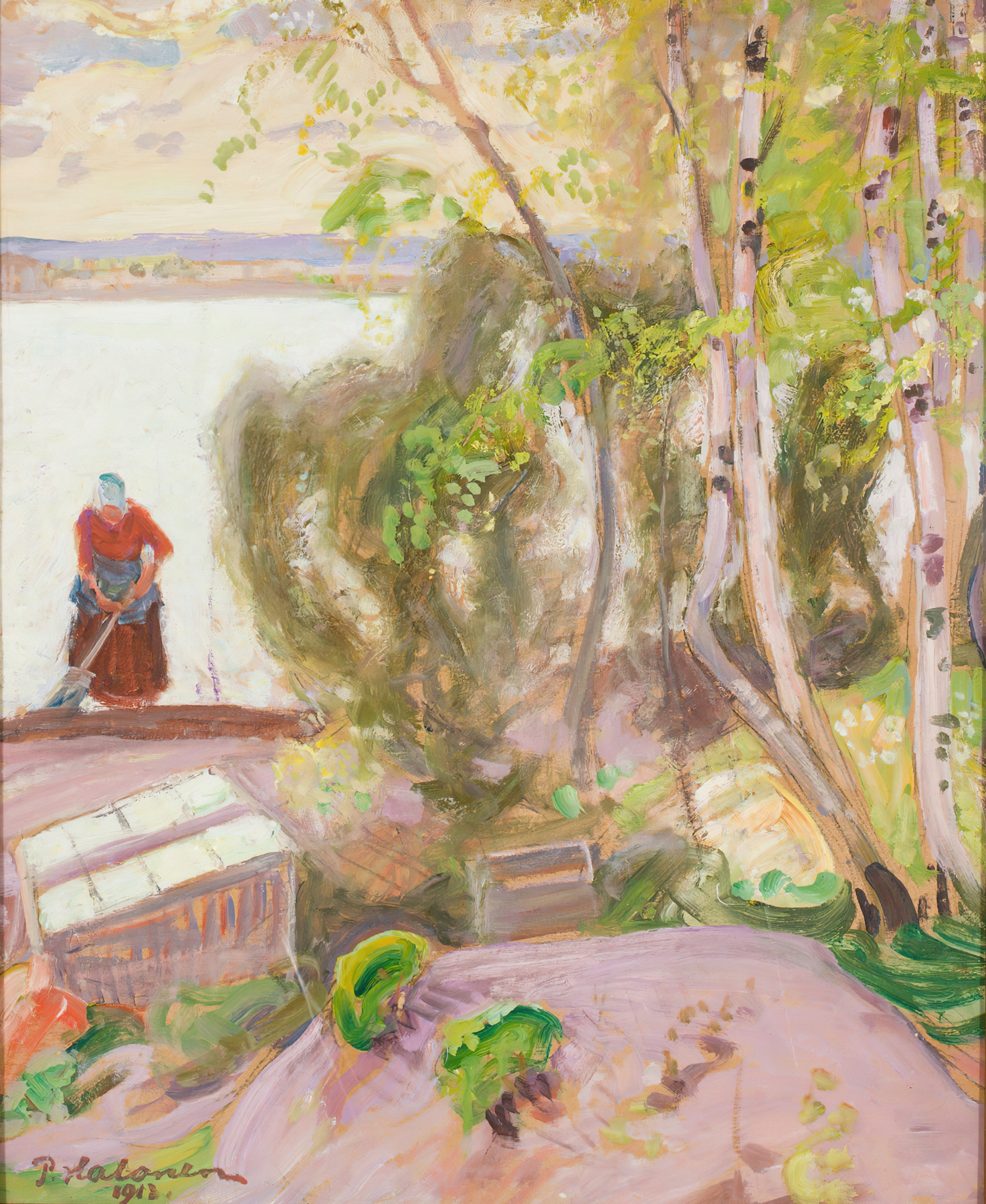
A gentle breeze stirs the leaves, whispering secrets of spring in a sunlit garden. A woman, poised and contemplative, bends slightly to examine a blossoming flower, her fingertips grazing the delicate petals. The sun casts dappled shadows on her serene face, illuminating a moment of quiet wonder and connection with nature. Look to the left at the vibrant array of flowers, each one a burst of color against the rich greens of the foliage.
Notice how Halonen captures the interplay of light and shadow, creating depth and texture that draws the eye deeper into the scene. The soft brushstrokes and warm palette evoke a sense of tranquility, inviting the viewer to pause and share in this intimate moment of exploration and beauty. There is a subtle tension between the woman and her surroundings; while she is lost in thought, the vibrant life of the garden thrives around her. The flowers symbolize renewal and creation—each bloom a testament to the cycle of life.
The contrast between her stillness and the garden's vitality speaks to the balance we seek in our own lives, a reminder of the beauty and complexity inherent in the act of creation itself. In 1913, Pekka Halonen was immersed in the Finnish art scene, known for his embrace of nature and landscapes. This period marked a significant phase in his career, where he sought to capture the essence of his homeland through his work. At this time, Finland was experiencing a burgeoning sense of national identity, and Halonen's art reflected the deep connection between the people and their natural environment, positioning him as a pivotal figure in Finnish art history.