Sailing Boats — Night, from the series ‘The Seto Inland Sea’ — History & Analysis
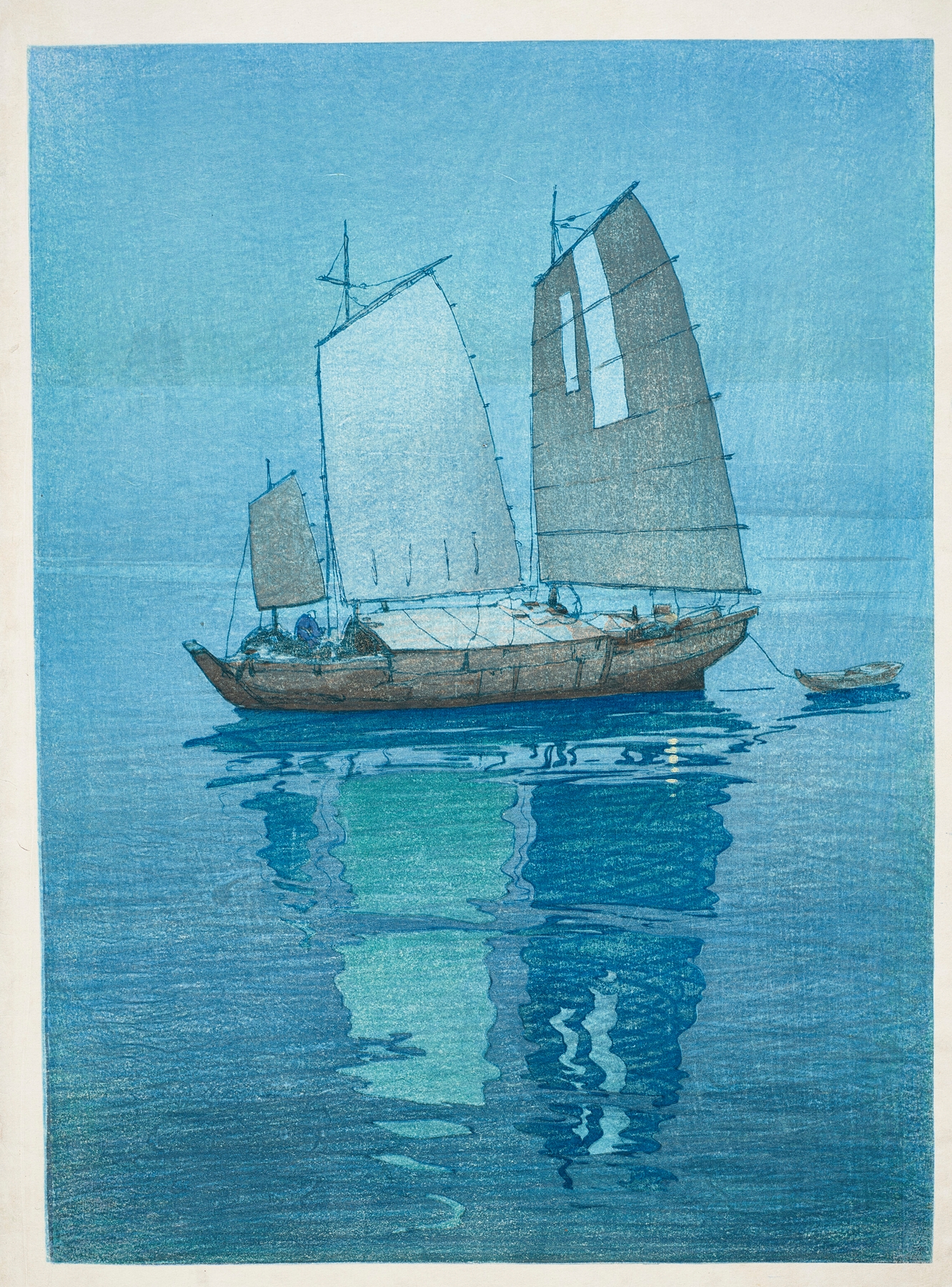
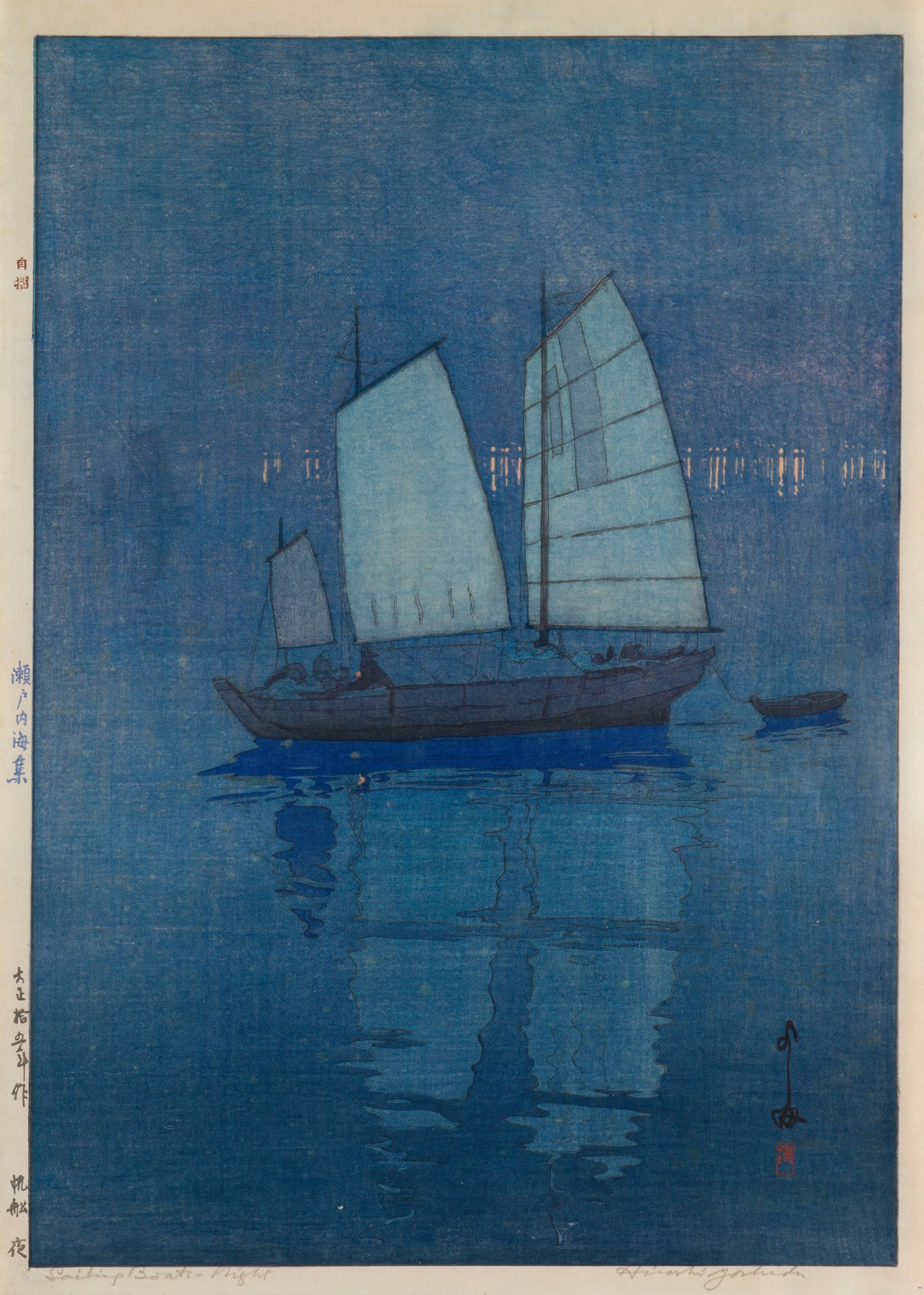
Did the painter know this moment would outlive them? Captured in the depths of night, the ephemeral tranquility of Sailing Boats — Night invites us to ponder the delicate interplay between existence and eternity. Look to the center of the composition, where soft, glowing boats glide effortlessly across the ink-black water, their sails illuminated by a spectral moonlight. The stark contrast between the deep blues and the luminous whites creates a dreamlike quality, while the rhythmic brushstrokes evoke a sense of movement.
The horizon, rendered with subtle gradations, suggests a world beyond—a promise of transcendence that lies just beyond the canvas. Upon closer inspection, observe the small details: ripples in the water that shimmer with the moon's reflection, each wave a fleeting moment caught in time. The simplicity of the boats suggests humility against the vastness of the sea, while the serene backdrop hints at solitude and introspection. This tension between the insignificance of the vessels and the grandeur of their surroundings resonates deeply, offering a meditation on life's ephemeral nature.
In 1926, Yoshida Hiroshi painted this piece during a time of significant change in Japan—a nation grappling with modernization while also cherishing traditional aesthetics. Working in his studio in Tokyo, he was immersed in the shin-hanga movement, which sought to blend Western techniques with classical Japanese art forms, reflecting both personal and cultural transitions. This artwork stands as a serene testament to that moment, forever capturing the quiet beauty of the night.