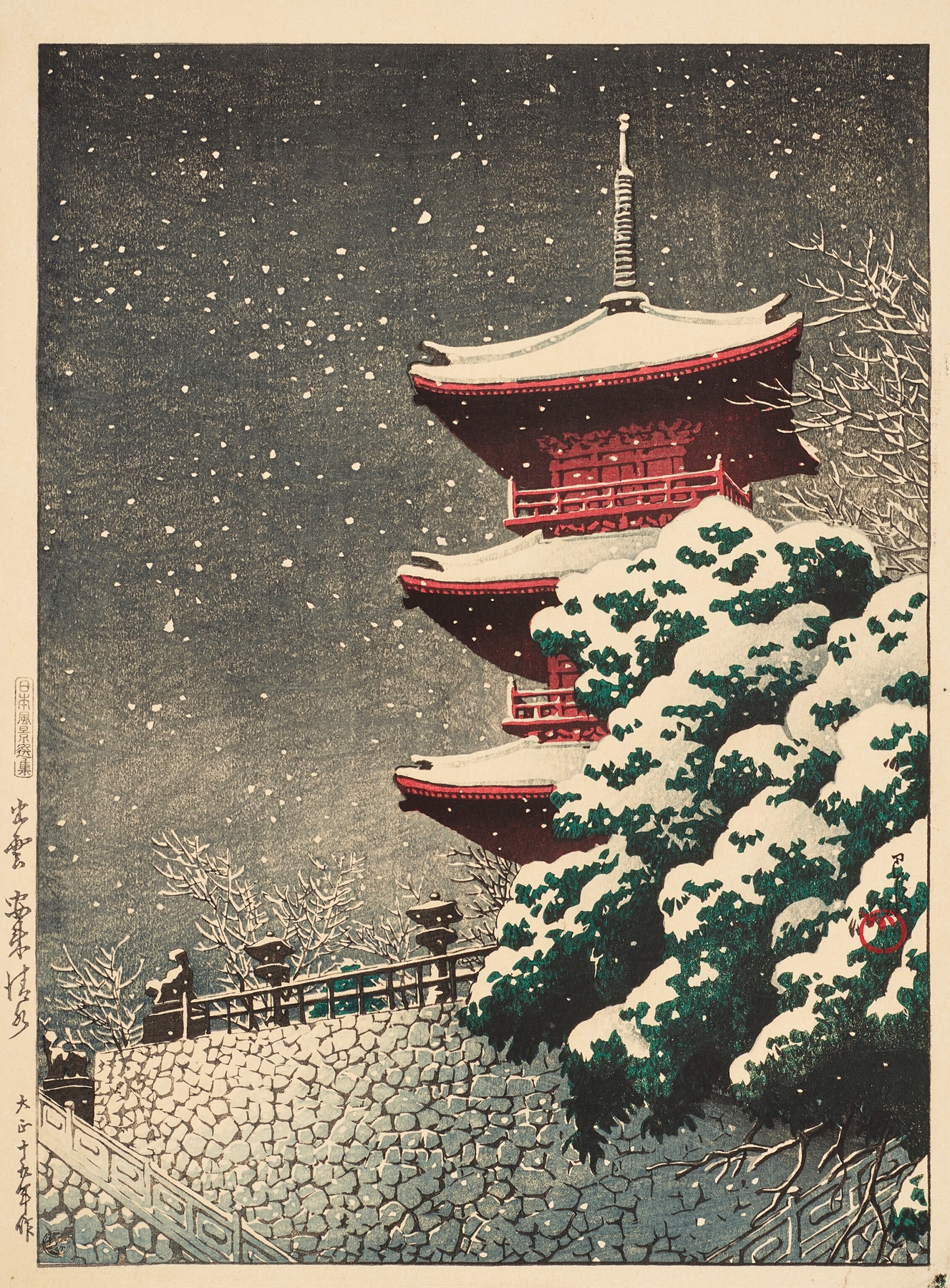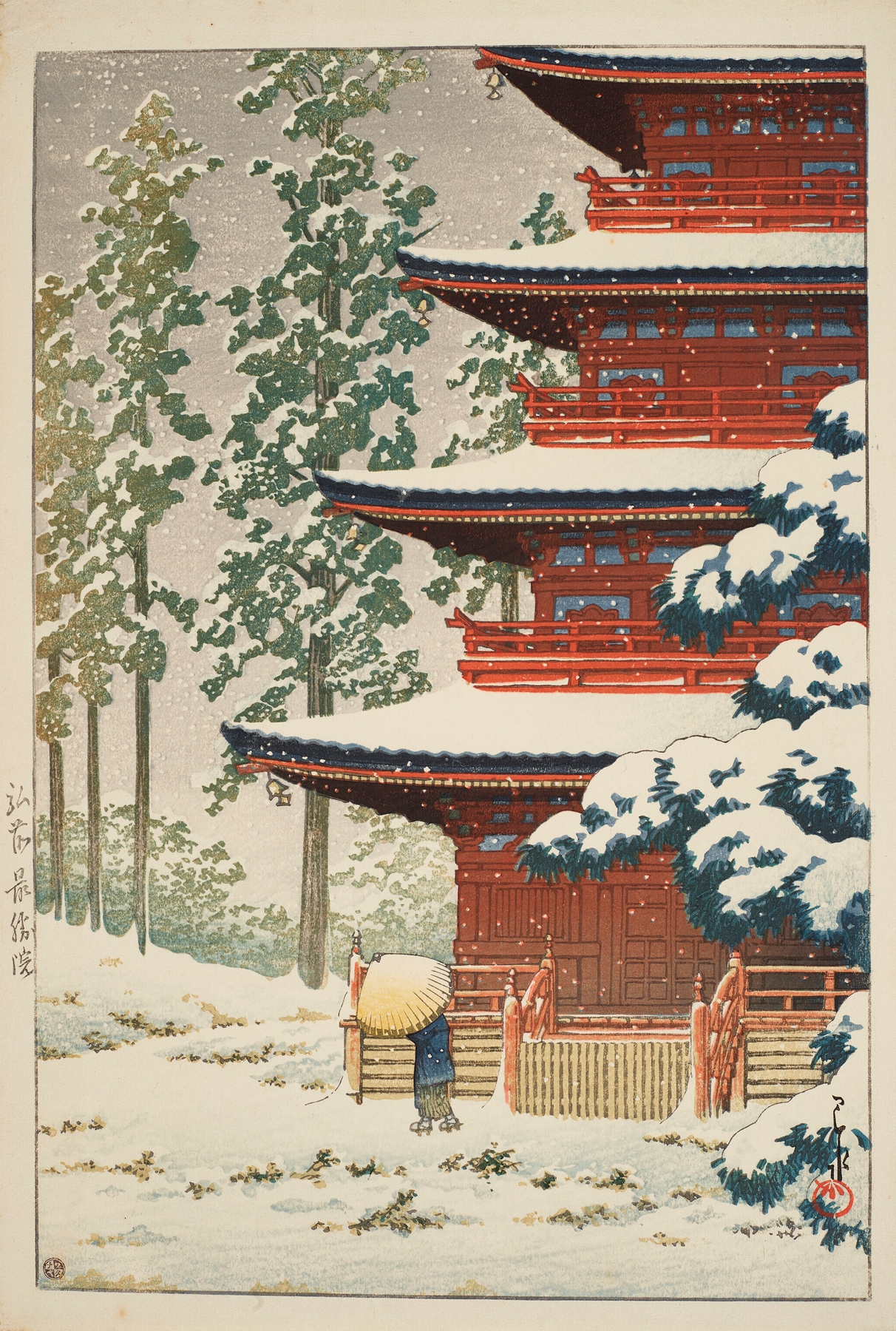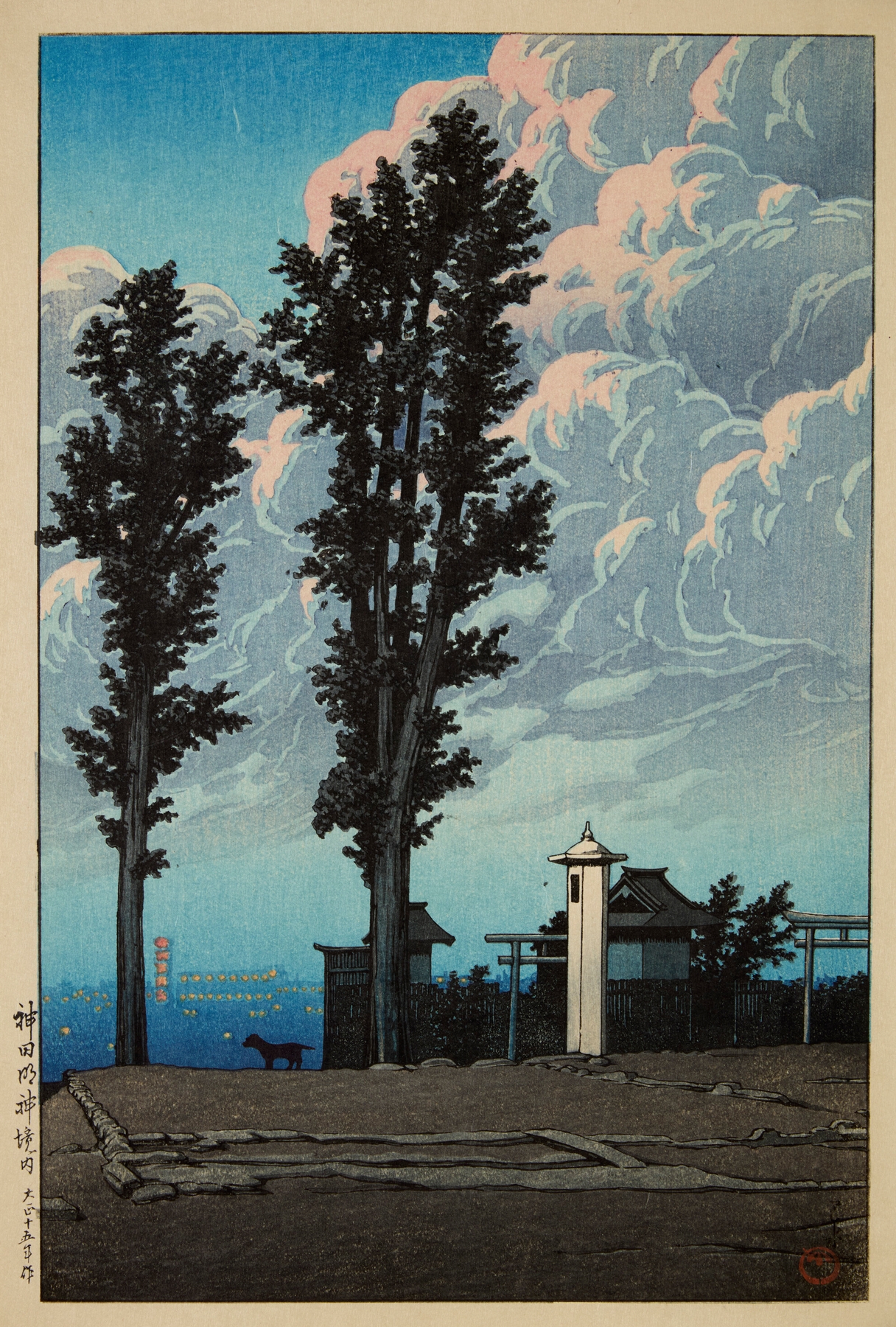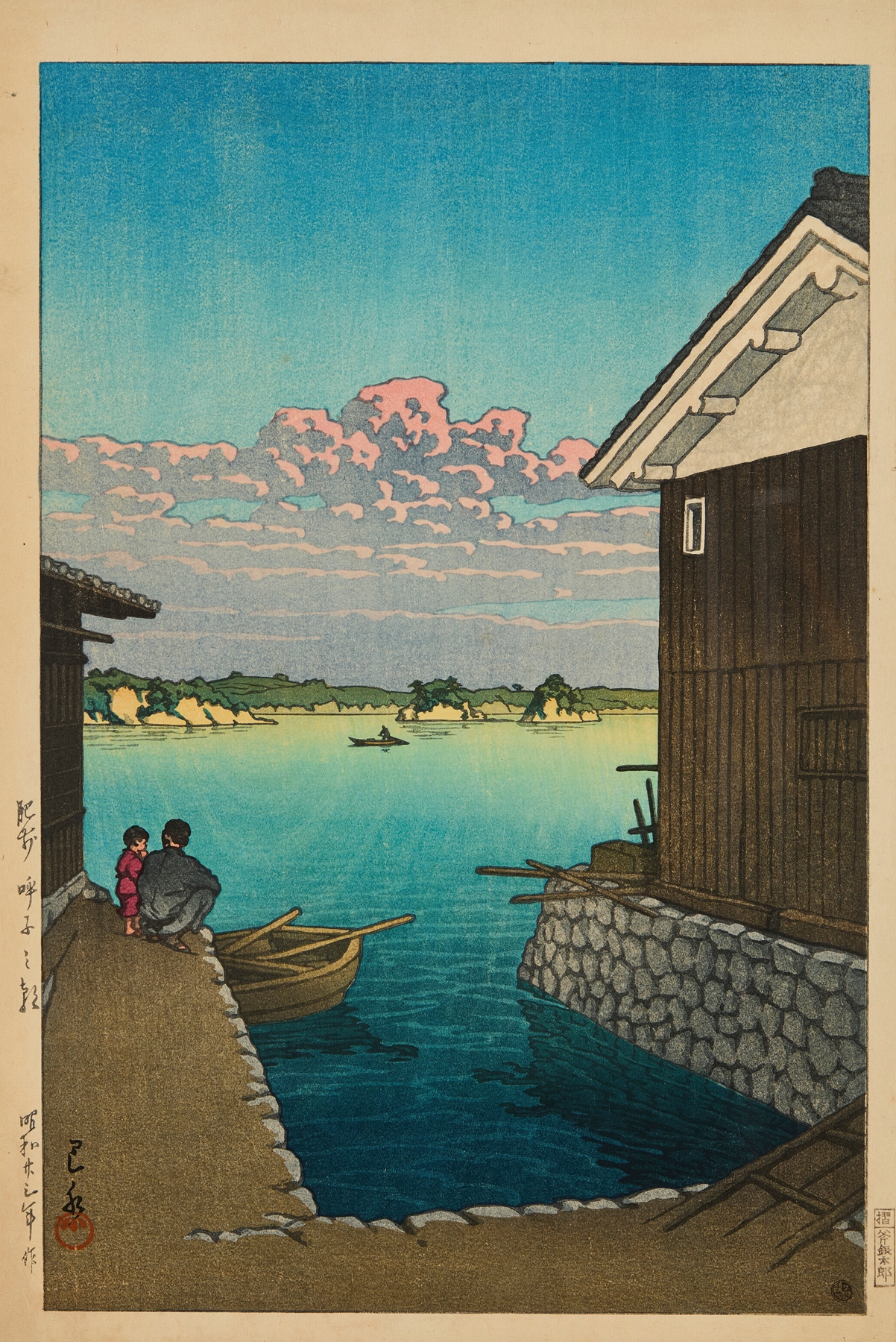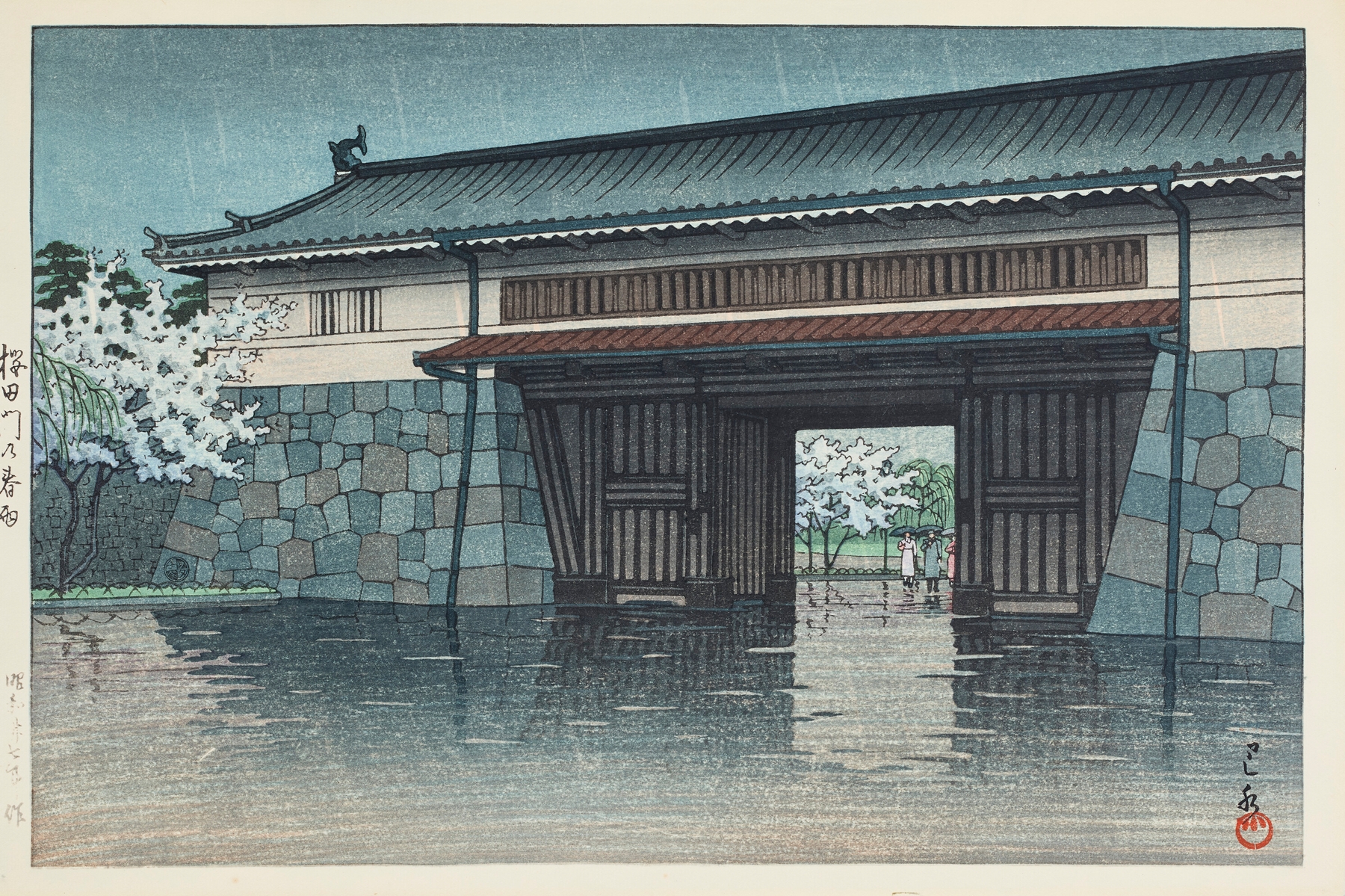
Can beauty exist without sorrow? In *Spring Rain at Sakurada Gate*, one feels a delicate yearning that lingers like the faint patter of rain on ancient stone. First, look closely at the soft hues that envelop the scene. The palette is dominated by muted blues and grays, setting a tranquil yet contemplative mood. Notice how the rain blurs the outlines of the gate and surrounding trees, creating a sense of intimacy within the landscape. The composition draws your gaze towards the intricate wooden structure, emphasizing its weathered beauty against the ephemeral backdrop that shifts with each droplet. The contrast in this piece is stark yet subtle; the solidity of the gate juxtaposes the fleeting nature of the rain, suggesting the transient quality of both beauty and time. The soft reflections on the wet pavement hint at a deeper layer of emotion, where the vibrant energy of life seems momentarily suspended. This duality evokes a bittersweet feeling, as if the viewer is invited to ponder the impermanence of moments that both comfort and ache. Kawase Hasui painted this piece in 1952, during a period of post-war Japan, as the nation began to grapple with its identity amid modernization. His works often reflect a deep reverence for traditional landscapes, and this painting exemplifies his mastery in capturing the quiet harmony between nature and architecture. At this time, Hasui was celebrated for his woodblock prints, which blended the old with the new, making him a significant figure in the Shin-hanga movement.