Schönbrunn, Neptunsbrunnen — History & Analysis
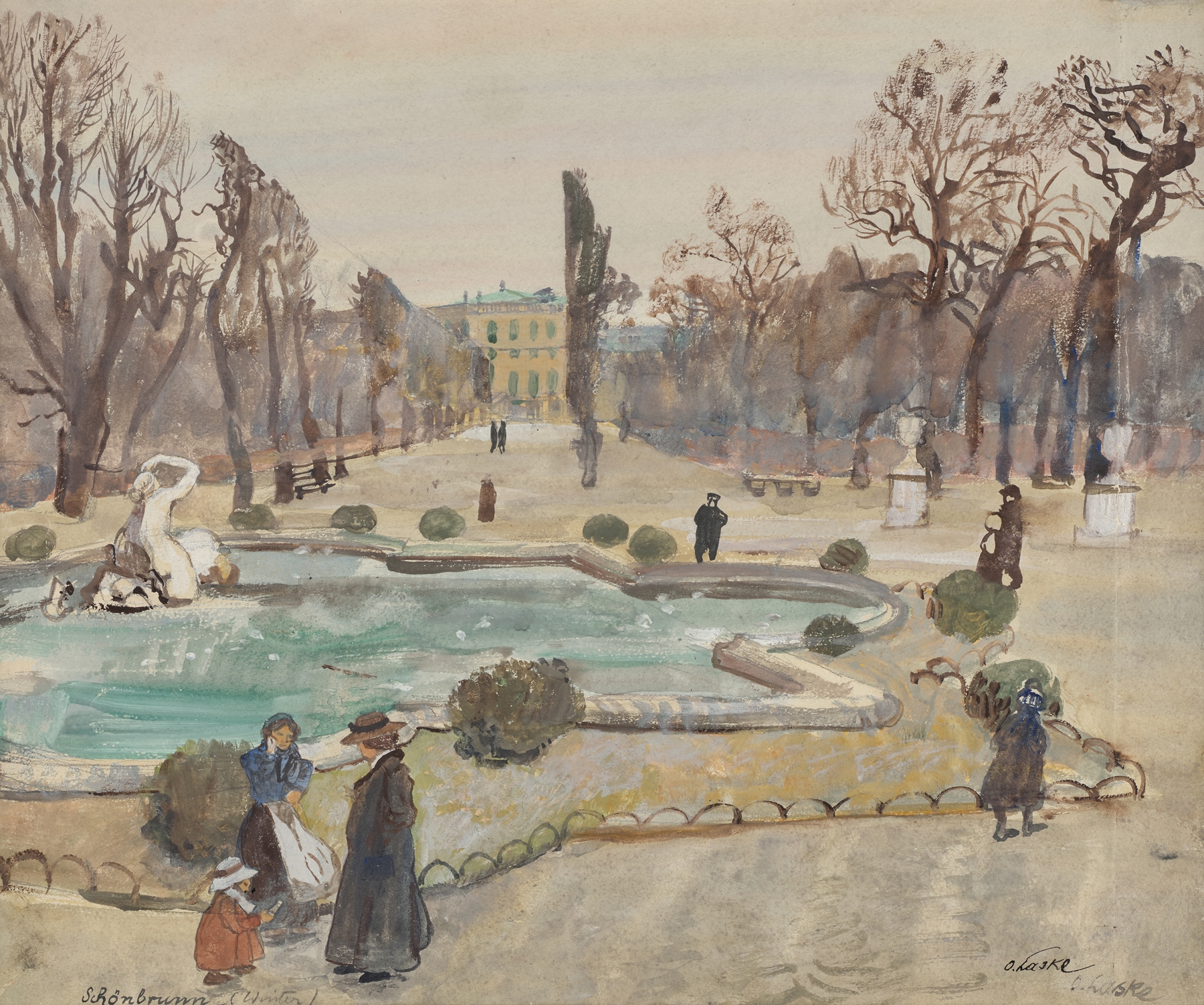
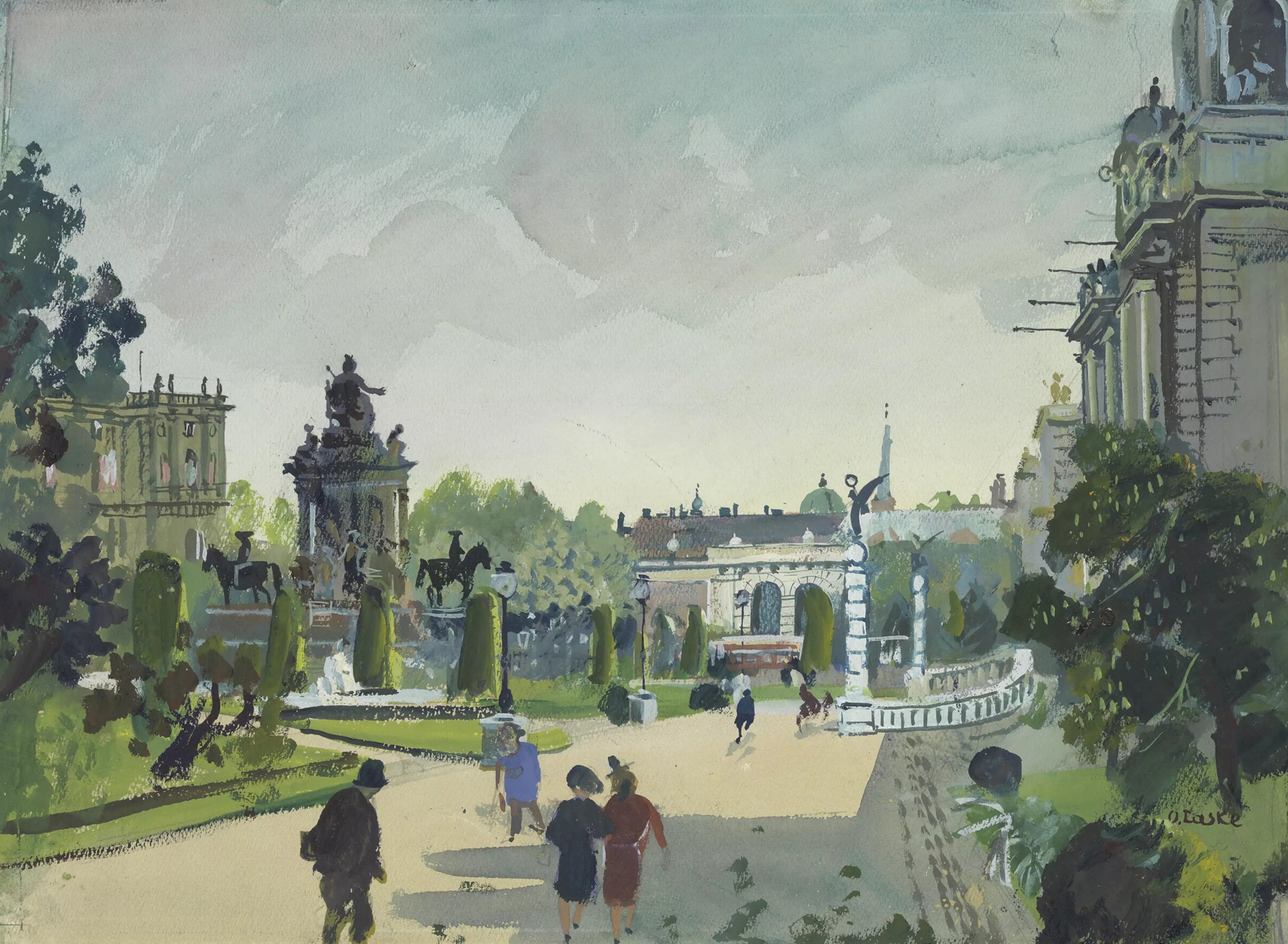
Could beauty survive in a century of chaos? In Schönbrunn, Neptunsbrunnen, Oskar Laske encapsulates the delicate interplay between nature’s elegance and the inevitable decay that shadows it. This painting invites contemplation on the resilience of beauty amidst decay, drawing viewers into a moment that feels simultaneously serene and poignant. Look to the center where the Neptune fountain commands attention, its intricate carvings exquisitely rendered in soft, muted tones. The water cascades down in gentle waves, catching the light just right to create a shimmering effect that dances across the surface.
Notice how the surrounding foliage, lush and vibrant, almost embraces this focal point, offering a stark contrast to the hints of wear evident in the stonework. The composition balances these elements masterfully, inviting the eye to wander while anchoring it with the fountain's dignified presence. As you explore the painting, consider how the weathered stone subtly suggests a narrative of time and history, hinting at the passage of glory to a state of decline. The juxtaposition of the vibrant vegetation against the decaying architecture conveys a bittersweet tension, evoking feelings of nostalgia and loss.
This interplay between life and decay serves as a reminder of nature's endurance, even in the shadow of human constructs that inevitably fade. Laske created this work in 1930, during a period marked by upheaval in Europe, as the world was grappling with the aftermath of World War I and the rise of political tensions. Residing in Vienna, he was part of a vibrant artistic community that sought to capture both the beauty and turmoil of their time. This painting reflects not only his artistic vision but also a broader commentary on the fragility and resilience of beauty in a world increasingly overshadowed by chaos.