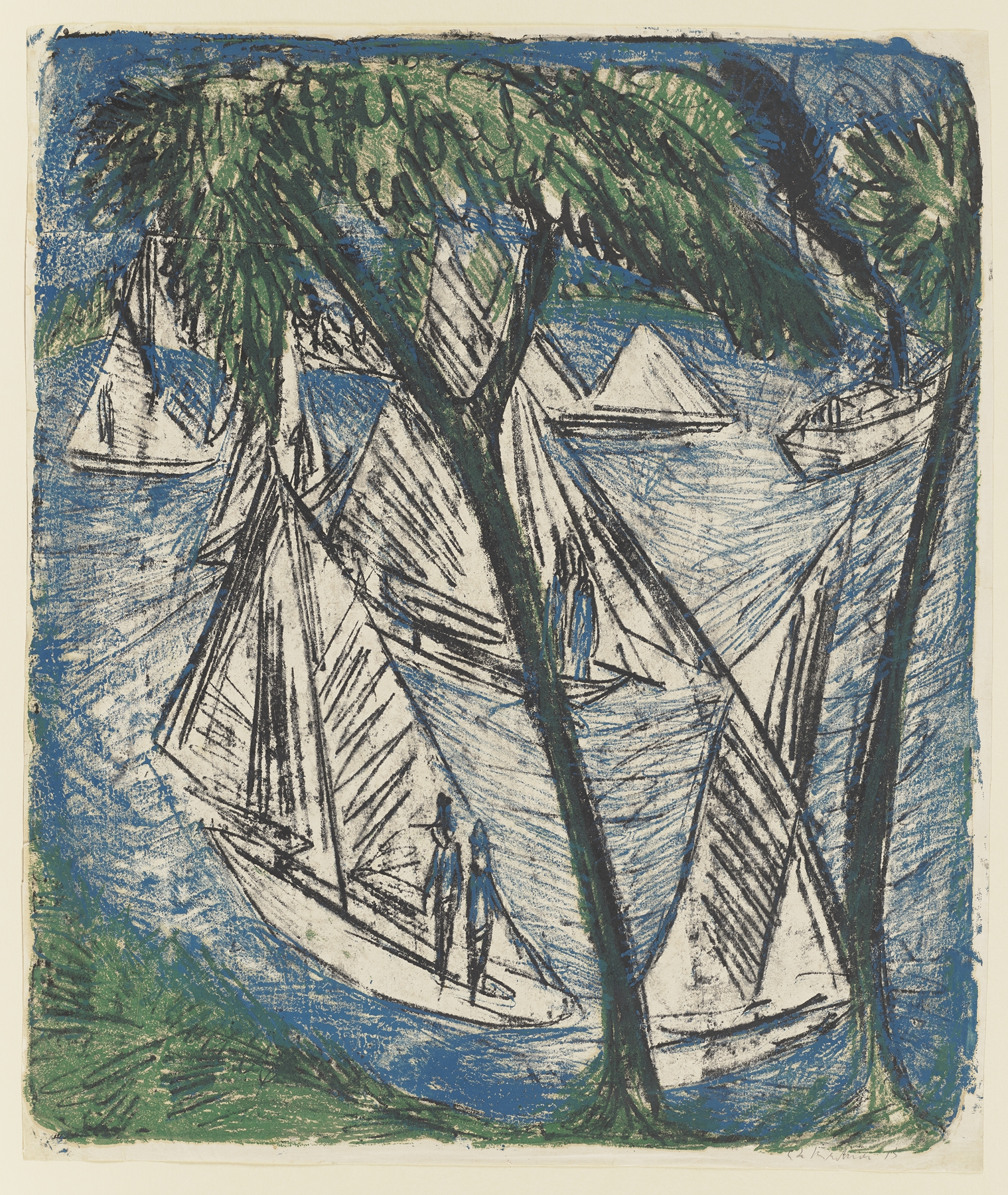
Segelboote bei Grünau — History & Analysis
Can paint confess what words never could? In Segelboote bei Grünau, the vibrant hues painted by Ernst Ludwig Kirchner evoke a profound sense of decay intertwined with the beauty of fleeting moments. Focus first on the bold, angular strokes that define the sails of the boats, commanding attention with their dynamic movement against the placid water. Look to the lush greens and blues that envelop the scene, where the reflections shimmer with an almost surreal quality.
This juxtaposition of vigorous brushwork and calm waters creates a tension that seems to oscillate between vitality and stillness, revealing Kirchner’s mastery of color and form. Delve deeper into the rich layers of meaning: the boats, sturdy yet vulnerable, symbolize the fragility of existence, set against an idyllic backdrop that hints at an impending loss. The contrasting elements of serenity in nature and the restless energy of human life mirror the artist's own internal struggles. As you examine the details, notice how the untouched areas of canvas evoke a sense of absence, suggesting that even in beauty, decay lurks just beneath the surface.
In 1913, Kirchner painted this work in Germany, during a period marked by rapid societal change and personal turmoil. The artist was part of the expressionist movement, seeking to break free from traditional forms and capture raw emotion. As he grappled with his own mental health and the shifting tides of culture, Segelboote bei Grünau emerged as a vivid testament to both the fragility of life and the unrelenting passage of time.