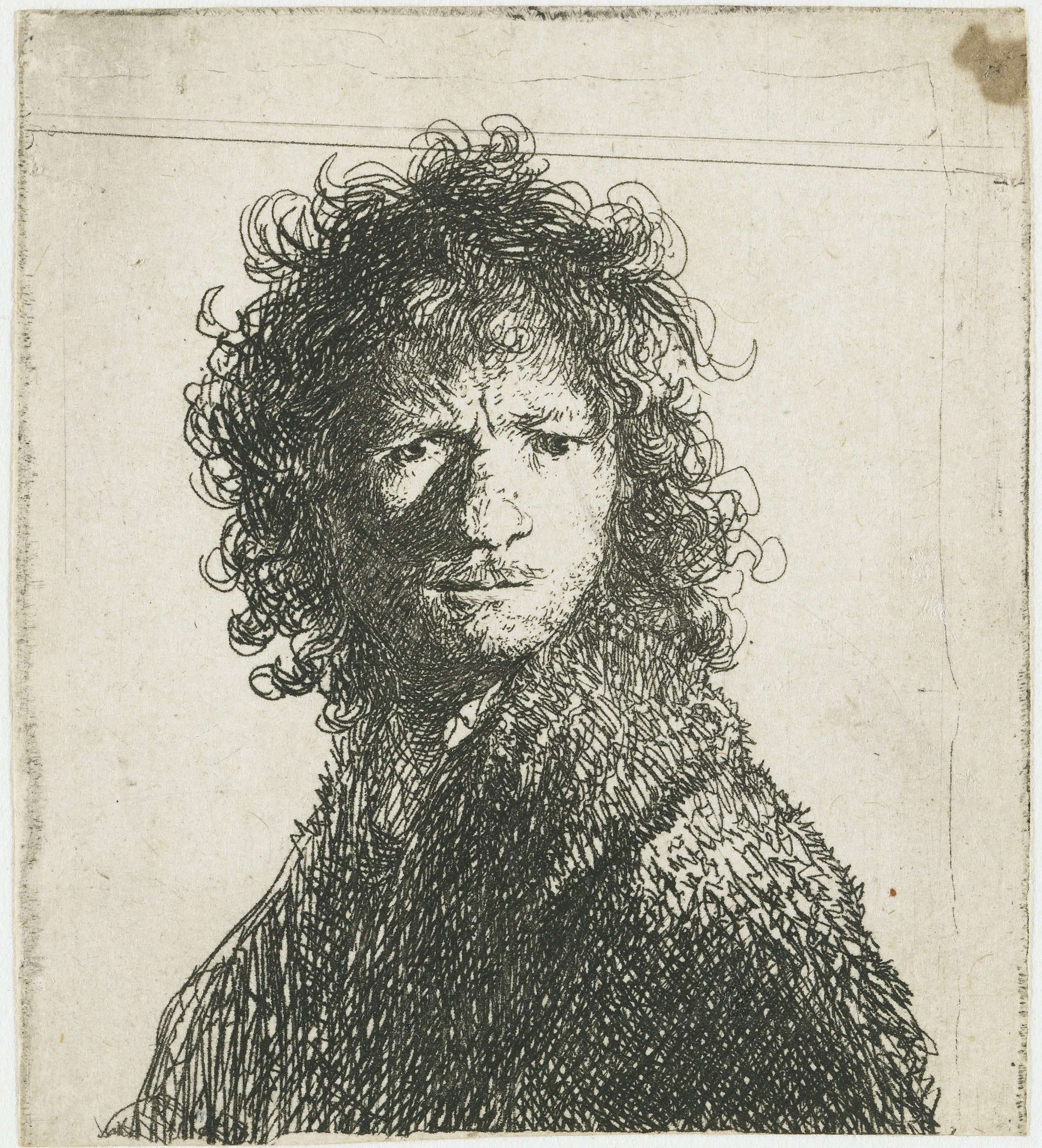
Self-portrait, frowning: bust — History & Analysis
What if beauty was never meant to be finished? In the raw honesty of a frown, one finds the weight of existence and the inevitability of mortality, captured in a moment that speaks to our shared human condition. Focus on the deep shadows that cradle the contours of the face, leading your gaze to the furrowed brow and piercing eyes. Notice how the light illuminates the skin, revealing textures that tell tales of experience and introspection.
The somber palette, rich in earthy tones, emphasizes a sense of gravitas, while the delicate brushwork brings forth an immediacy, inviting you to connect with the artist's inner turmoil. As you linger, consider the frown—a manifestation of introspection and the complexity of human emotion. This self-portrait resonates with the contrasts of vulnerability and strength, evoking a profound empathy for the artist. The tension between beauty and imperfection reflects the fleeting nature of life, reminding us of the inevitability of decay and the depth of thought that accompanies existence.
In the early 1630s, Rembrandt was still establishing his voice in the bustling art scene of Amsterdam, navigating his early career with ambition and uncertainty. His exploration of self-identity through portraiture marked a pivotal moment in his development as an artist, mirroring the broader shift in the representation of individuality in art. This period laid the groundwork for his masterful ability to convey psychological depth, a hallmark that would define his legacy.