Self-portrait in a velvet cap with plume — History & Analysis
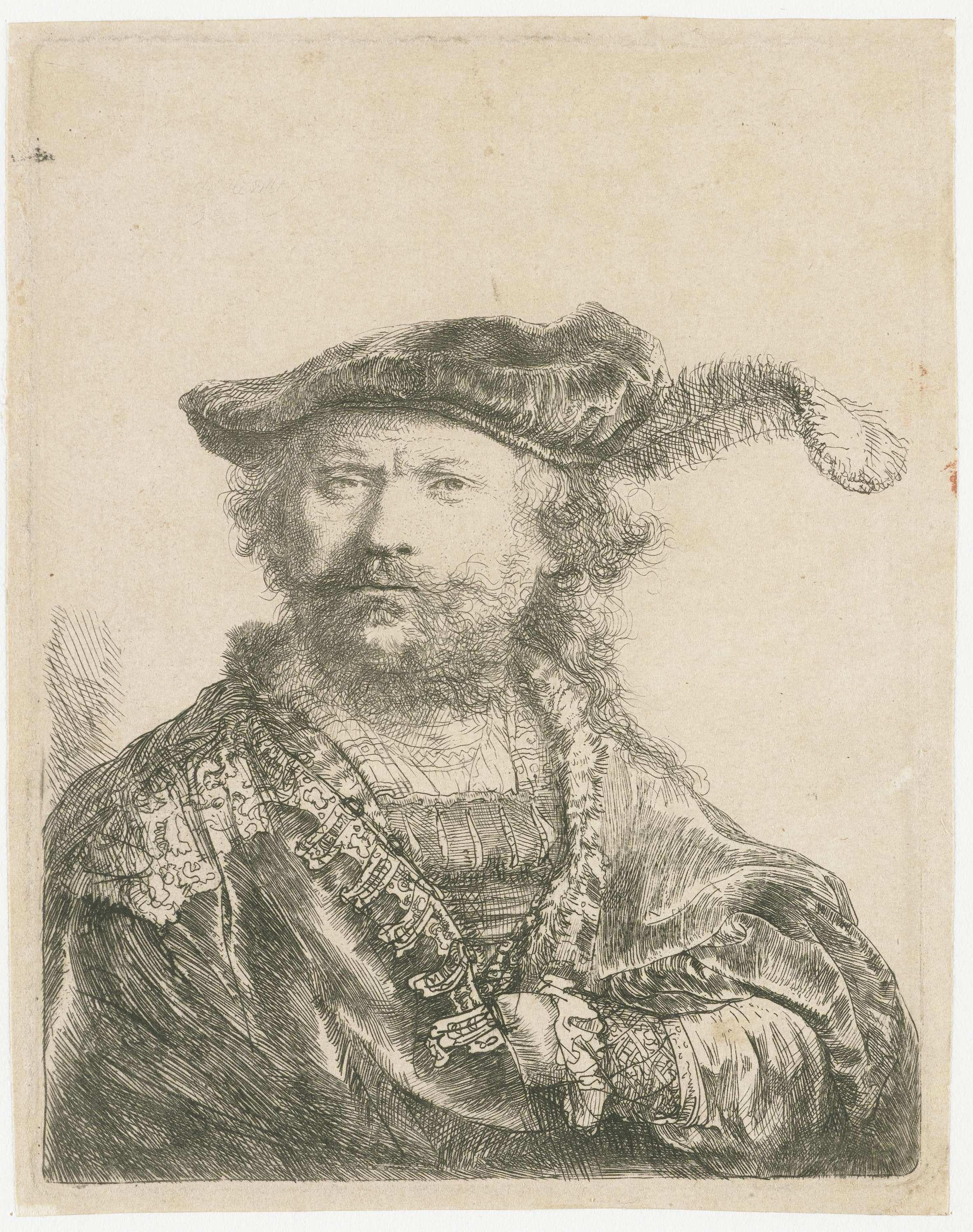
“Sometimes beauty is just pain, disguised in gold.” In Rembrandt van Rijn’s Self-portrait in a velvet cap with plume, the viewer is confronted with a face that captures a lifetime of introspection and the relentless passage of time. A striking interplay of vulnerability and strength, the painting invites contemplation on mortality and the human condition. Look to the left at the rich, dark fabric of the velvet cap, its textures almost tangible against the smoothness of the skin. Focus on the pronounced play of light and shadow across his face; the soft illumination reveals aged lines and a gaze steeped in wisdom.
The muted palette contrasts with the vibrancy of the plume—a bold symbol of pride nestled atop his head, inviting the eye to wander between opulence and decay, jest and sincerity. Beneath the surface, this self-portrait serves as a poignant reminder of the artist's mortality. The plume, while decorative, stands as an ephemeral emblem of glory, juxtaposing fleeting beauty against the permanence of aging. Each brushstroke evokes an emotional depth that resonates with the viewer’s own contemplation of life’s fragility, suggesting that even in moments of apparent triumph, there lies an undercurrent of sorrow.
In 1638, Rembrandt worked amidst the thriving artistic scene of Amsterdam, a city enveloped in the wealth and innovation of the Dutch Golden Age. By this time, he had achieved considerable fame, yet he was also navigating personal challenges, including financial instability and the loss of loved ones. Within this context, the self-portrait encapsulates both his mastery of technique and his profound understanding of the human experience, offering a glimpse into the soul of an artist grappling with the dualities of life.