Self-portrait in a velvet cap with plume — History & Analysis
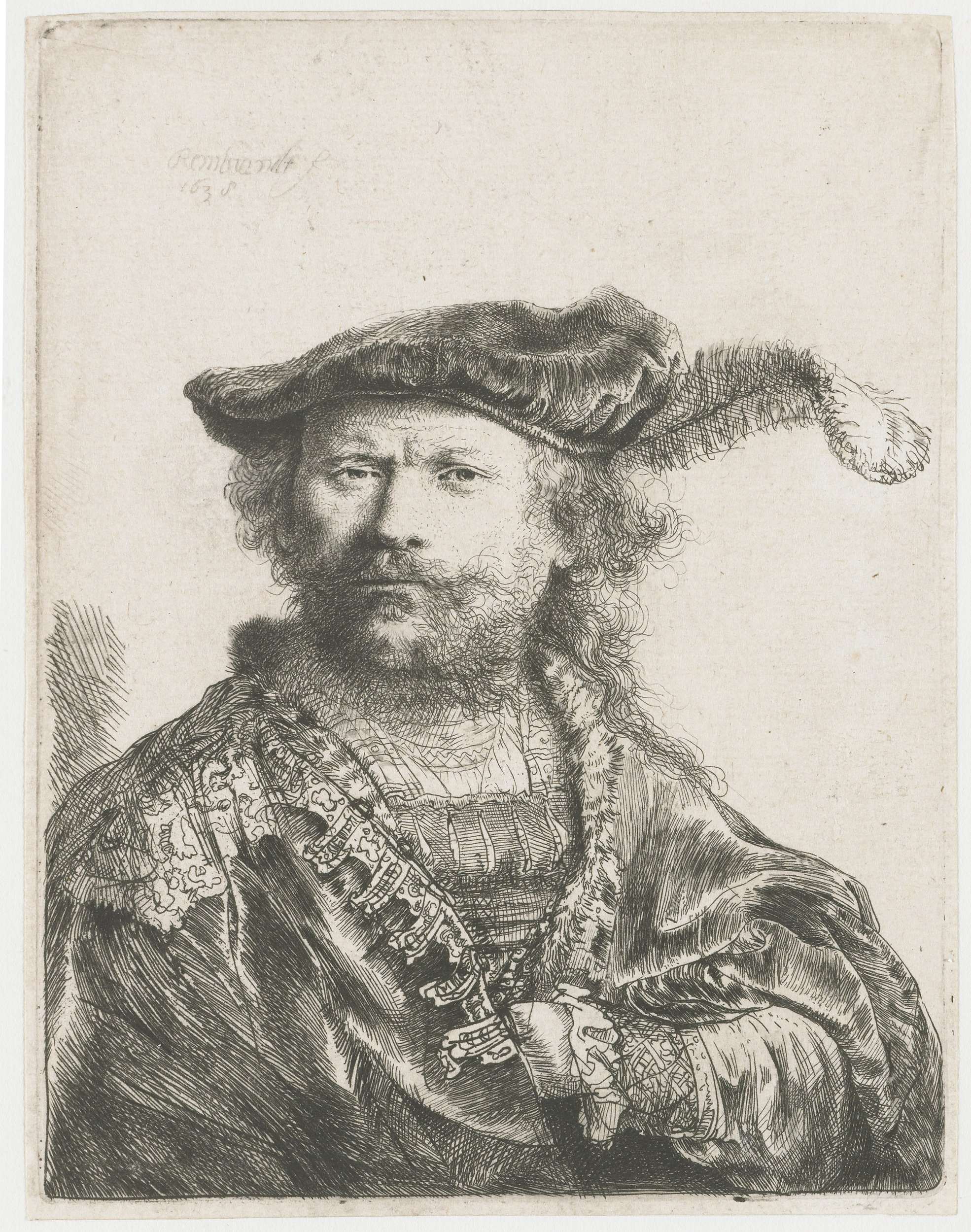
When did color learn to lie? In the depths of Rembrandt's Self-portrait in a velvet cap with plume, the answer hangs heavy, as the hues of flesh and fabric carry stories of both vulnerability and resilience. Look to the center, where the artist’s gaze draws you in with an intensity that feels alive. Notice how the light falls upon the velvet cap, its rich dark tones contrasting with the warm, earthy palette of his skin. The brushstrokes are deliberate yet fluid, capturing the subtle textures of fabric and the softness of the face.
The plume, arching gracefully, becomes a visual metaphor for aspiration, yet it is anchored by the gravity of the expression, revealing layers of contemplation and self-assessment. Hidden beneath the surface are tensions of identity and mortality. The softness of his skin hints at youth, while the shadows carve lines of experience and struggle. There’s a palpable dialogue between the sumptuous material of his attire and the stark honesty of his visage, a juxtaposition that speaks of societal expectations clashing with personal reality.
The painting confronts the viewer with the understanding that every façade conceals a narrative—one that may be laced with violence, both externally and within. In 1638, Rembrandt created this work during a transformative period in the Dutch Golden Age, as he was establishing his reputation as a master painter. Living in Amsterdam, he was deeply engaged in the vibrant art scene, yet personally grappling with turbulent changes. This self-portrait captures not only his growing mastery but also hints at the emotional complexities of his life, reflecting a moment suspended between ambition and introspection.