Shinnecock Hills — History & Analysis

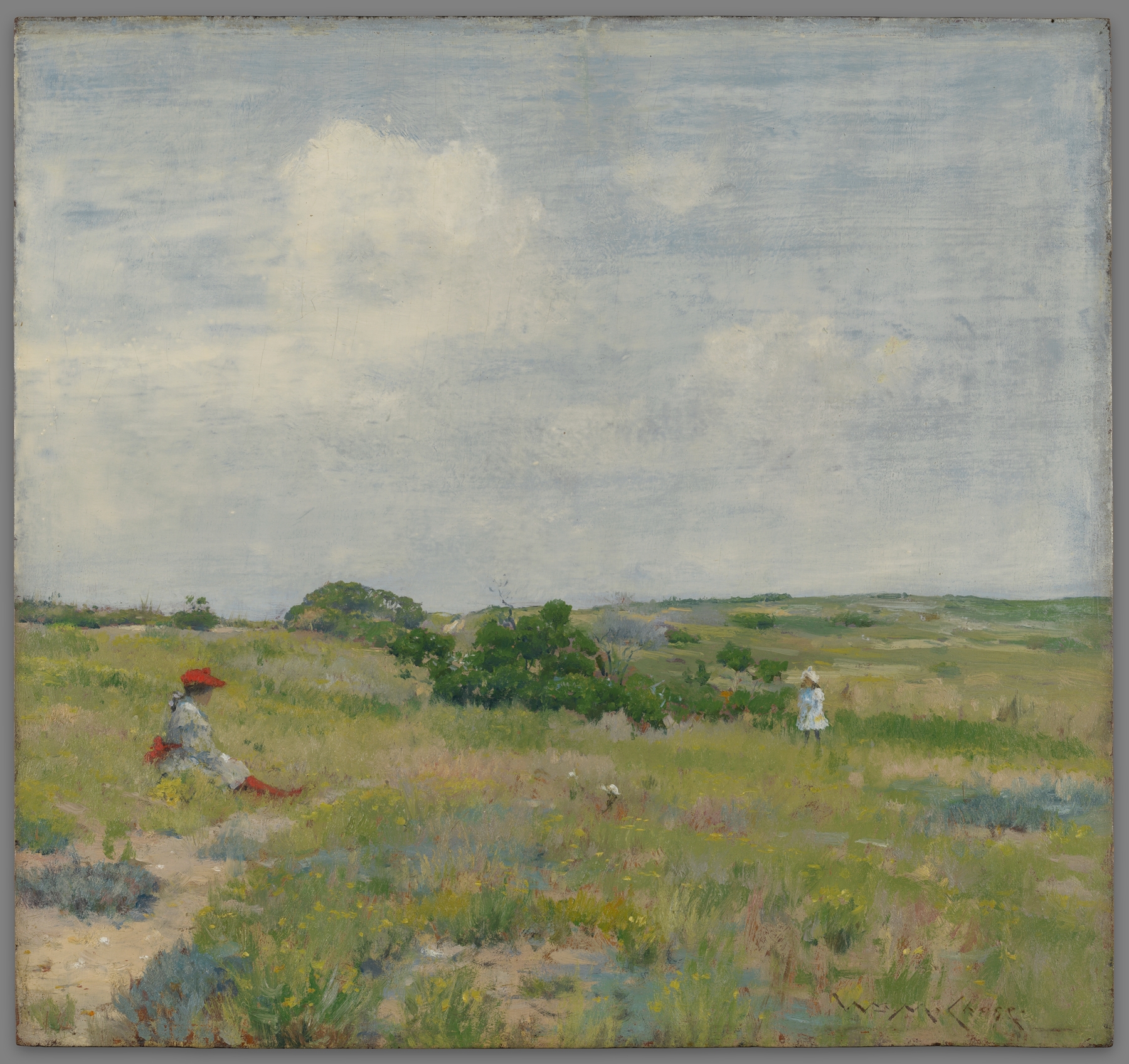
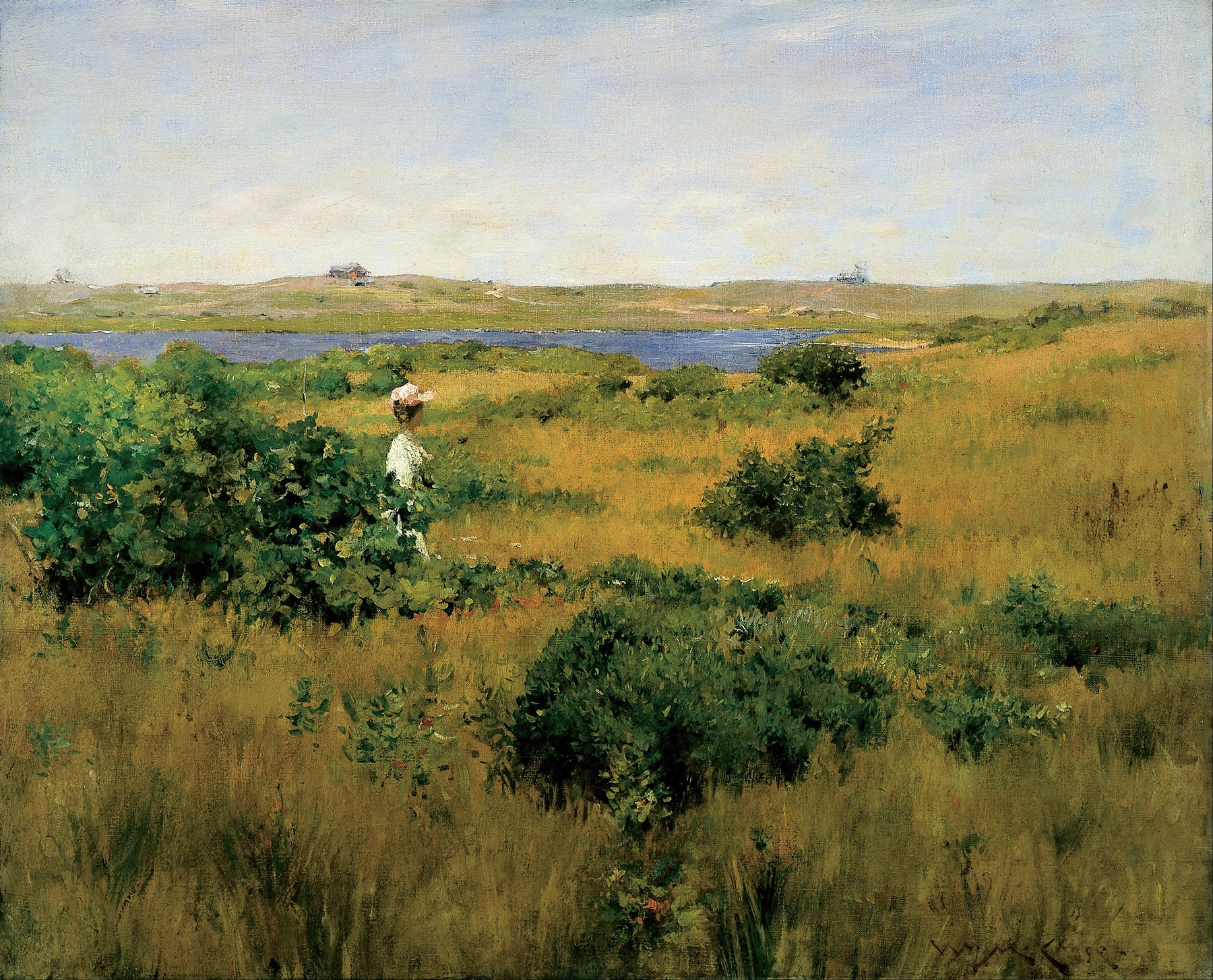
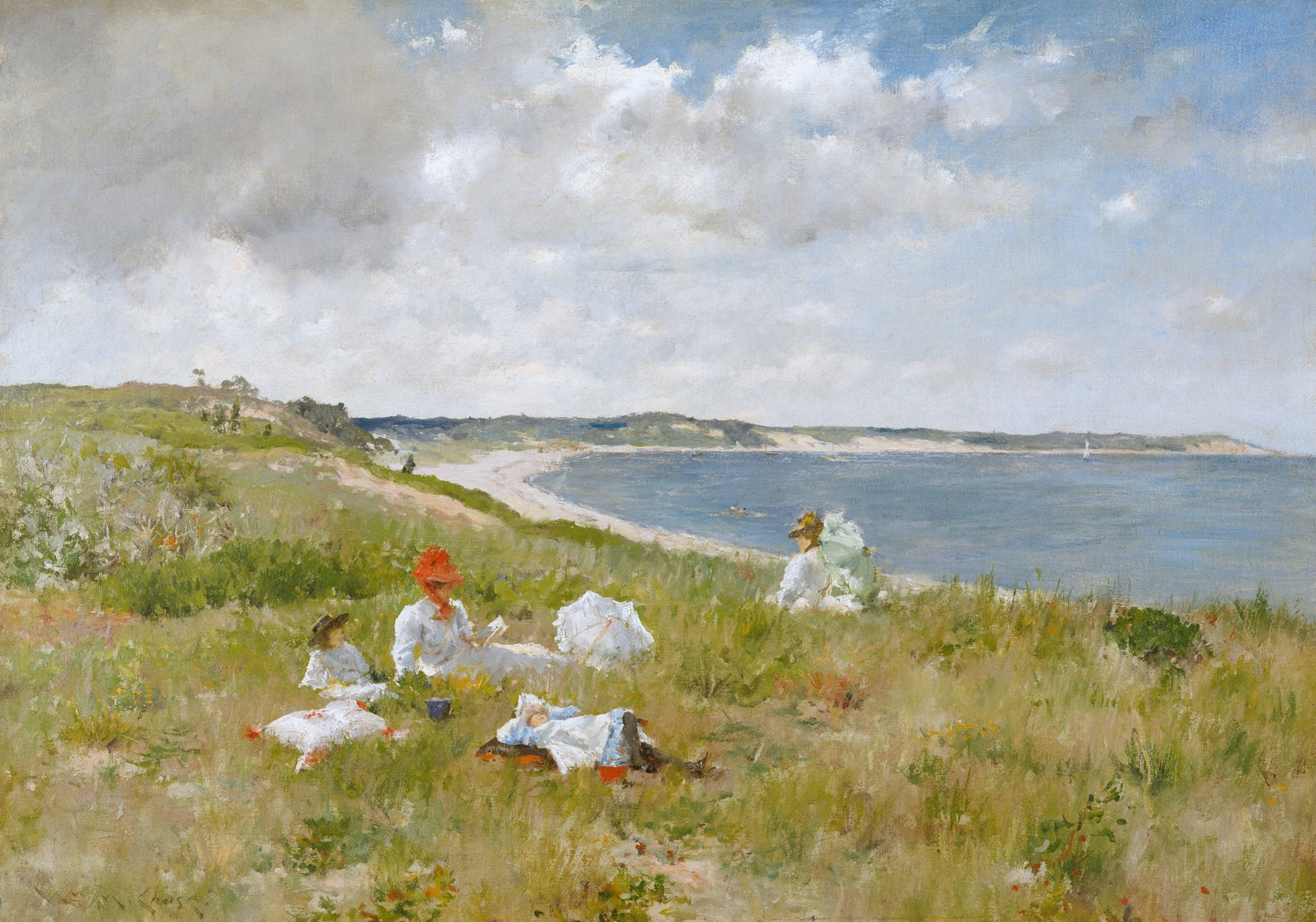
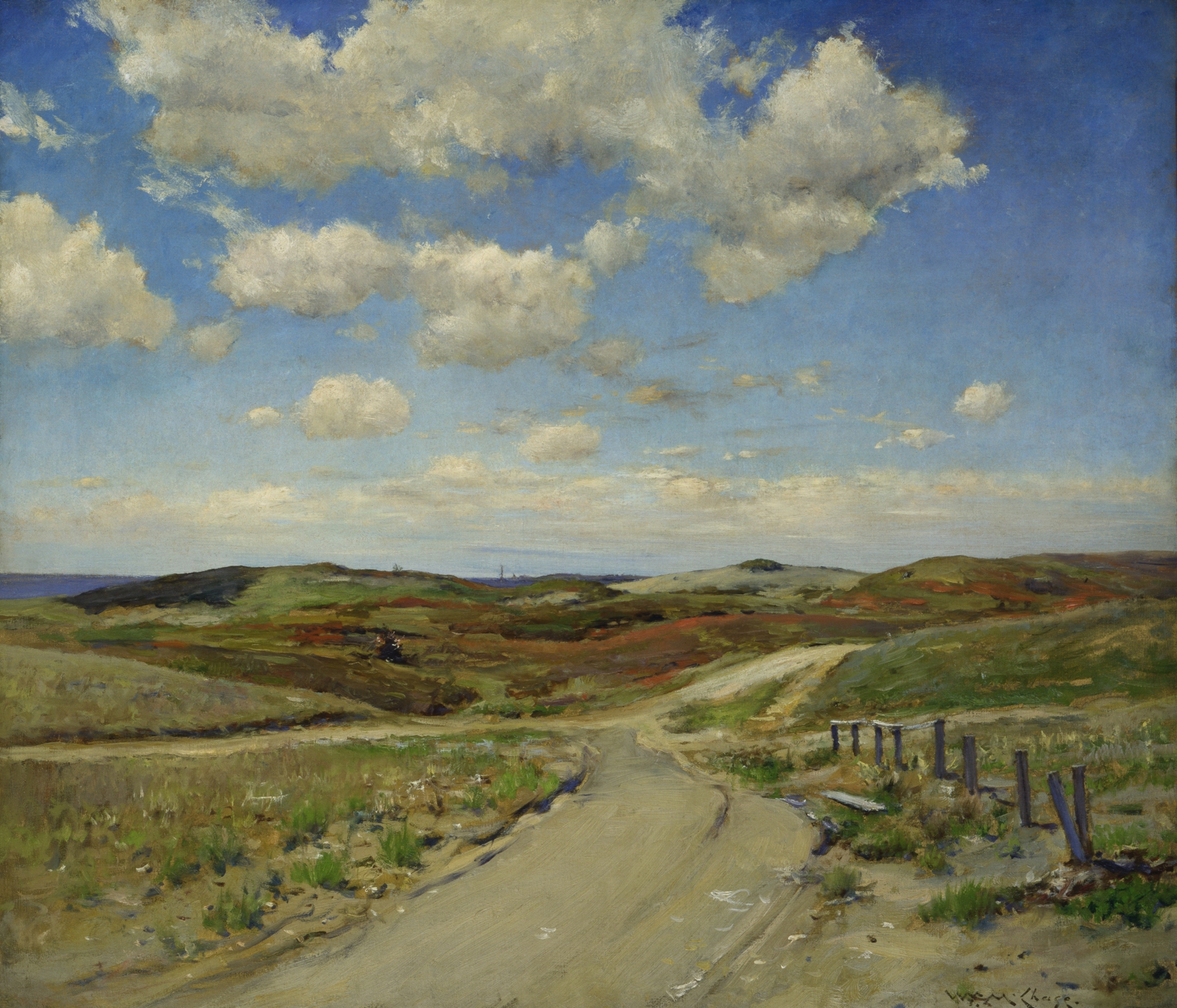
Who listens when art speaks of silence? In Shinnecock Hills, the landscape whispers stories of hope, inviting the viewer to commune with the serene beauty of nature. Look to the left at the gentle slope of the hills, painted in lush greens that blend seamlessly with the vibrant blue sky. Notice how the soft brushstrokes create a sense of movement, as if the grass sways in a tender breeze. The golden light of late afternoon washes over the scene, illuminating the distant horizon and lending a warm glow to the tranquil setting.
The composition draws the eye inward, revealing a harmonious balance between earth and sky. Delve deeper and you'll discover the emotional tensions at play. The solitary figure, small and almost lost against the vast landscape, evokes a sense of introspection and solitude. This contrast between the individual and the grandeur of nature suggests a profound relationship between human experience and the natural world.
The interplay of light and shadow further enhances this theme, hinting at the cyclical nature of hope and renewal as day gives way to night. In 1895, the artist captured this scene in the idyllic Shinnecock Hills of New York, a location beloved by Impressionists for its light and color. At this time, Chase was exploring plein air painting, seeking to convey the immediacy of nature's beauty. The art world was shifting, embracing new techniques and ideas, and this painting reflects that pivotal moment in his career, embodying both personal expression and artistic innovation.