Ship on fire at night — History & Analysis
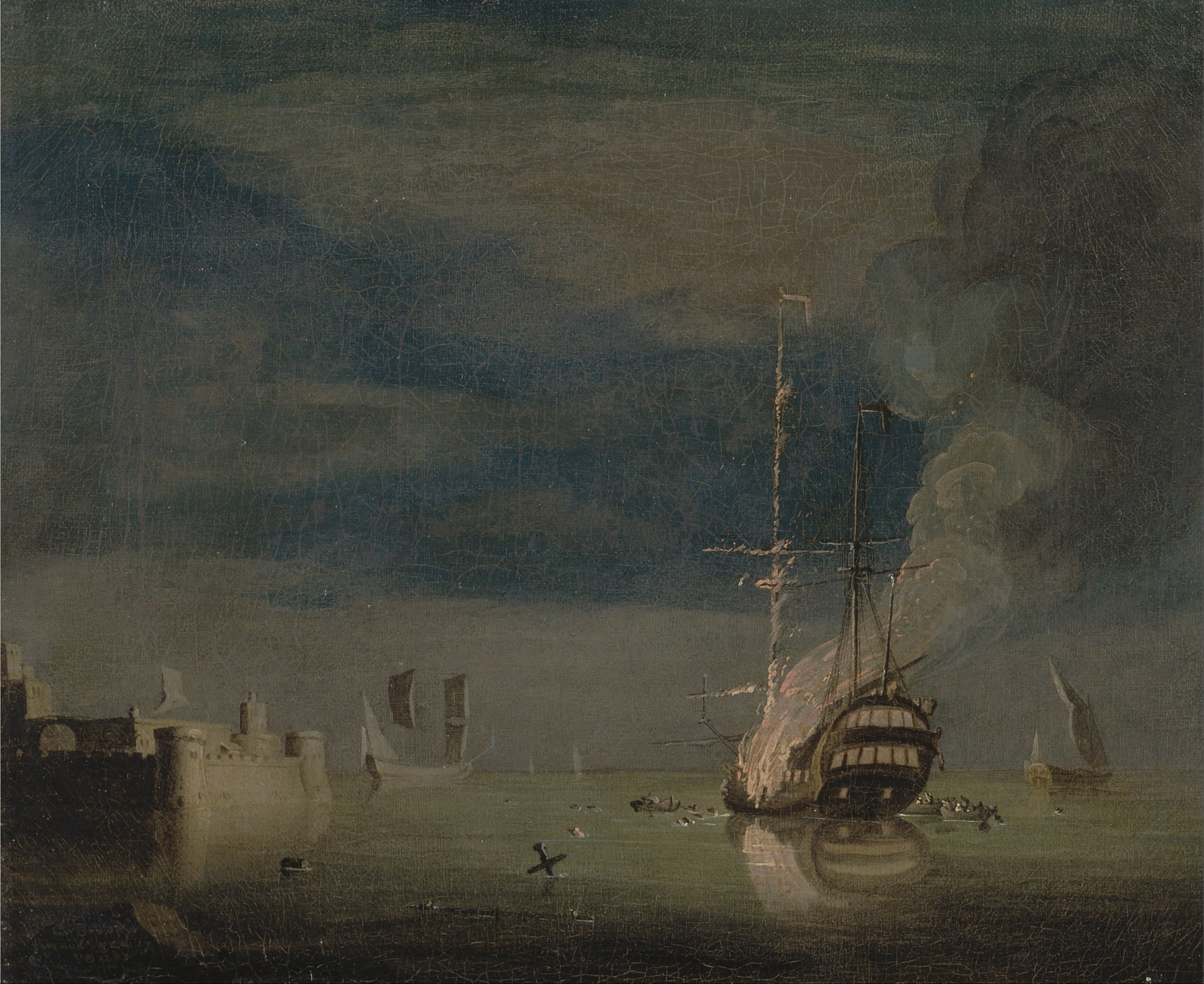
Who listens when art speaks of silence? In Ship on Fire at Night, the haunting glow of flames dances against dark waters, evoking a profound sense of decay. Begin by examining the foreground, where the fire consumes the ship with a mesmerizing, chaotic brilliance. Notice how the brilliant oranges and yellows contrast sharply against the inky blues and blacks of the night sea, creating a dramatic tension that pulls the viewer in.
The ship's silhouette, though ravaged, retains its form, a ghostly reminder of its former glory, while the reflections on the water shimmer like fleeting memories. The artwork encapsulates the duality of destruction and beauty; the fierce flames symbolize both an end and a transformation. Look closely at the way smoke curls into the night sky, whispering of loss yet hinting at rebirth. The contrasts within the color palette mirror life's inevitable decay, inviting reflections on mortality and the ephemeral nature of existence.
This piece urges viewers to confront the darkness, suggesting that even in destruction, there is an unsettling allure. In 1756, Charles Brooking was immersed in an era where maritime art flourished amidst the backdrop of naval conflicts and exploration. Living in England, he was witnessing the effects of the Seven Years' War, which profoundly influenced his artistic voice. Though his work often celebrated naval prowess, this piece diverges into a poignant meditation on loss and the transient nature of both ships and life itself.