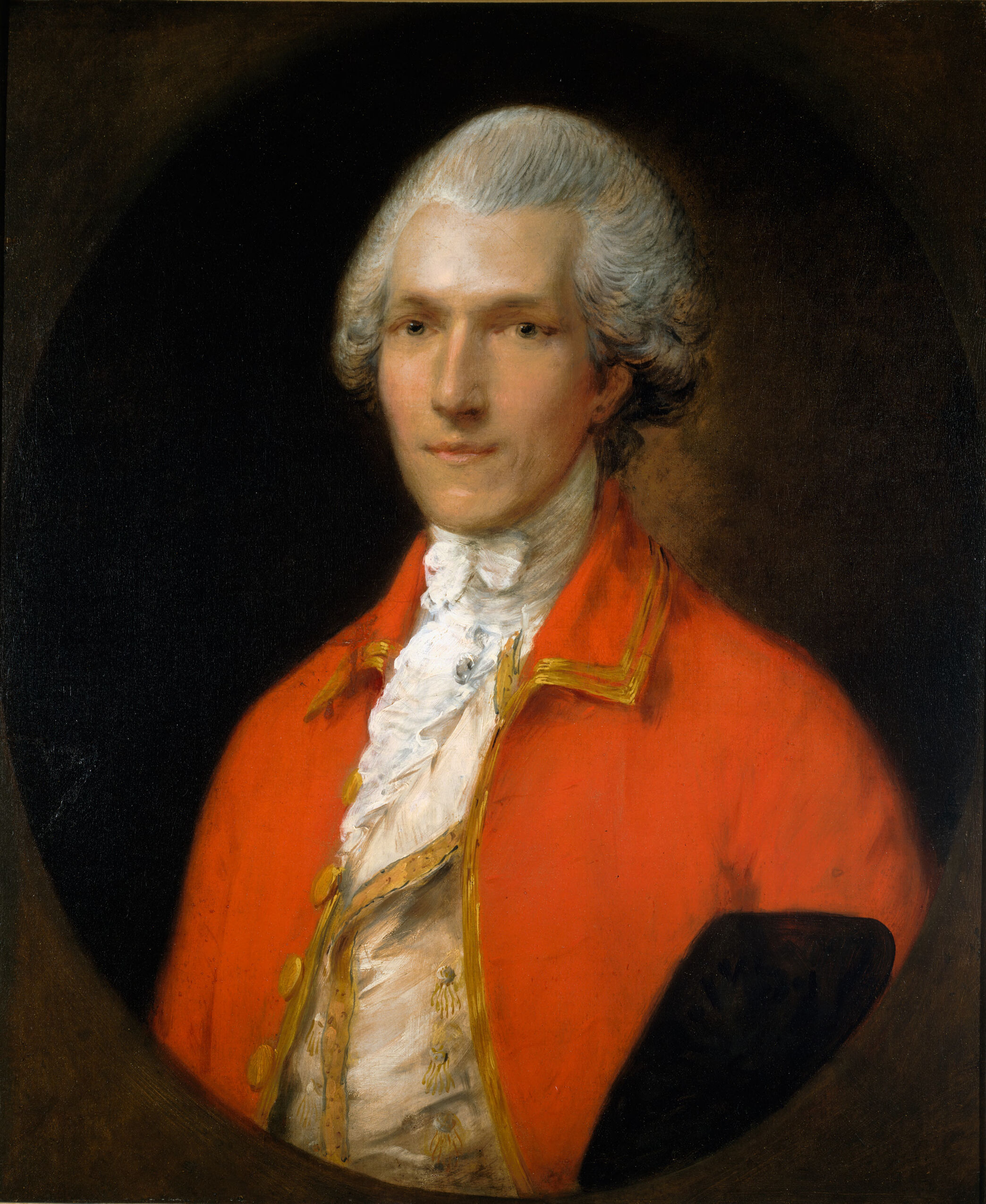
Sir Benjamin Thompson, later Count Rumford (1753-1814) — History & Analysis
“Every silence here is a confession.” In the stillness of Gainsborough’s world, hope lingers in the soft gaze of his subject, a man poised between the weight of history and the promise of the future. The air is thick with unspoken words, as if the canvas itself breathes anticipation, whispering tales of potential and unfulfilled dreams. Look to the left at the subtle play of light that bathes Sir Benjamin Thompson's features, illuminating the contours of his face with a gentle glow. The rich, deep colors of his attire—hues of dark green and brown—contrast against the muted backdrop, grounding him in reality while hinting at his elevated status.
Notice how the brushwork captures the texture of the fabric, each stroke revealing the artist's mastery and intimate understanding of the subject's character. Beneath the surface, there’s an emotional tension woven into the very fabric of this portrait. The slight tilt of his head suggests contemplation, while his direct gaze, both firm and serene, speaks to a life marked by achievement yet burdened by ambition. The interplay of light and shadow not only highlights his features but reflects the duality of his existence—caught between the past and an uncertain future, a beacon of hope amidst the complexities of enlightenment.
In 1783, Gainsborough painted this work during a period of personal turmoil, as his health was deteriorating and his career faced challenges. Yet, the art world was evolving, embracing new ideas about individuality and the human experience, aligning perfectly with Thompson's own journey as a pioneering scientist and statesman. This portrait captures not just a man but an era on the cusp of change, a moment where hope and innovation intertwine.