Skaters on a frozen river — History & Analysis
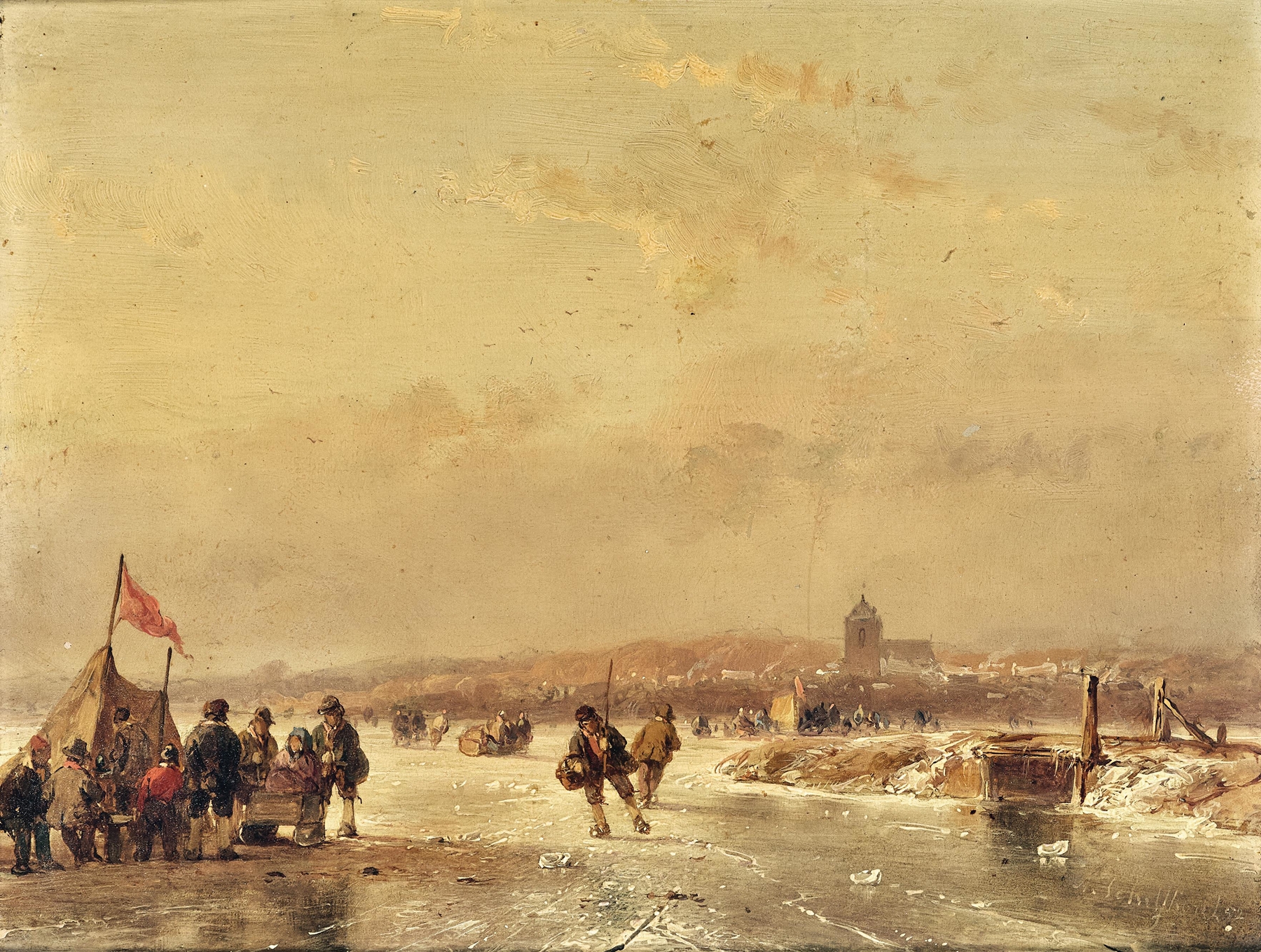
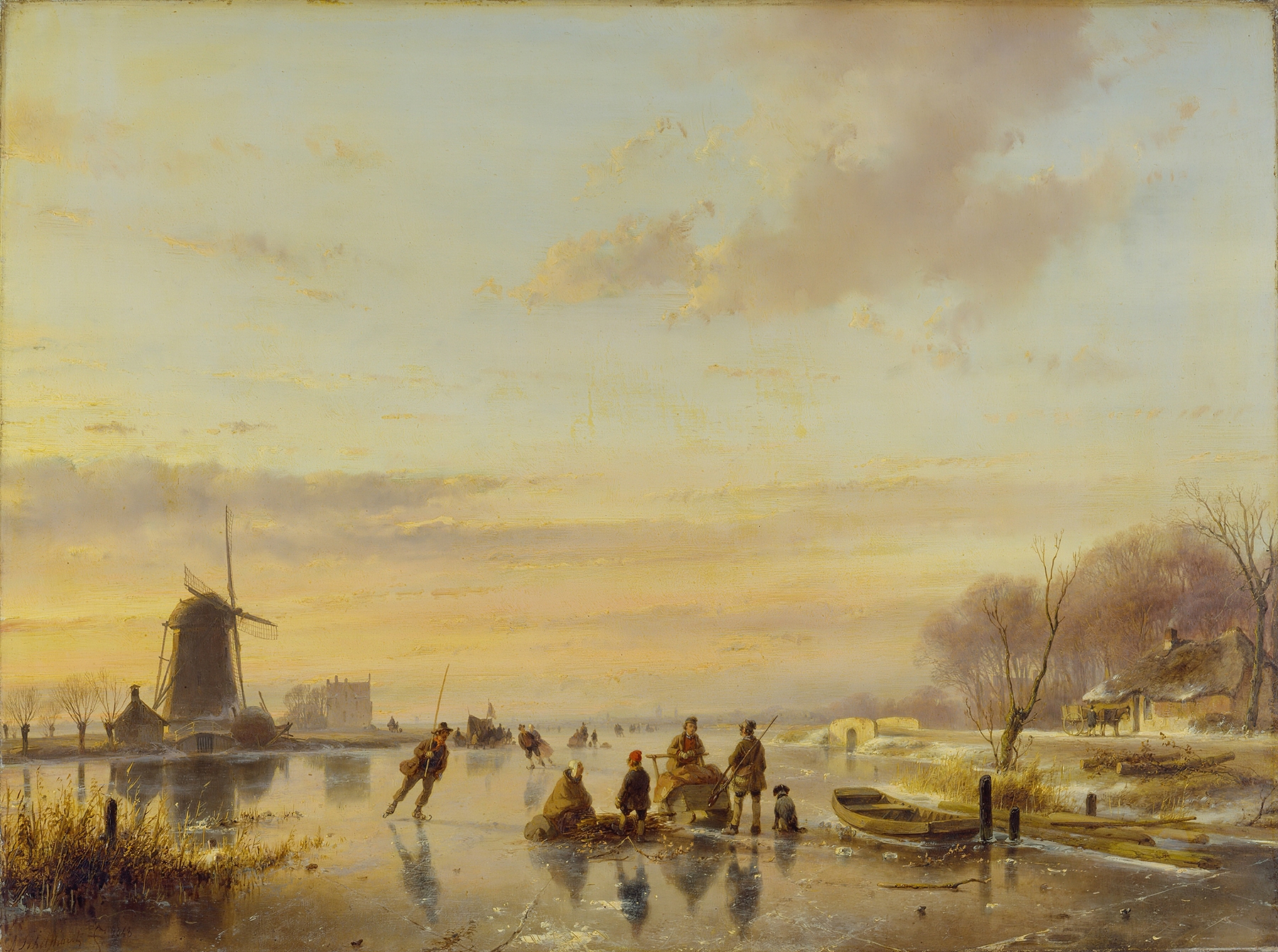
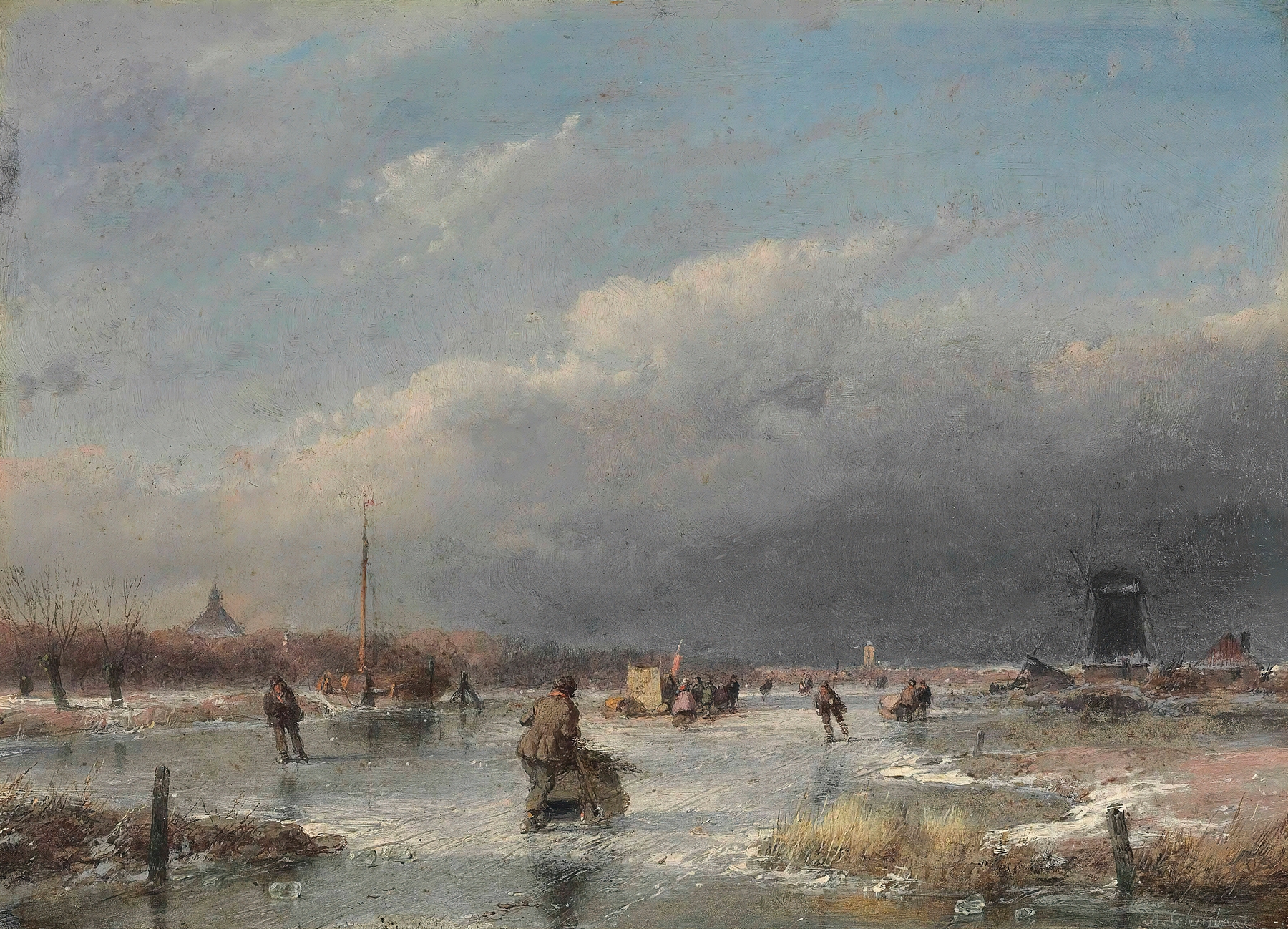
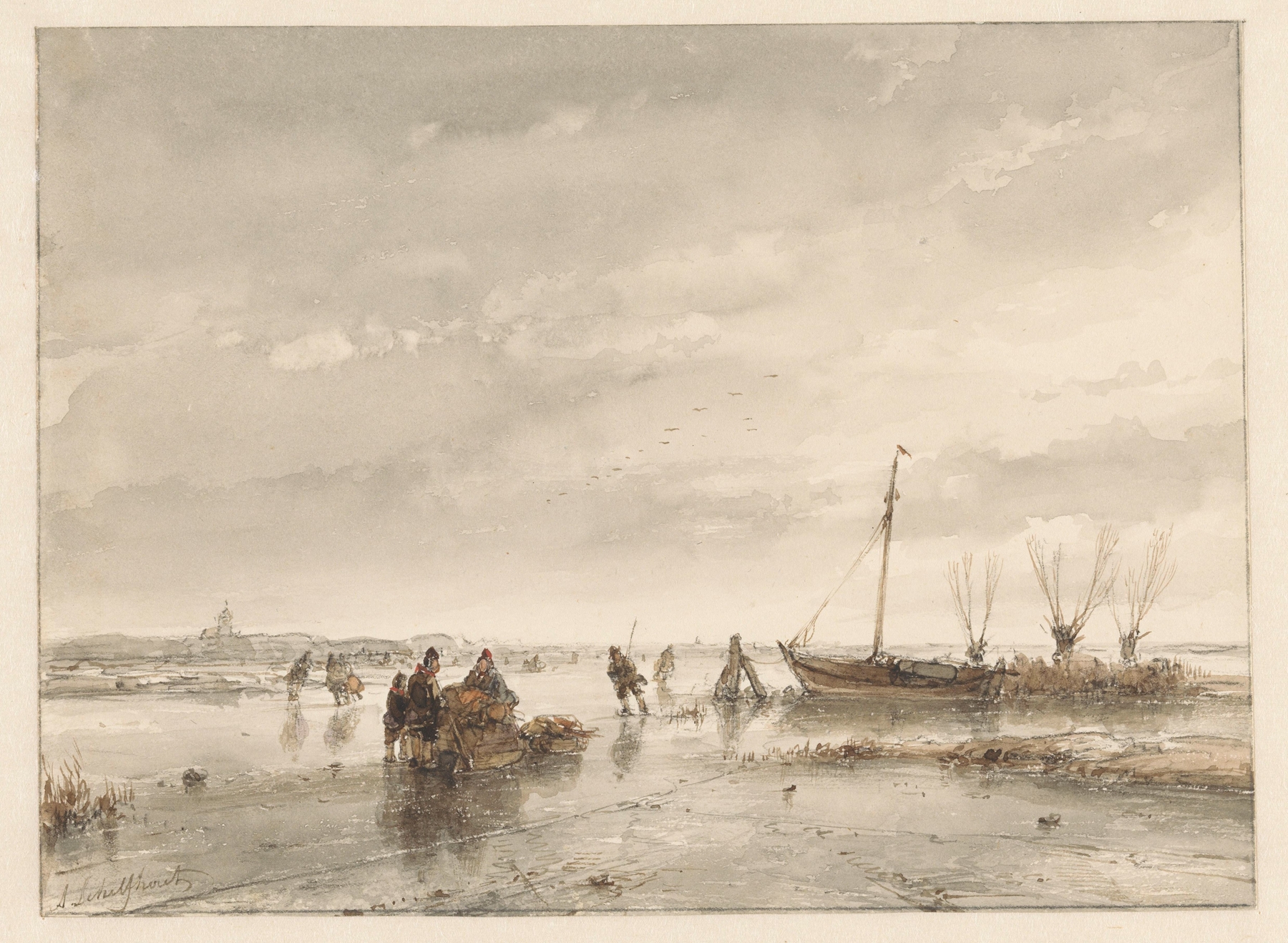
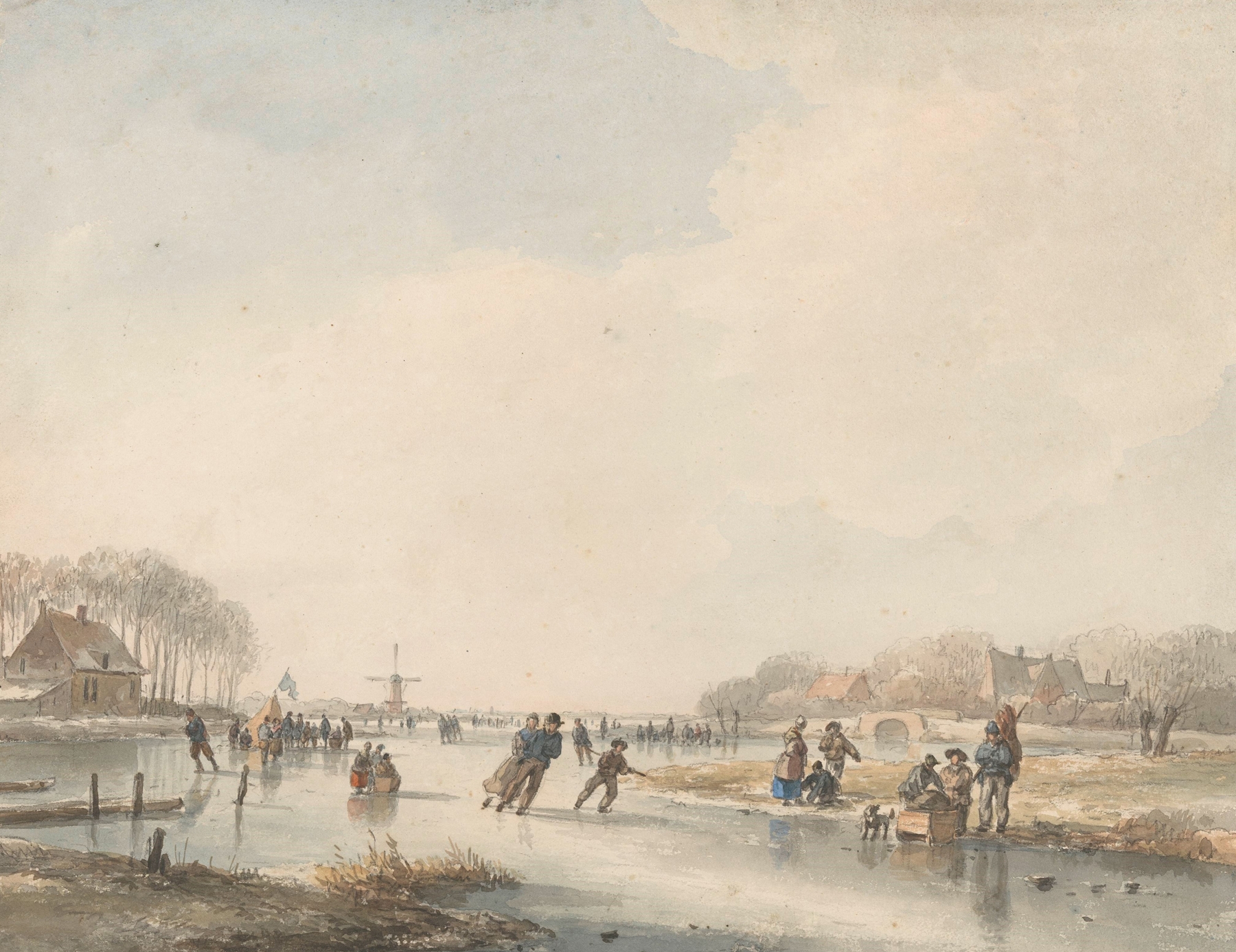
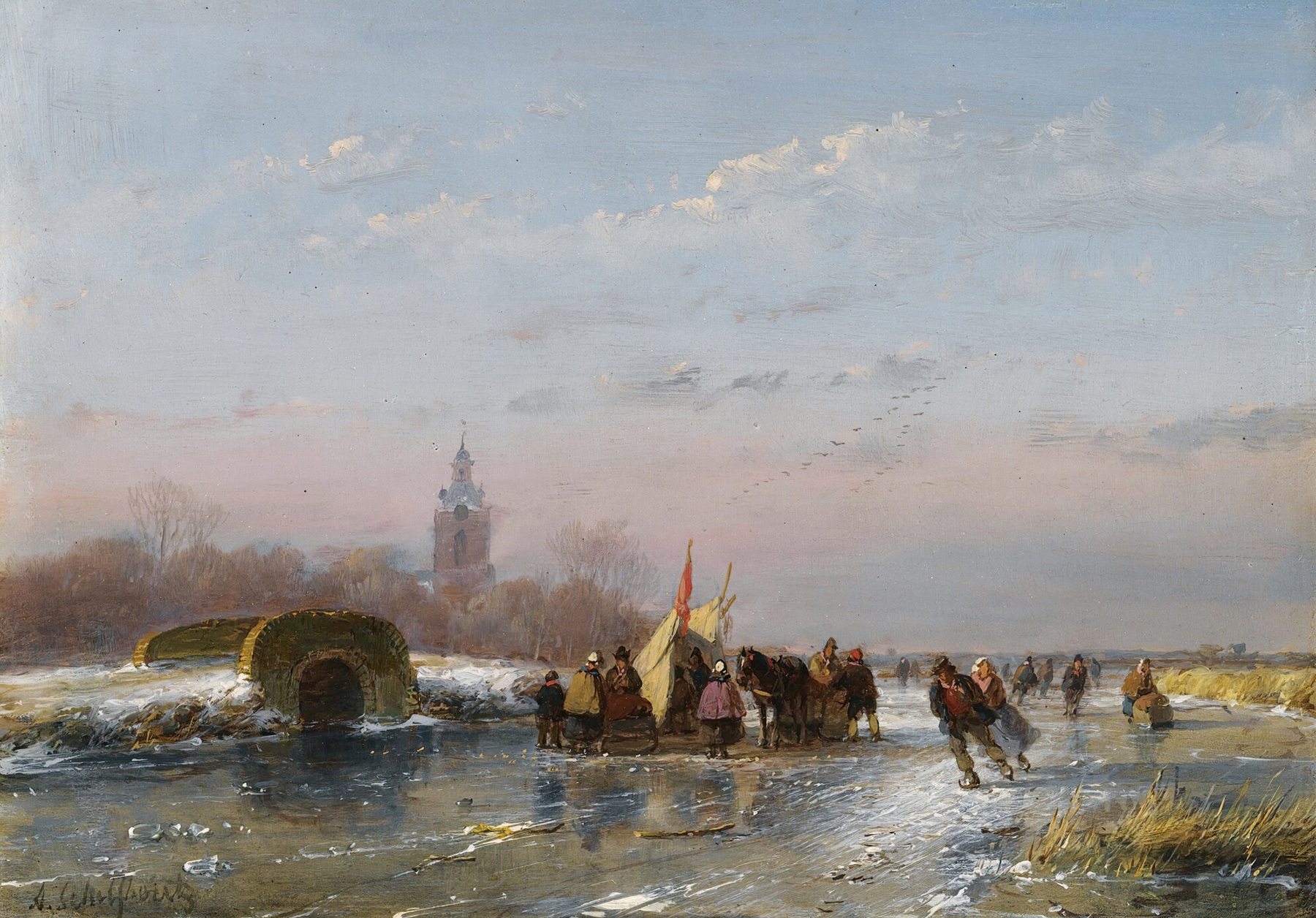
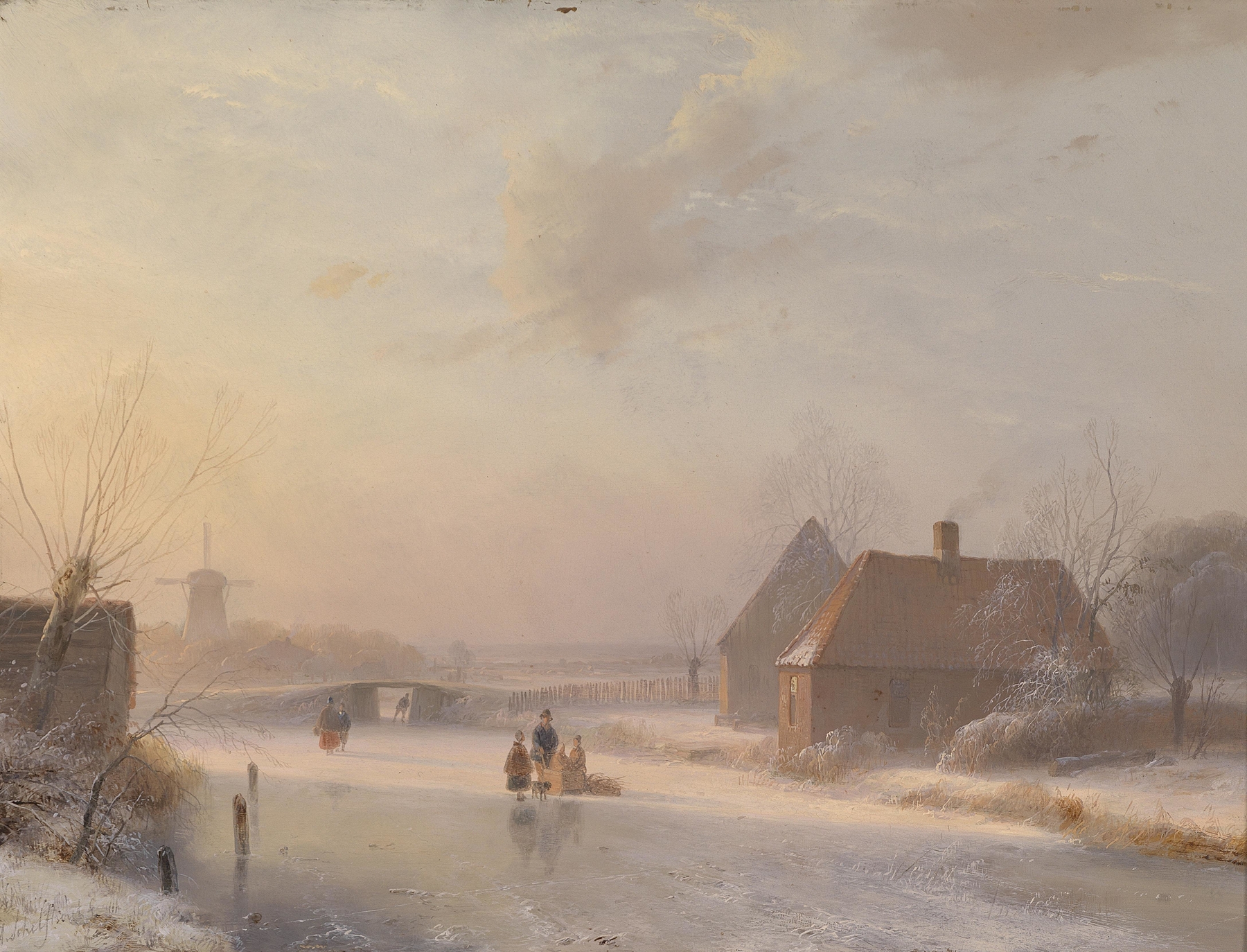
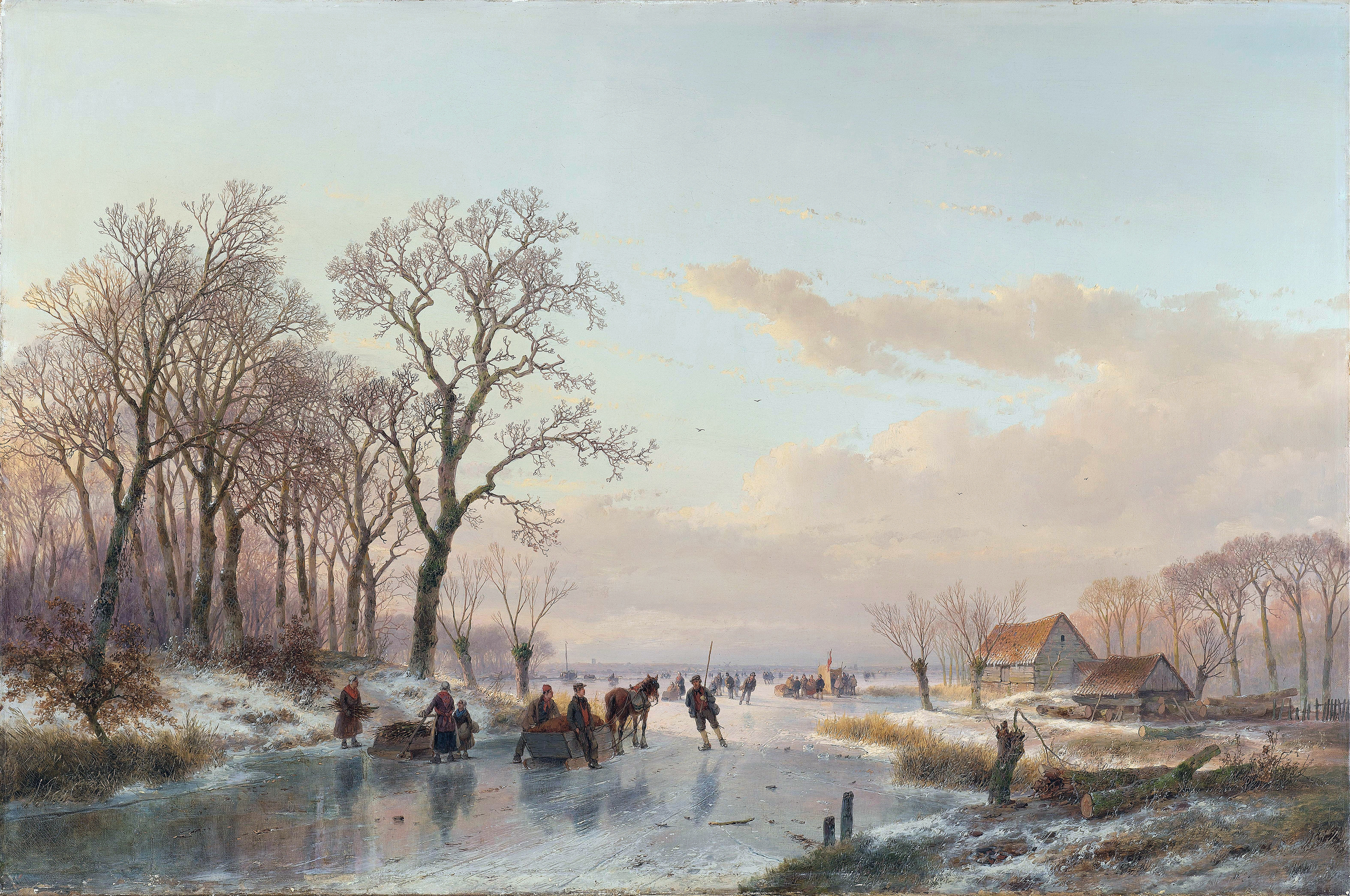
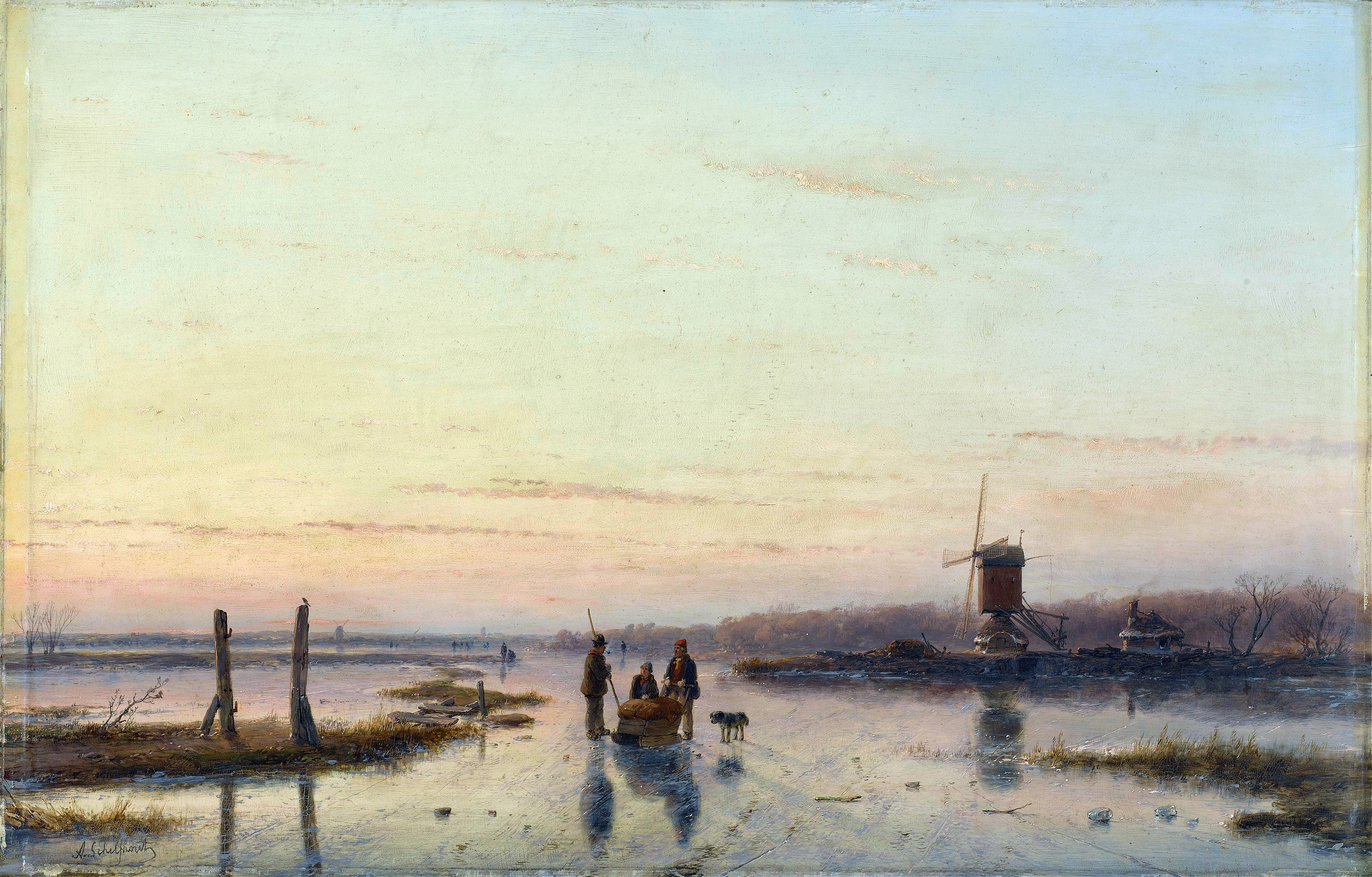
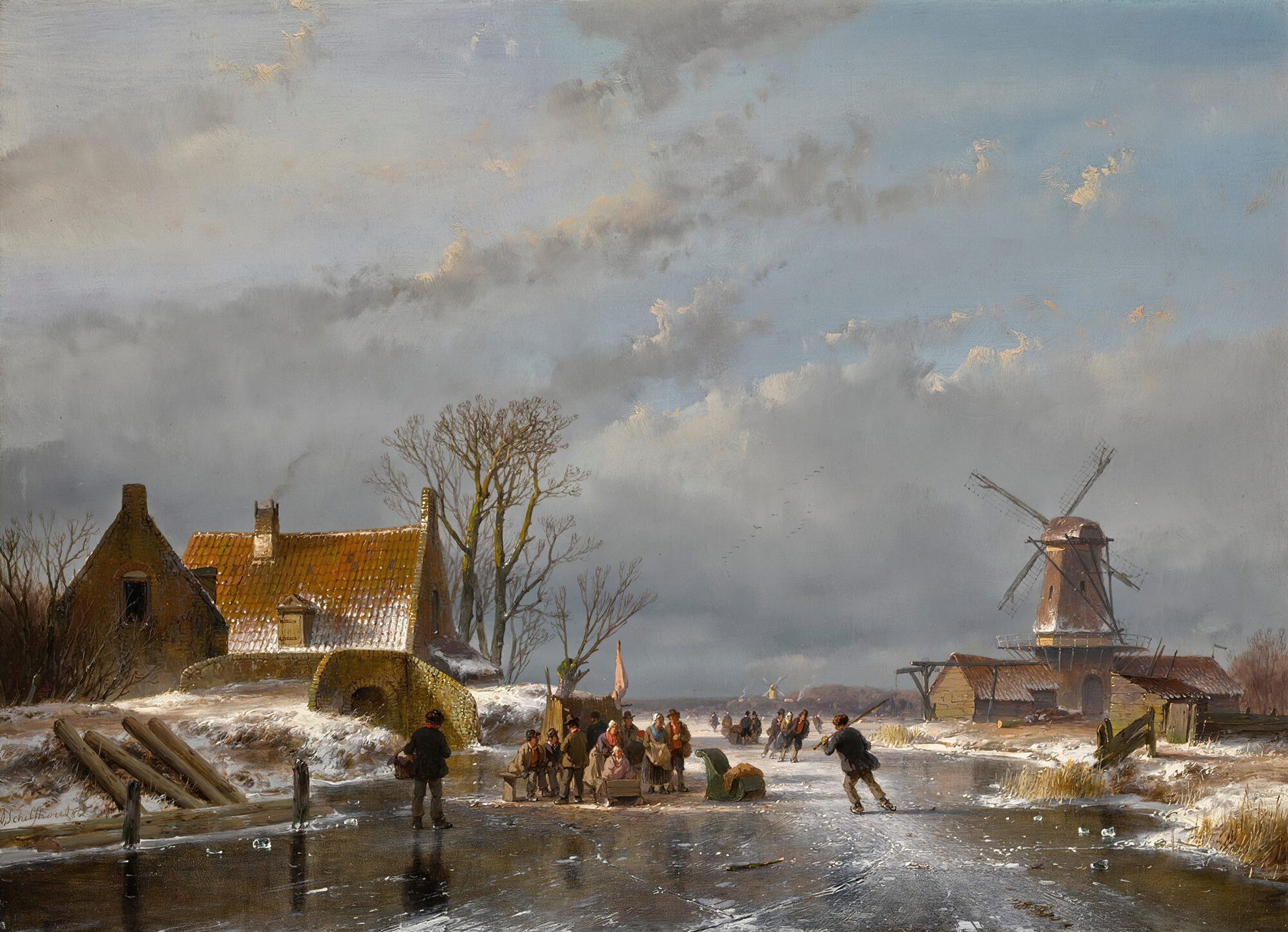
When did color learn to lie? In a world where frozen rivers beckon playful spirits, emptiness breathes beneath the surface of vibrant hues. Look to the center of the canvas, where skaters glide effortlessly across the ice, their bright attire contrasting against a muted winter landscape. The artist employs a soft palette of whites and blues, creating a sense of chill that penetrates the viewer's heart.
The delicate brushstrokes in the ice shimmer with an illusion of movement, inviting us to join in the joyful dance while simultaneously whispering of the stillness that surrounds them. Yet, the scene is punctuated by a haunting solitude. The skaters, though surrounded by each other, seem isolated—each lost in their own reverie. In the background, the skeletal trees stand as witnesses, their bare branches reaching out like desperate hands toward a sky that is both beautifully clear and ominously vacant.
This juxtaposition of communal joy against stark isolation evokes a profound sense of longing, suggesting that even in merriment, the heart can feel profoundly empty. Andreas Schelfhout painted this work in 1866, during a period of great change in the Netherlands. As a prominent figure in the Dutch Romantic movement, he was captivated by winter scenes, often reflecting societal shifts through nature. At this time, Dutch realism was gaining momentum, and artists like him sought to capture the beauty of everyday life, even when juxtaposed with the stark reality of human emotion and experience.