Snowy Day, Boston — History & Analysis
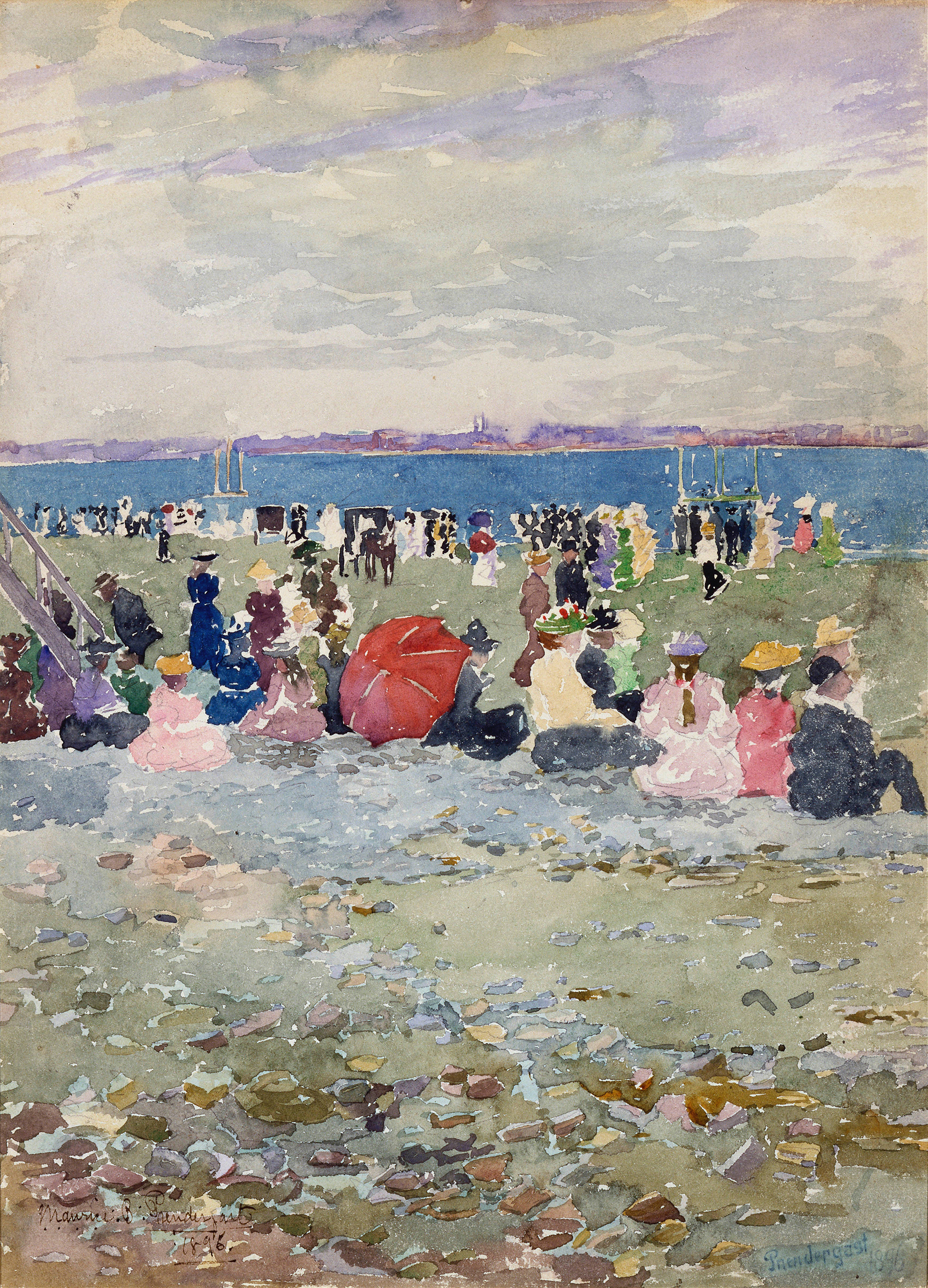
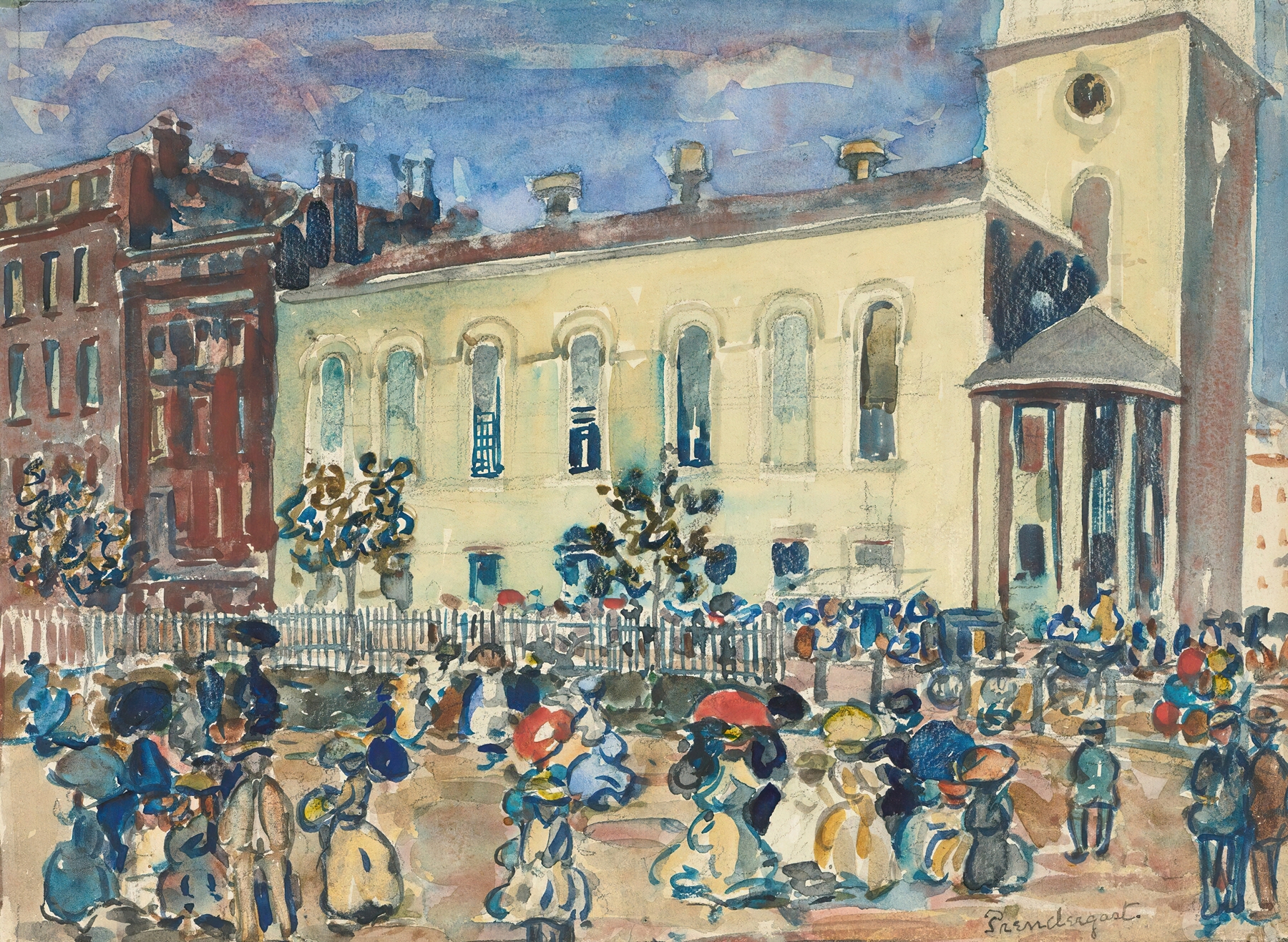
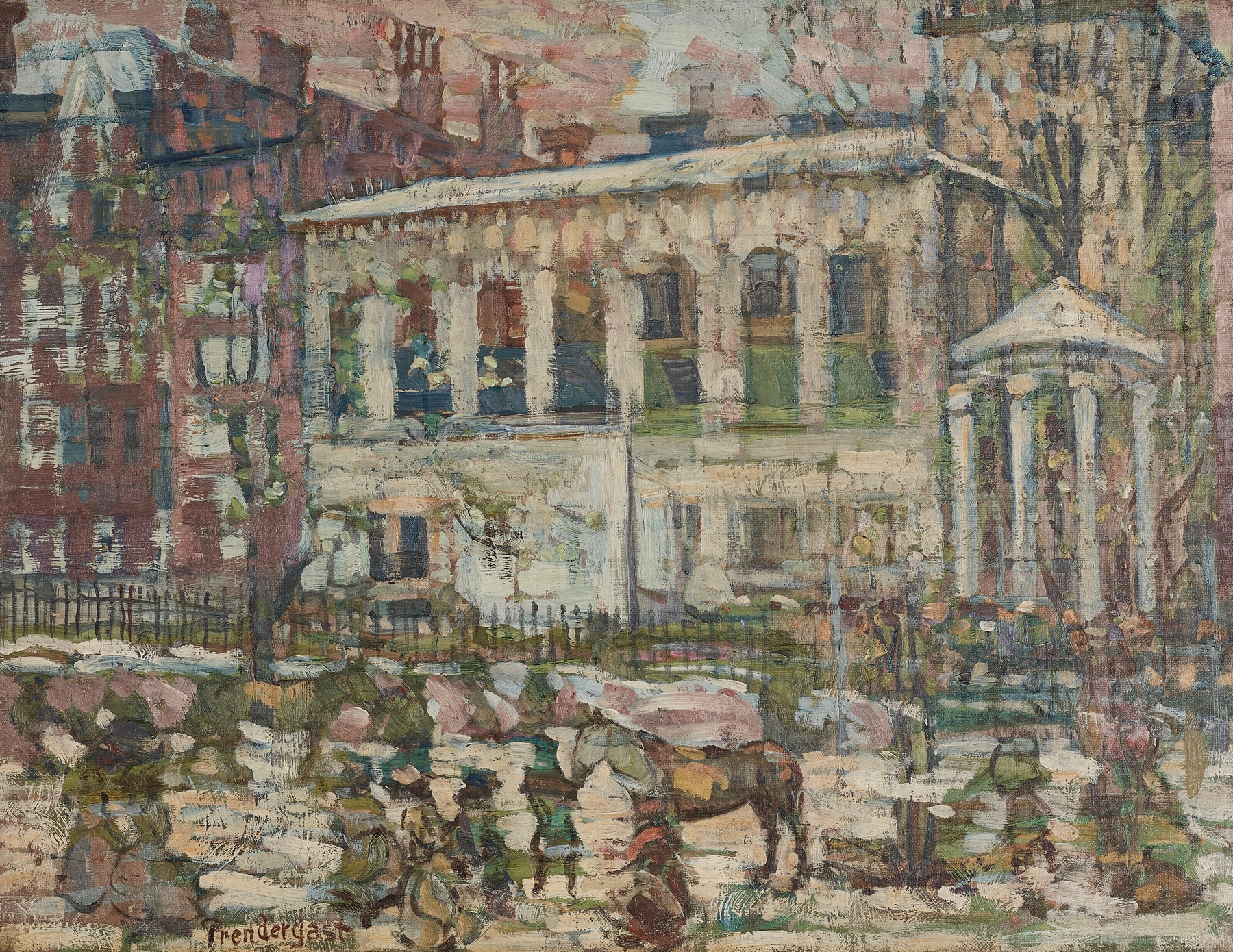
Could a single brushstroke hold eternity? In Snowy Day, Boston, Maurice Prendergast captures a fleeting moment suspended in time, where the beauty of winter blends seamlessly with the vibrancy of life. Look closely at the swirling patterns of snowflakes that dance across the canvas, inviting your gaze to traverse the joyous chaos of a bustling Boston street. Notice how the artist employs a lively palette of blues and whites, juxtaposed with dashes of warm color from the figures clad in coats and hats.
The loose brushwork creates a sense of movement, as if the figures are caught mid-laughter, their expressions hidden beneath layers of fabric, but their vitality unmistakable. Beneath the surface, the painting unfolds layers of emotional nuance. The stark contrast between the coldness of the snow and the warmth of human interaction hints at the intimate connection forged in shared experiences—moments of laughter, play, and community amidst winter’s chill. Each figure seems to embody a unique story, their postures and gestures weaving an intricate narrative of connection, solitude, and the transient nature of joy itself.
Prendergast painted this work between 1907 and 1910 during a period of artistic experimentation and transformation in Boston, where he was closely associated with the American Impressionist movement. At that time, he embraced modern techniques, prioritizing color and composition over rigid realism, reflecting both the vibrancy of urban life and his deep appreciation for the world around him. This painting not only mirrors his artistic evolution but also captures a moment that resonates with the collective memory of winter joy.