Excursionists, Nahant — History & Analysis
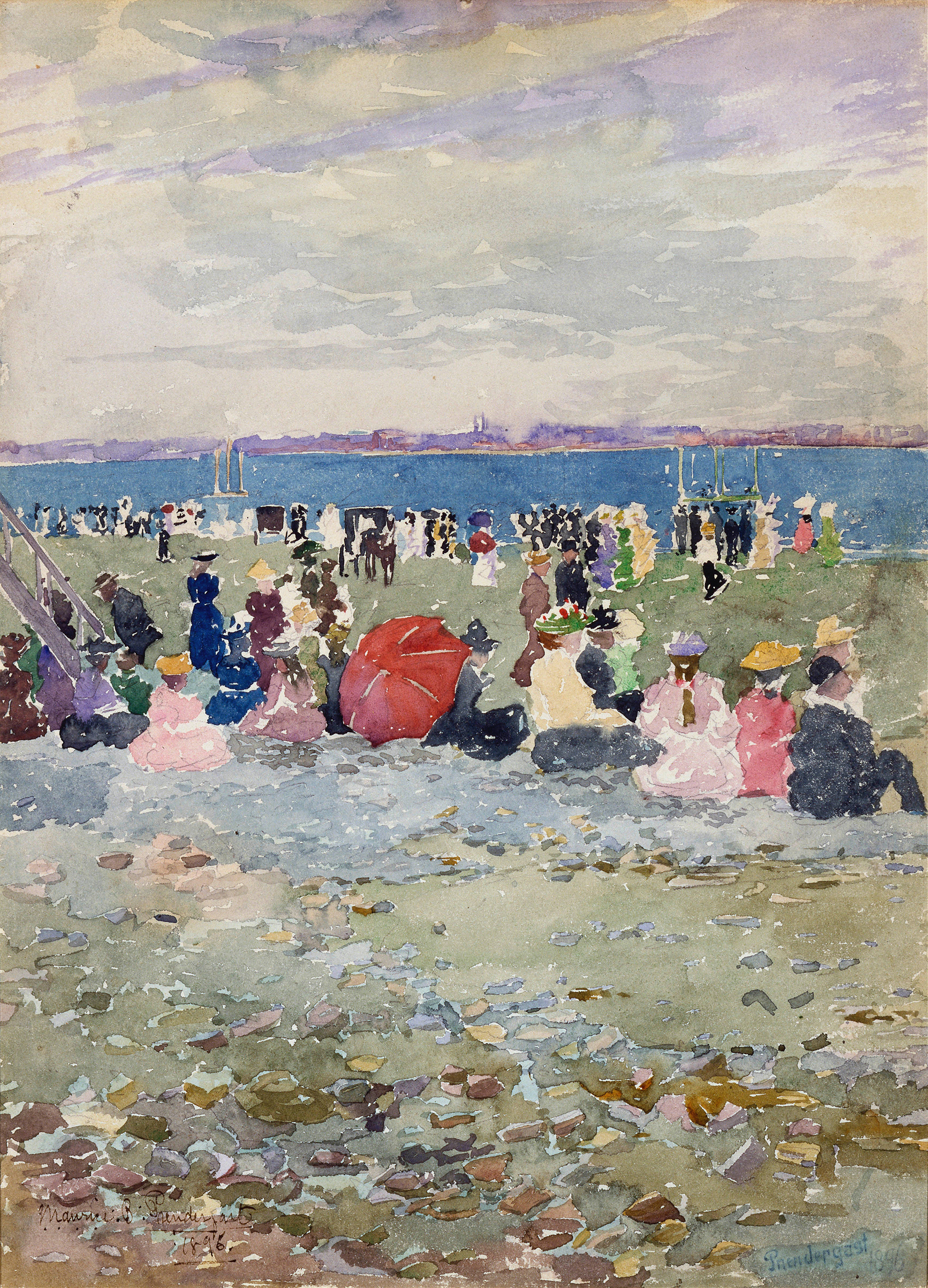
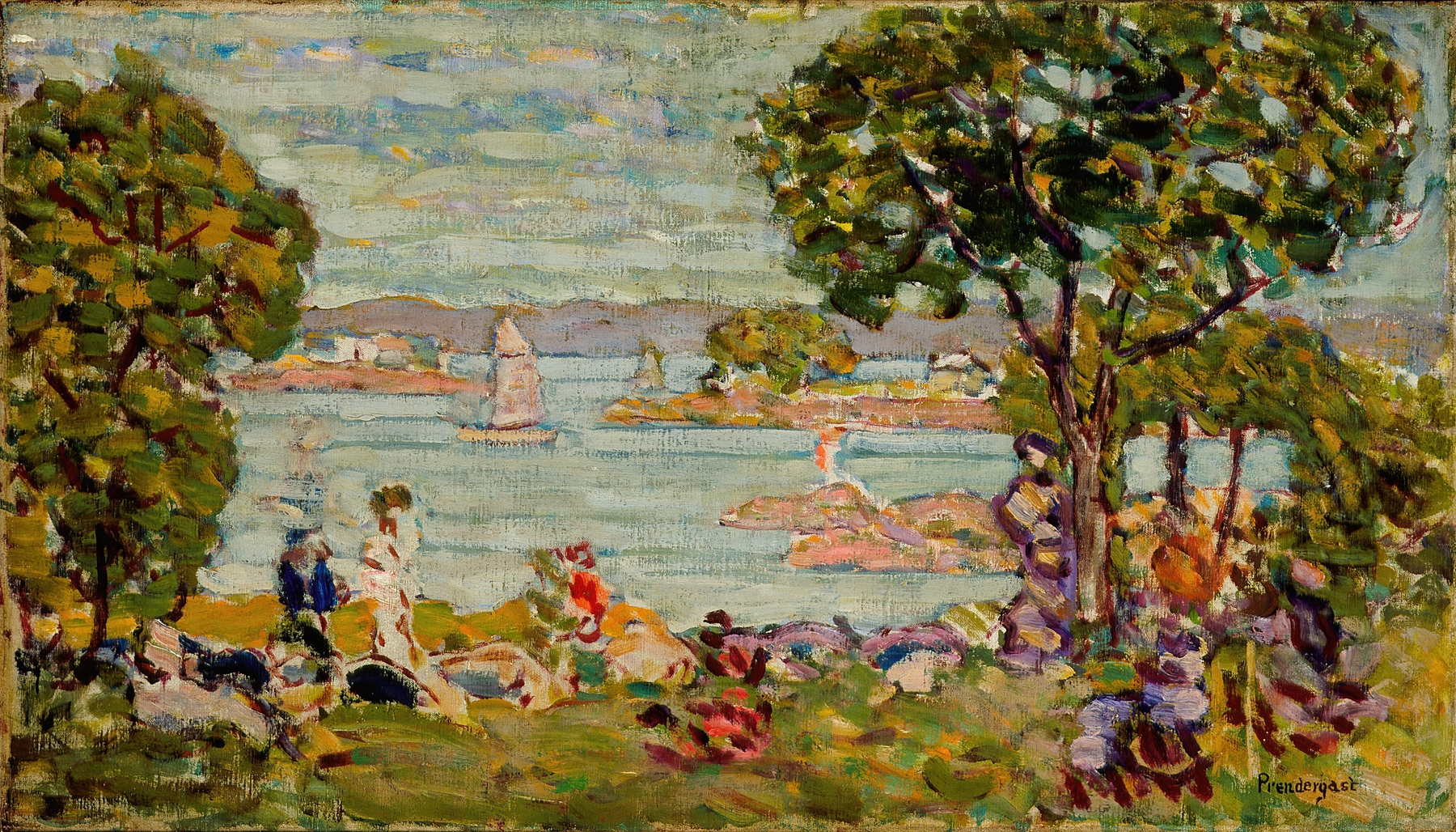
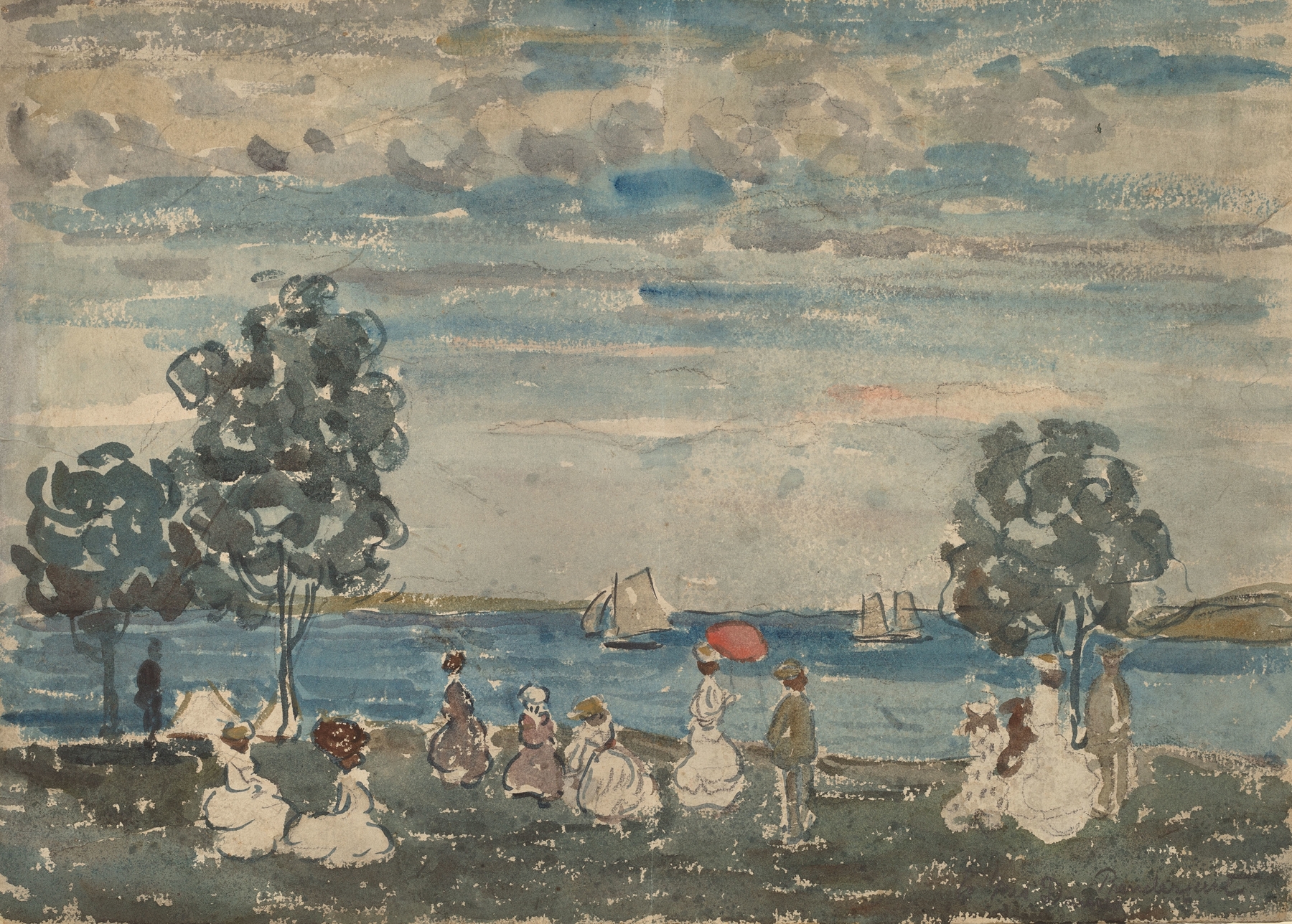
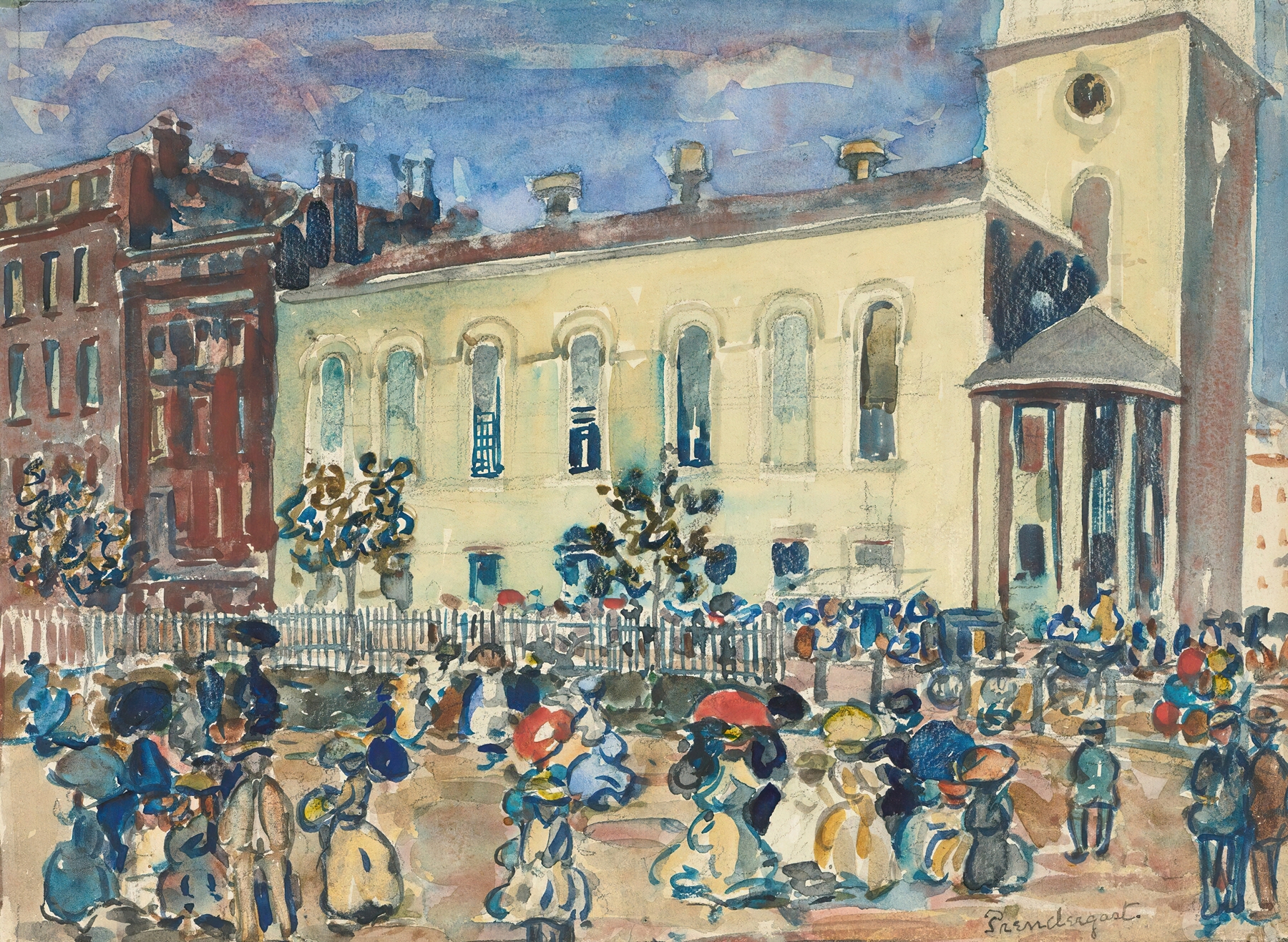
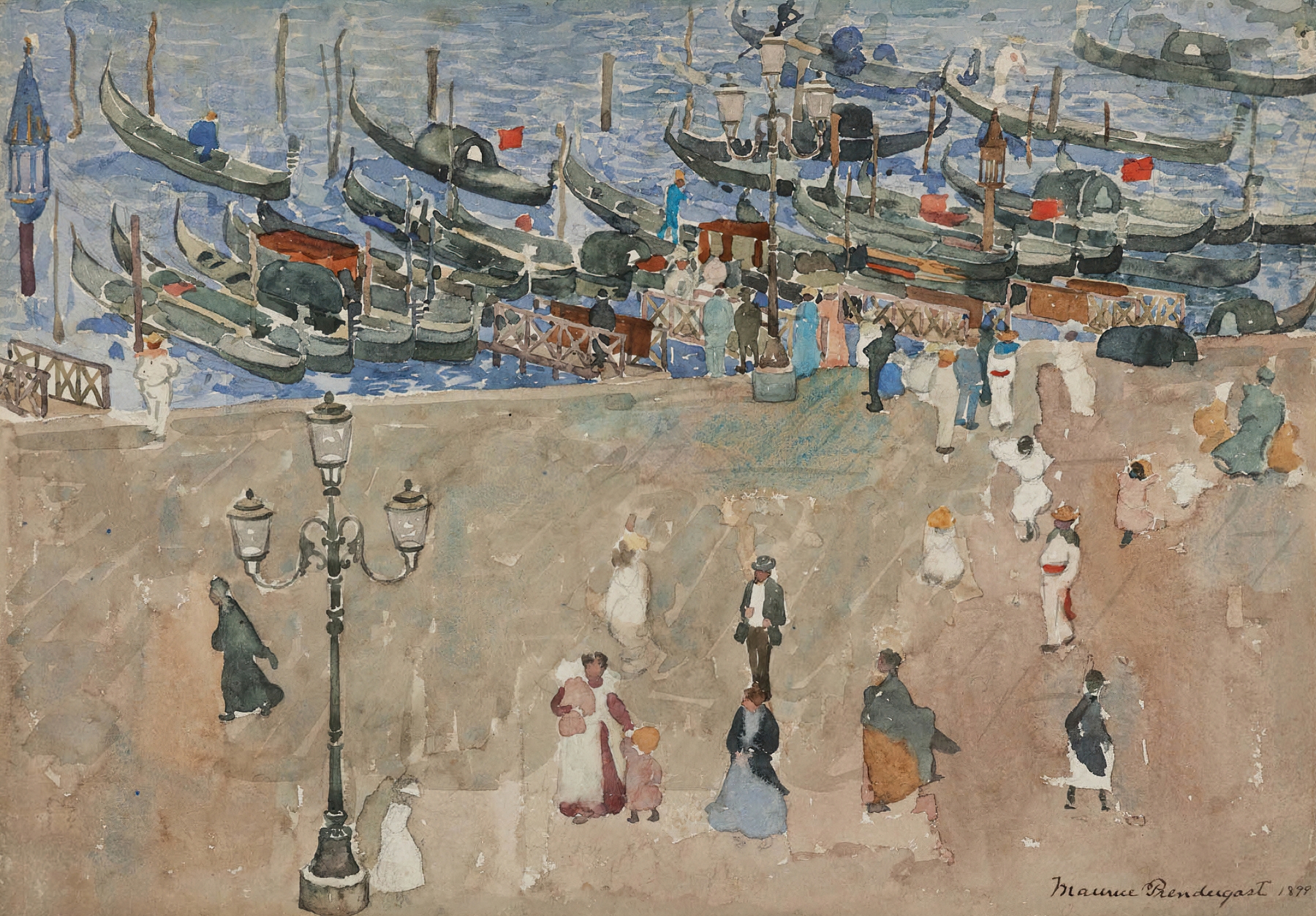
Where does light end, and longing begin? In the vibrant strokes of Prendergast's work, a world unfolds where faith intertwines with the gentle embrace of nature, inviting us to explore the essence of human connection. Look closely at the left side of the canvas where clusters of figures bask in the sunlight, their colors vibrant against the lush backdrop. The dappled light dances on the water, reflecting the blues and greens, while the soft hues of their clothing resonate with the warmth of the day.
Notice how the artist employs a mosaic-like technique, layering colors to create a sense of movement and life, drawing our eyes from the foreground to the distant shoreline, where the horizon blurs into a dreamlike haze. Beneath this picturesque scene lies a contrast between the vibrancy of the excursionists and the stillness of the landscape around them. The figures exude a joyful abandon, yet their scattered placement suggests a longing for connection amidst the exuberance. Each face carries its own story, a microcosm of human experience framed by the serene beauty of nature, evoking both unity and isolation.
The harmony of colors speaks to a deeper faith in life's simple pleasures, reminding us of the interplay between light and shadow. Maurice Prendergast painted Excursionists, Nahant during a transformative period in the late 19th century while living in Boston. This era marked a significant shift in American art, as artists began to embrace Impressionism, moving away from strict academic traditions. Amidst the vibrant artistic community, Prendergast was influenced by his travels in Europe, which deepened his appreciation for color and light, allowing him to capture the essence of modern life.