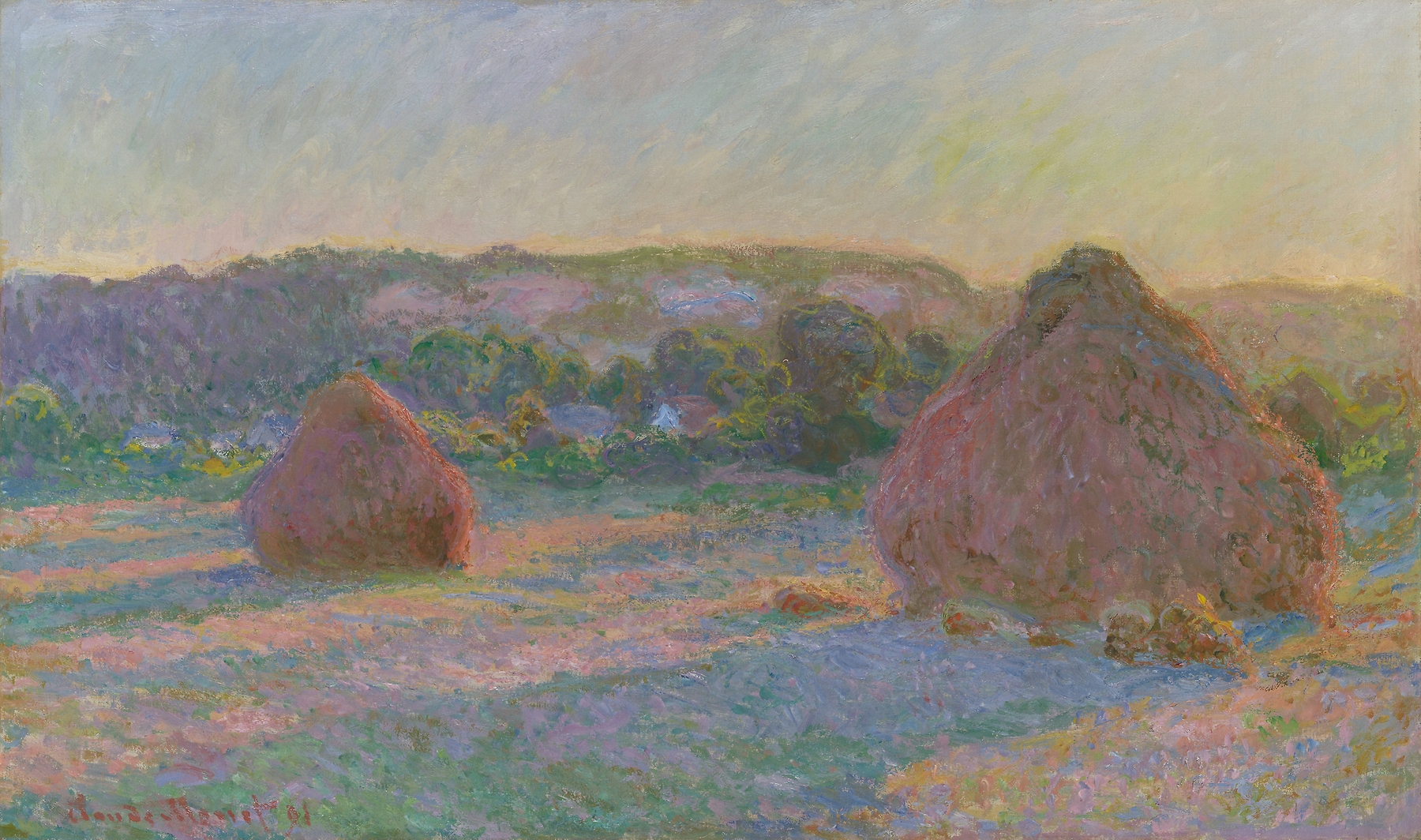
Is this a mirror — or a memory? The stillness of a snow-draped landscape makes one ponder the delicate balance between perception and reality, conjuring a quiet violence that disrupts the peace of nature. Look to the center, where the stack of wheat stands defiantly against a backdrop of muted grays and icy whites. Monet’s brushwork captures the softness of snowflakes clinging to the stalks, each stroke layering a sense of weight against the airy, overcast sky. Notice how the interplay of light and shadow creates an ethereal glow, transforming the ordinary into a scene that feels both tangible and dreamlike. Yet beneath this serene surface lies an unsettling tension. The starkness of the snow contrasts with the organic curves of the wheat, evoking a sense of vulnerability in the face of nature’s harshness. Each element holds a memory of life, yet here, they are burdened under the quiet violence of winter's grasp. This duality of warmth and cold embodies a fleeting moment: the wheat, once vibrant, now solitary and encumbered, speaks to the cycle of growth and decay. Created during the late 19th century, this piece emerged in a pivotal period for its creator, who was exploring the effects of light and atmosphere. Monet painted this work in Giverny, a time when he was forging his distinct style, amidst a burgeoning Impressionist movement that sought to capture the elusive qualities of nature. The landscape, both beautiful and haunting, reflects not only the artist's personal evolution but also the broader shifts occurring in the world of art.