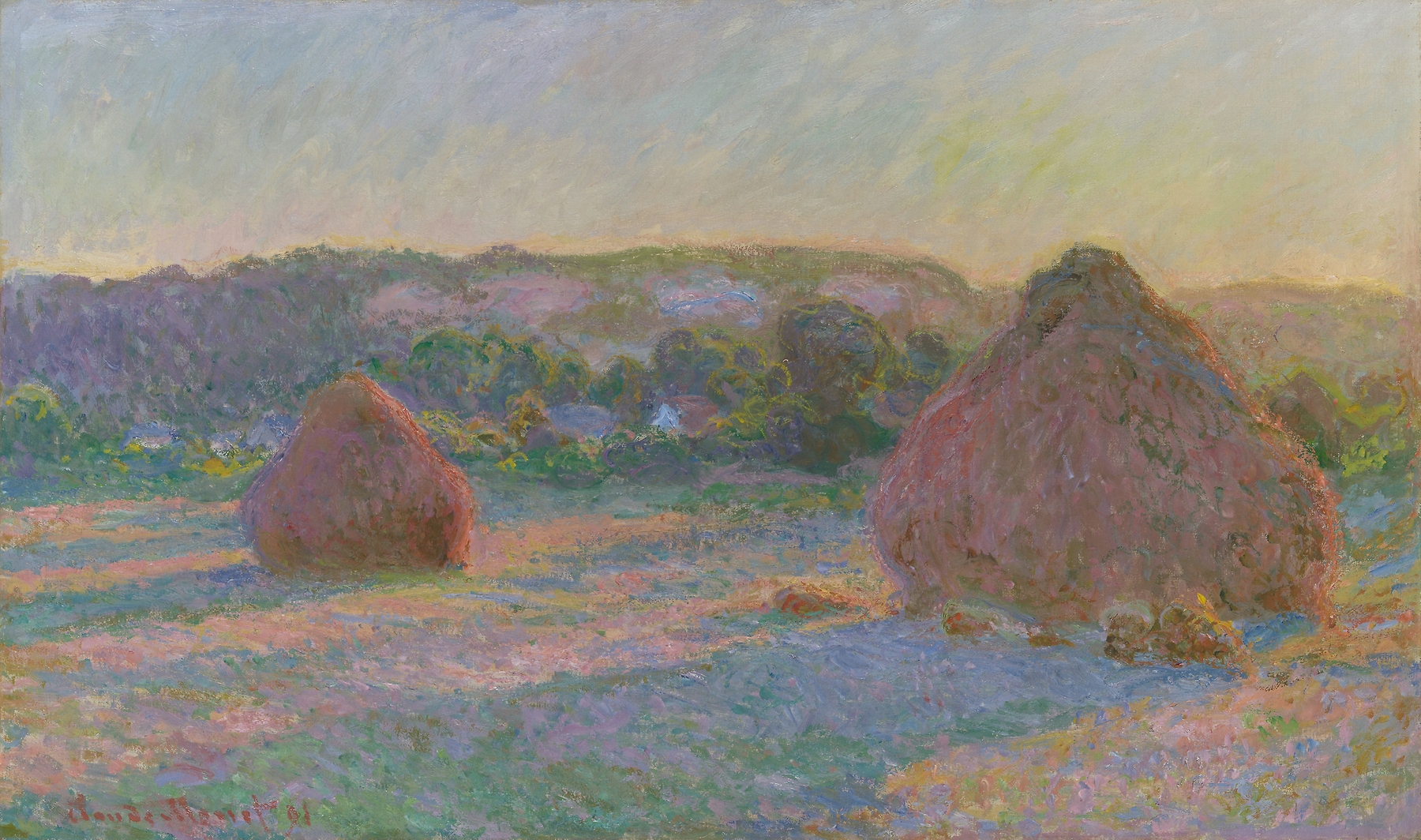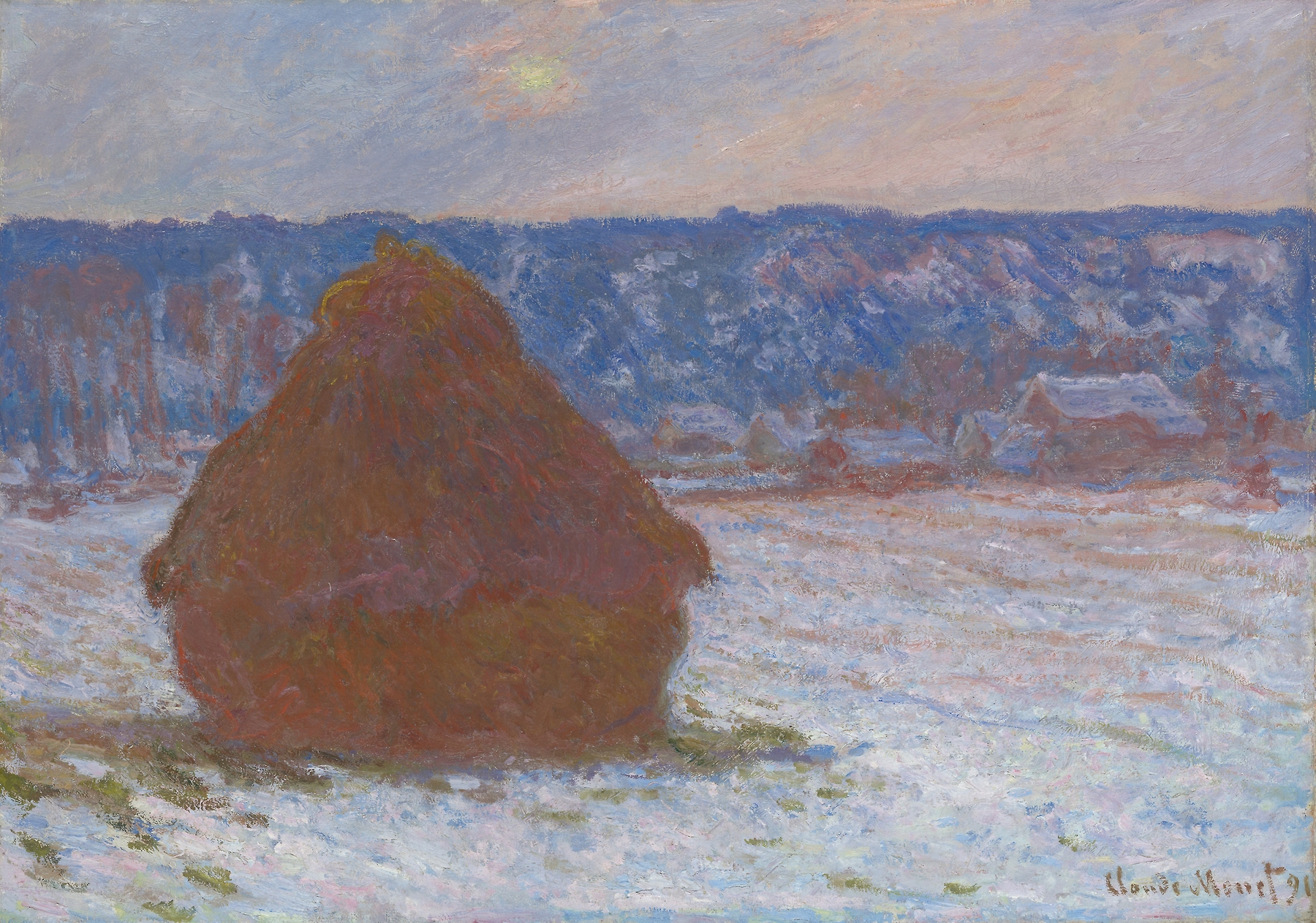
When did color learn to lie? In a world where nature’s palette can evoke profound longing, the interplay of light and shadow often tells stories deeper than reality itself. Focus on the central stack of wheat, its golden hue muted under a blanket of snow. The artist’s brushstrokes are soulfully loose, allowing colors to blend and breathe, while the overcast sky looms heavy, casting a tranquil yet somber ambiance. Notice how the subtle variations in whites and grays create a fluid harmony, drawing your gaze from the foreground to the distant horizon where the cold sky meets the earth. This painting embodies a contrast between abundance and scarcity. The wheat, rich and full, stands resilient amidst the icy grasp of winter, symbolizing hope and sustenance. Yet, the looming clouds and muted colors suggest an impending chill — a reminder of nature’s fleeting beauty and the inevitable passage of time. Each stroke resonates with an emotional tension, reflecting the artist's inner yearning for connection and warmth even in the coldest moments. During the late 19th century, Monet painted *Stack of Wheat (Snow Effect, Overcast Day)* in the serene countryside of Giverny, France. This period marked a significant evolution in his approach to light and color, as he embraced the changing atmospheres that defined his impressionistic style. The world was shifting, and so was the art scene, as artists began to explore the boundaries of perception, a movement that Monet was at the forefront of, pushing the edges of reality and imagination.