Stack of Wheat (Thaw, Sunset) — History & Analysis
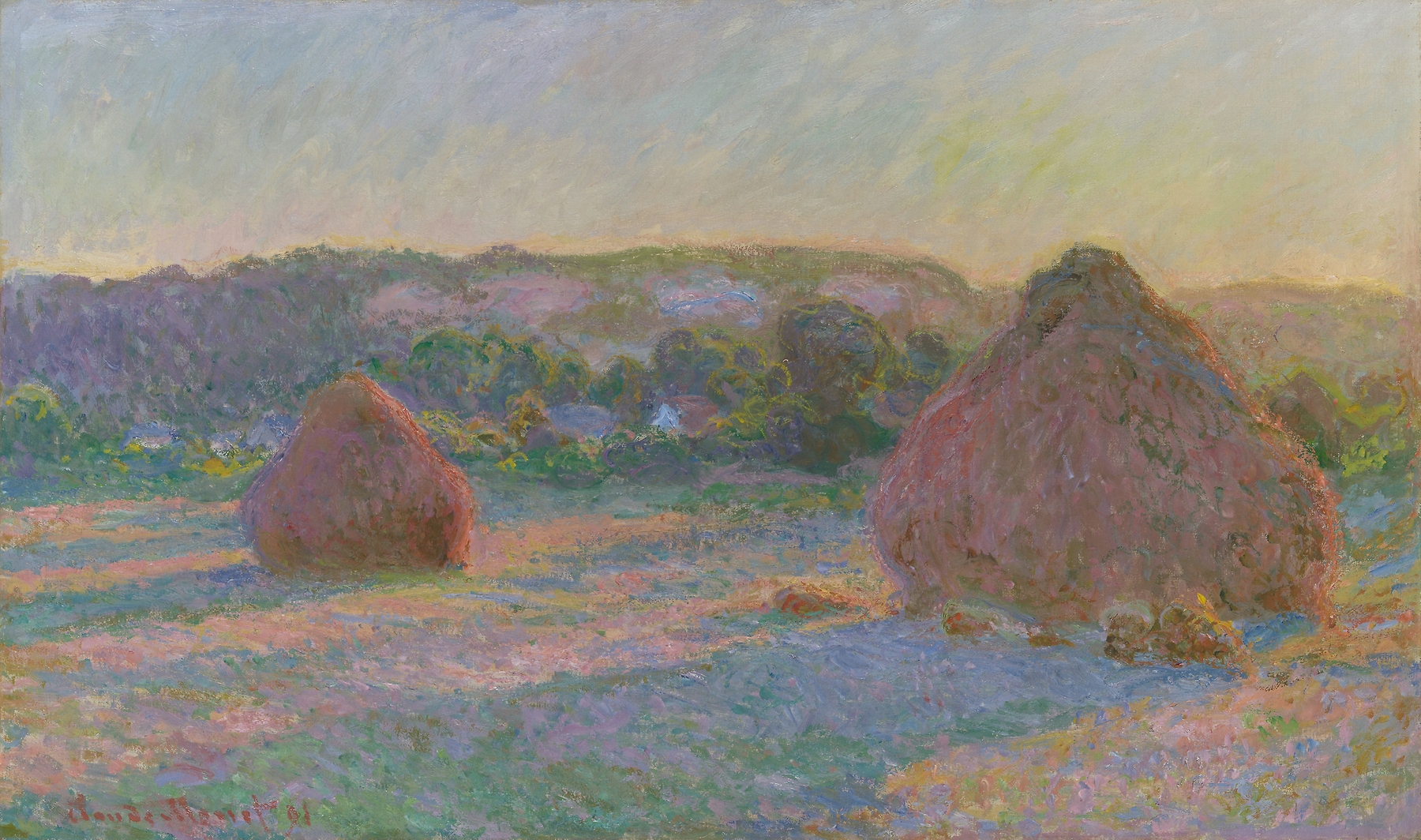
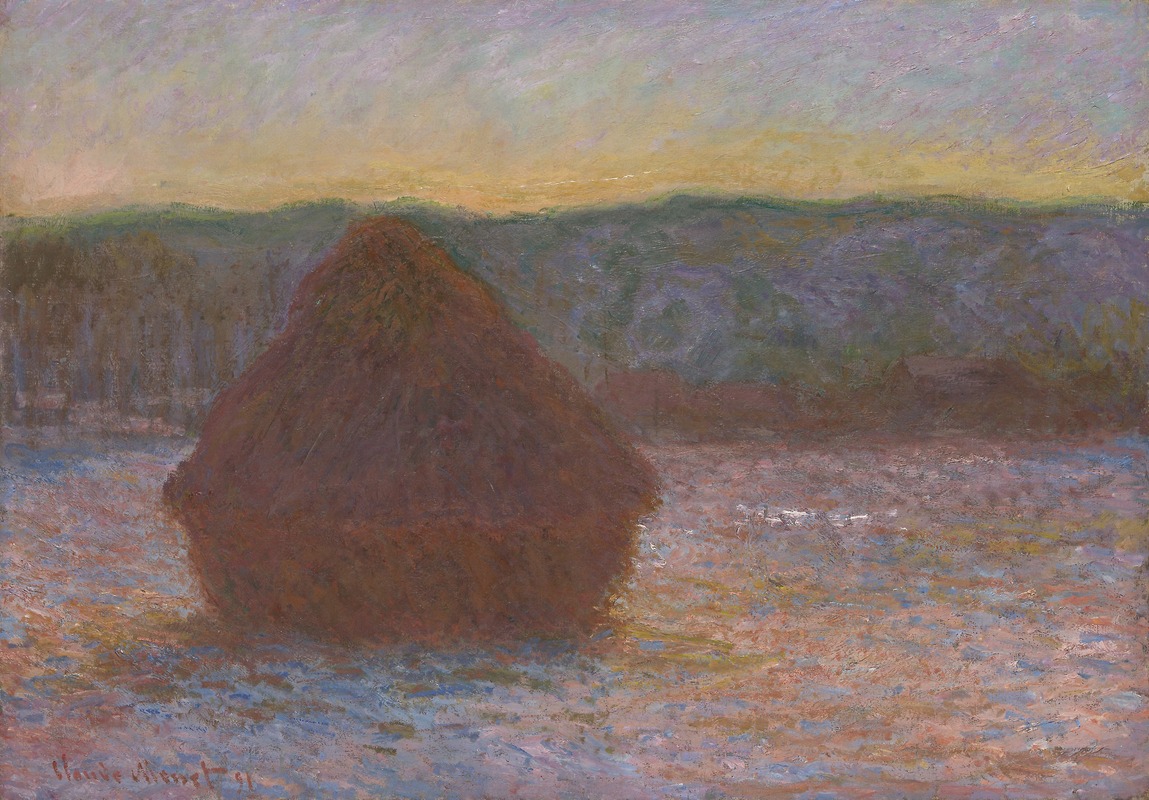
What if silence could speak through light? In the stillness of twilight, a stack of wheat stands resolute, cradled by an expanse of soft gold and faded violet. The simplicity of the subject belies a profound depth, inviting the viewer into a moment that resonates with unspoken grief, a poignant reminder of time’s relentless passage. Look to the center, where the wheat stack rises against a backdrop of dusky skies. Notice how the light dances on the rippled surfaces, each blade catching the last glimmers of the sun.
The impasto technique creates texture, lending a tactile quality to the golden wheat while softening the horizon. Monet’s masterful use of color transitions from deep ochres to delicate lavenders, evoking the bittersweet nature of a day nearing its end—a visual metaphor for loss wrapped in beauty. Beyond its serene façade lies a stark contrast between abundance and absence. The wheat, once a symbol of life and sustenance, now stands as a monument to what is fleeting. The vibrant colors, while captivating, guard a sense of melancholy; they reflect the artist's own sorrow during this period, perhaps hinting at the passing of his beloved family members.
Each brushstroke conveys not just the beauty of the landscape, but the weight of memory and longing intertwined within it. In the late 19th century, Monet painted this work during a time of personal upheaval following the deaths of family members. His art was evolving, embracing more expressive techniques and a profound exploration of light and atmosphere. Stack of Wheat (Thaw, Sunset) emerged amidst these turbulent emotions, capturing both his artistic journey and the universal experience of mourning.