Suo Kintaikyo (The Kintai Bridge in Suo Province) — History & Analysis
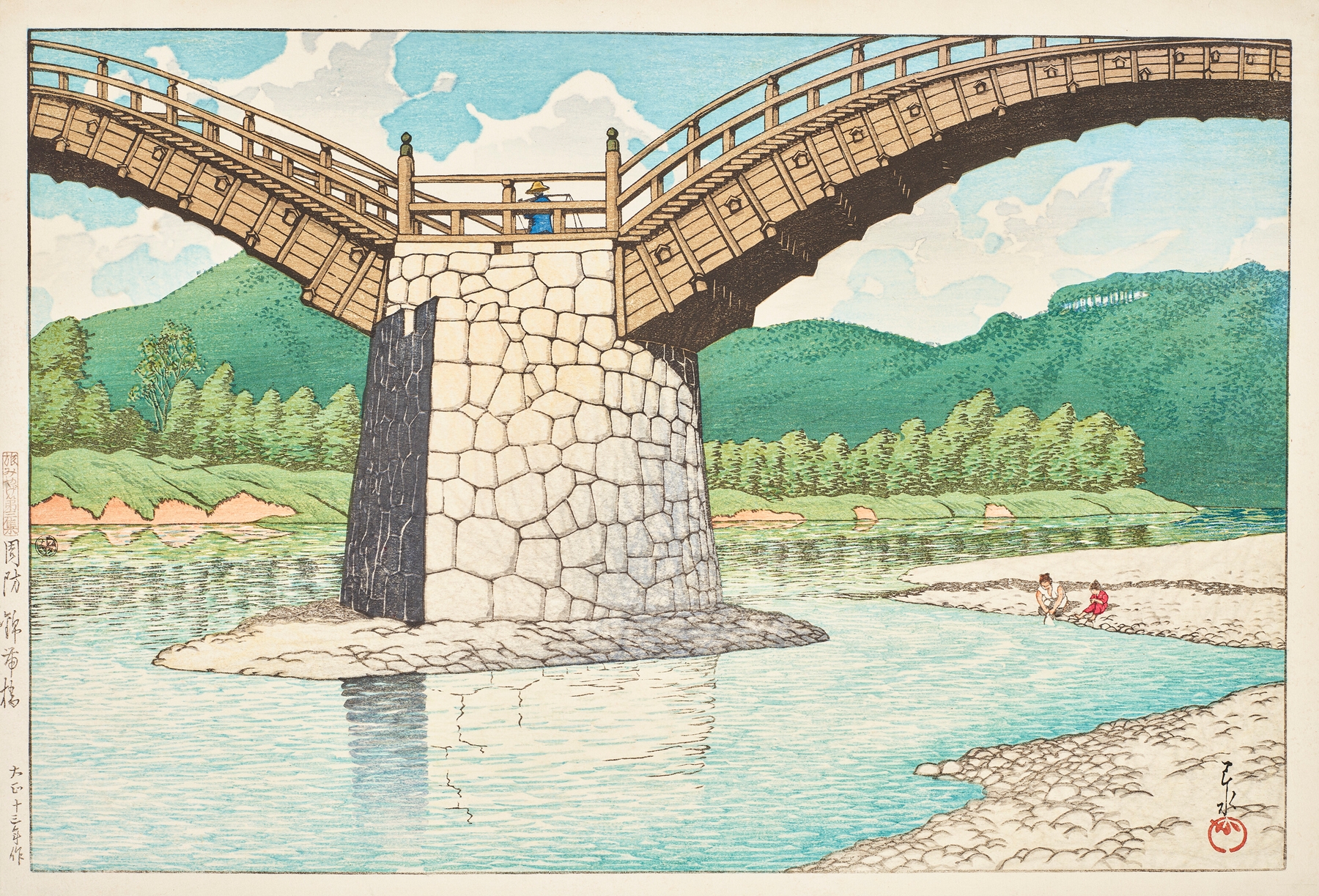
“To paint is to remember what time wants us to forget.” In Suo Kintaikyo, the haunting beauty of a bridge captures not just a physical crossing but an emotional passage through fear and memory. Look to the center of the canvas, where the gracefully arched Kintai Bridge emerges from a shroud of mist. The delicate bluish-grey palette envelops the scene, enhancing the ethereal quality of the landscape. Note how the bridge is framed by tall, dark trees, their silhouettes contrasting with the soft hues of the sky.
Each brushstroke evokes a sense of serenity, yet the fog swirling around the bridge hints at the uncertainty and trepidation that permeate the air. Beneath the calm surface lies a profound tension between permanence and transience. The bridge, a symbol of connection and continuity, stands resilient against the encroaching fog, which embodies the fear of the unknown that time brings. The stillness of the water beneath reflects not only the bridge but the weight of history, suggesting that while certain moments may fade, their essence lingers, haunting us like a whisper of what once was.
In 1924, Kawase Hasui painted this work during a time when the world was grappling with the aftermath of war and the rapid changes of modernization. Living in Japan, Hasui was part of the shin-hanga movement, which sought to blend traditional Japanese printmaking techniques with Western influences. This painting reflects his preoccupation with capturing the ephemeral beauty of nature amid a society in flux, revealing both personal and collective anxieties through its atmospheric composition.