The Artist’s Garden at Eragny — History & Analysis
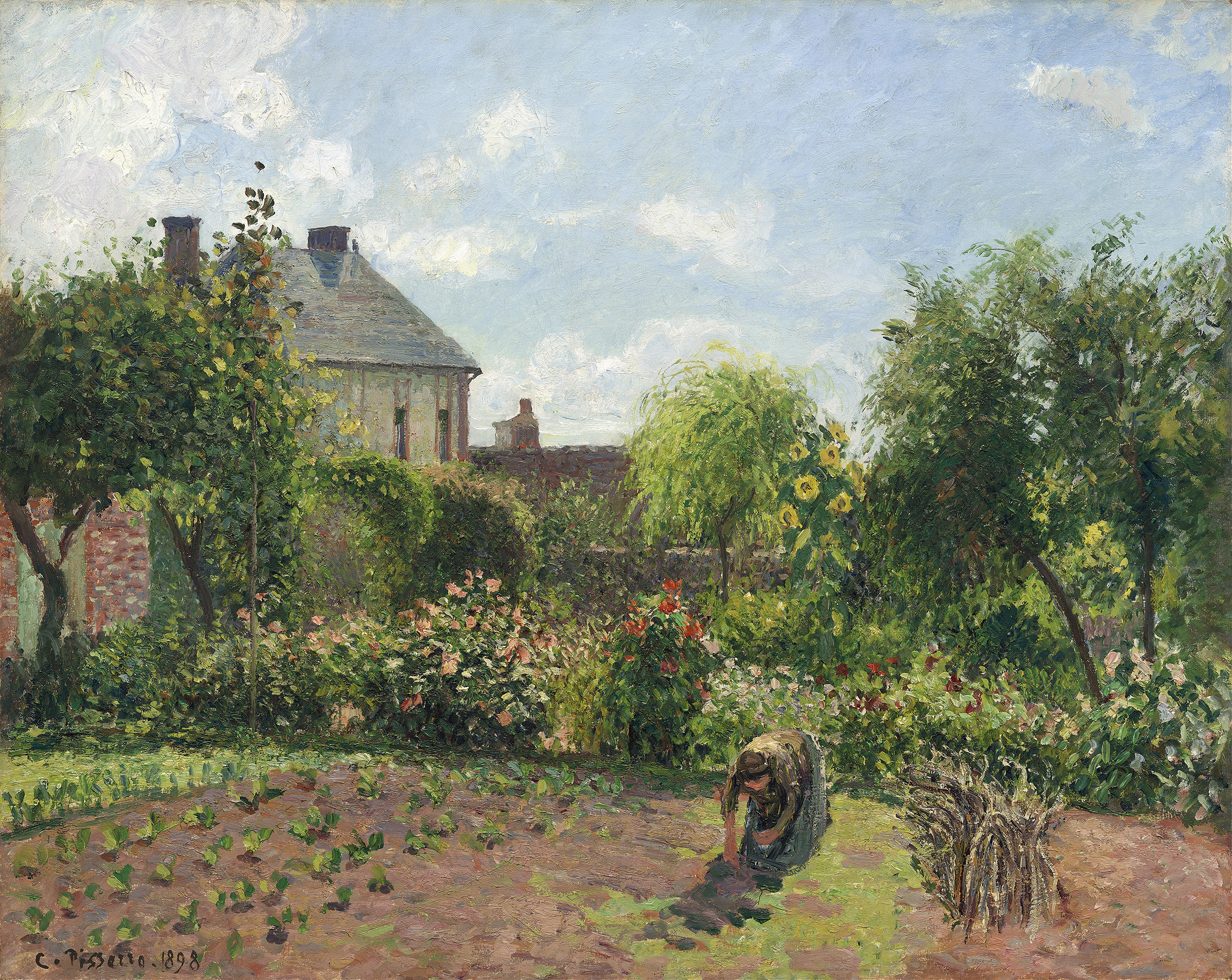
Amidst the blooming colors of late spring, sunlight spills across a canvas of vibrancy. A woman in a straw hat tenderly tends to the flowers, her hands gently coaxing life from the soil, while the vibrant hues of petals burst in joyful rebellion against the backdrop of lush greenery. The air is thick with the mingling scents of earth and blossoms, and the soft murmur of nature seems to hum a quiet symphony of renewal. Look to the left at the rich tapestry of pinks and purples cascading from the flower beds, each petal expertly crafted with dabs of paint that capture their delicate forms. The interplay of light creates a shimmering effect across the scene, drawing your gaze to the warm sunlit areas contrasting with soft shadows that cradle the edges. Notice how the loose brushwork invites a sense of movement, breathing life into the garden, as if the flowers themselves are swaying gently in the breeze. This artwork encapsulates a revelation of harmony between humanity and nature, where the act of gardening becomes a metaphor for nurture and growth. The woman’s serene expression suggests a meditative state, emphasizing the emotional connection to her labor. Meanwhile, the interplay of colors evokes a balance between chaos and order, demonstrating how beauty can arise from diligent care and attention to detail. In 1898, while living in Eragny, Pissarro found solace in the simplicity of rural life, moving away from the bustling city. The Impressionist movement was flourishing, and he was deeply influenced by the intimate bond between artist and environment, as well as the exploration of color and light. This period marked a significant moment in his career, as he sought to capture the idyllic beauty of his surroundings through a lens of personal experience.