The Bucintore Returning to the Molo on Ascension Day — History & Analysis
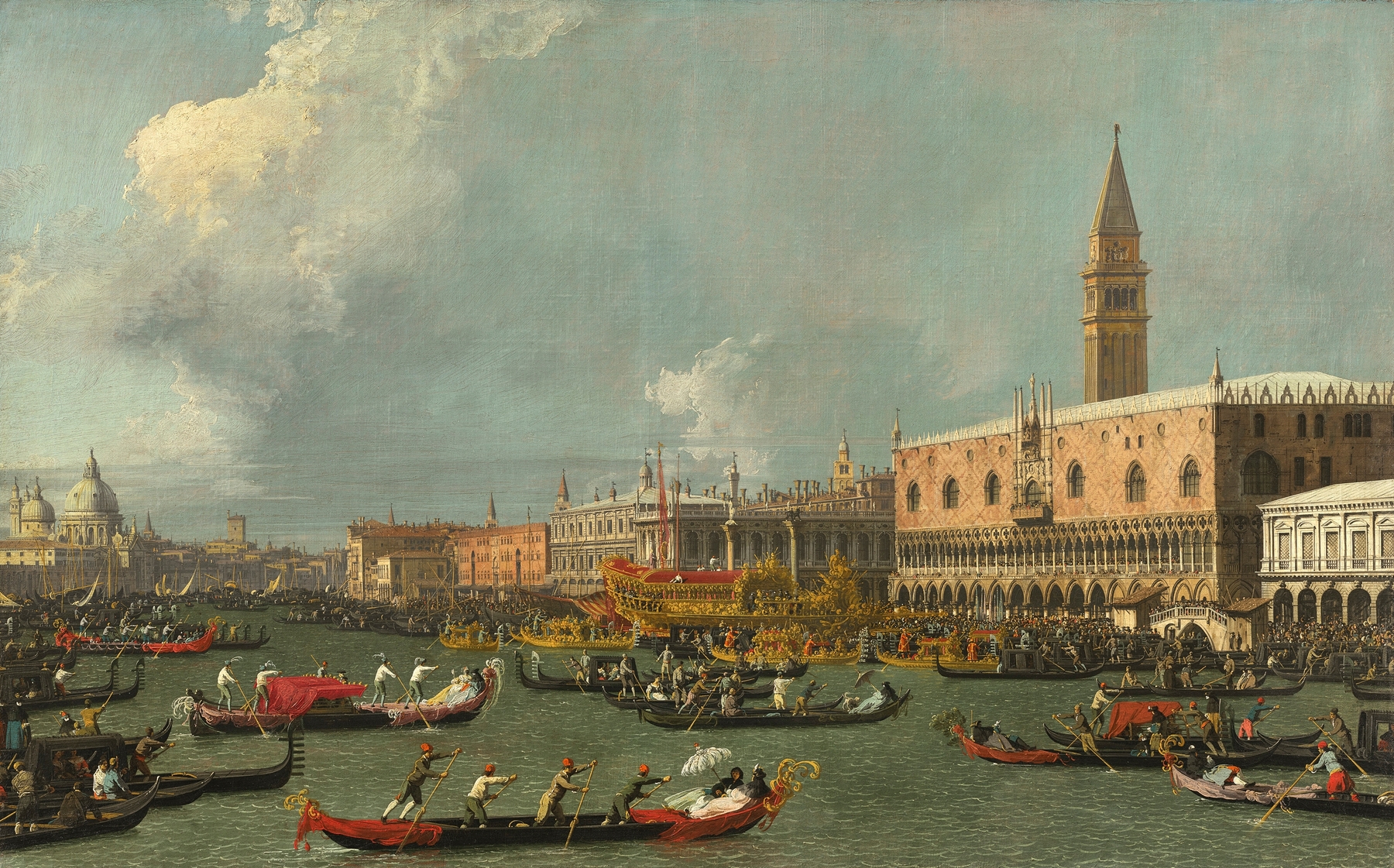
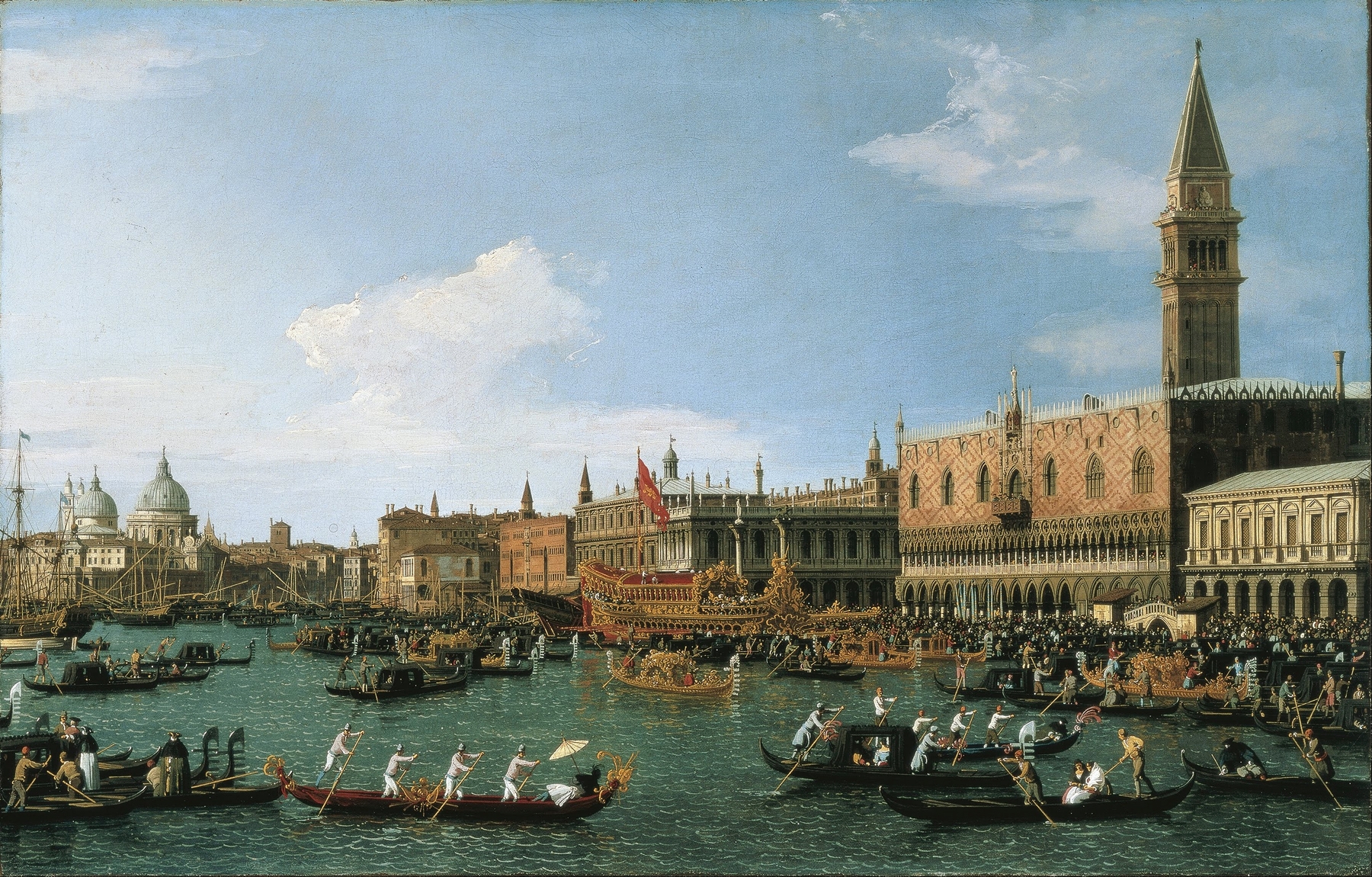
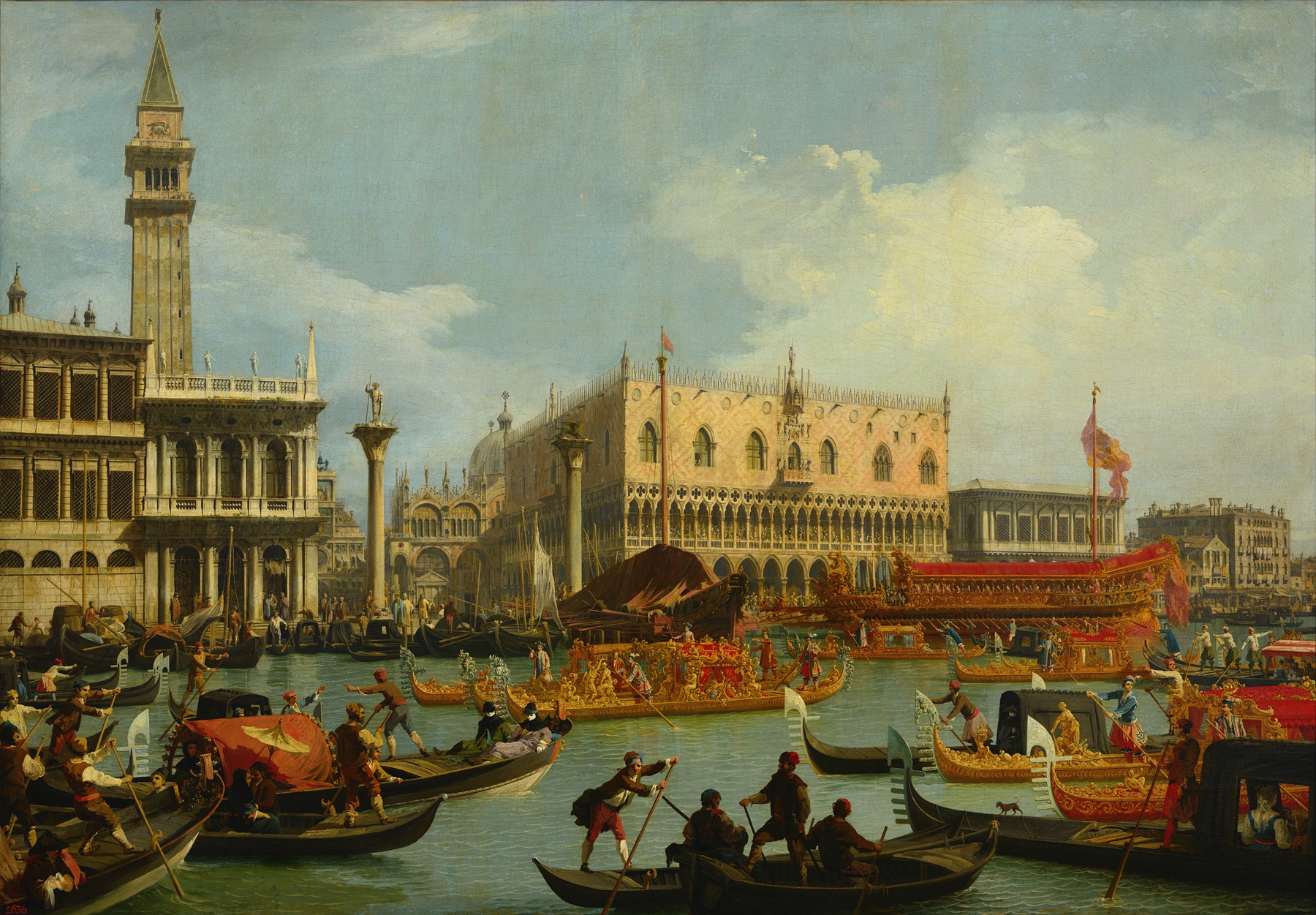
“Sometimes beauty is just pain, disguised in gold.” The shimmering waters of Venice conceal the heavy heart beneath their façade. In *The Bucintore Returning to the Molo on Ascension Day*, the radiance of celebration contrasts starkly with the solitude often felt within the crowd. Look to the center where the grand Bucintore, the state barge of the Doge, cuts through the cerulean waves. Notice how the delicate curves of its ornate structure reach toward the heavens, adorned with gilded details that reflect the sunlight, yet the figures within appear distant, lost in their duties. The composition draws your eye outward, capturing the bustling activity of various boats, yet the soft, muted tones of the background highlight an overwhelming sense of isolation amid the grandeur. This scene brims with contradictions; the jubilant atmosphere of Ascension Day juxtaposes the loneliness that lingers beneath the surface. The figures, while engaged in festivity, seem caught in their own worlds, suggesting a yearning for connection that remains just out of reach. Each brushstroke tells a story of celebration intertwined with a profound longing, inviting viewers to reflect on the solitude that can exist even in moments of communal joy. Canaletto painted this piece between 1727 and 1729 during a period of growing popularity for Venetian architecture and painting. While he was celebrated for his detailed cityscapes, he also grappled with the transient nature of fame and connection in a city thriving on spectacle. The work not only captures a prominent moment in Venetian tradition but also reveals the artist's own contemplation of community and solitude amid the vibrant life of the city.