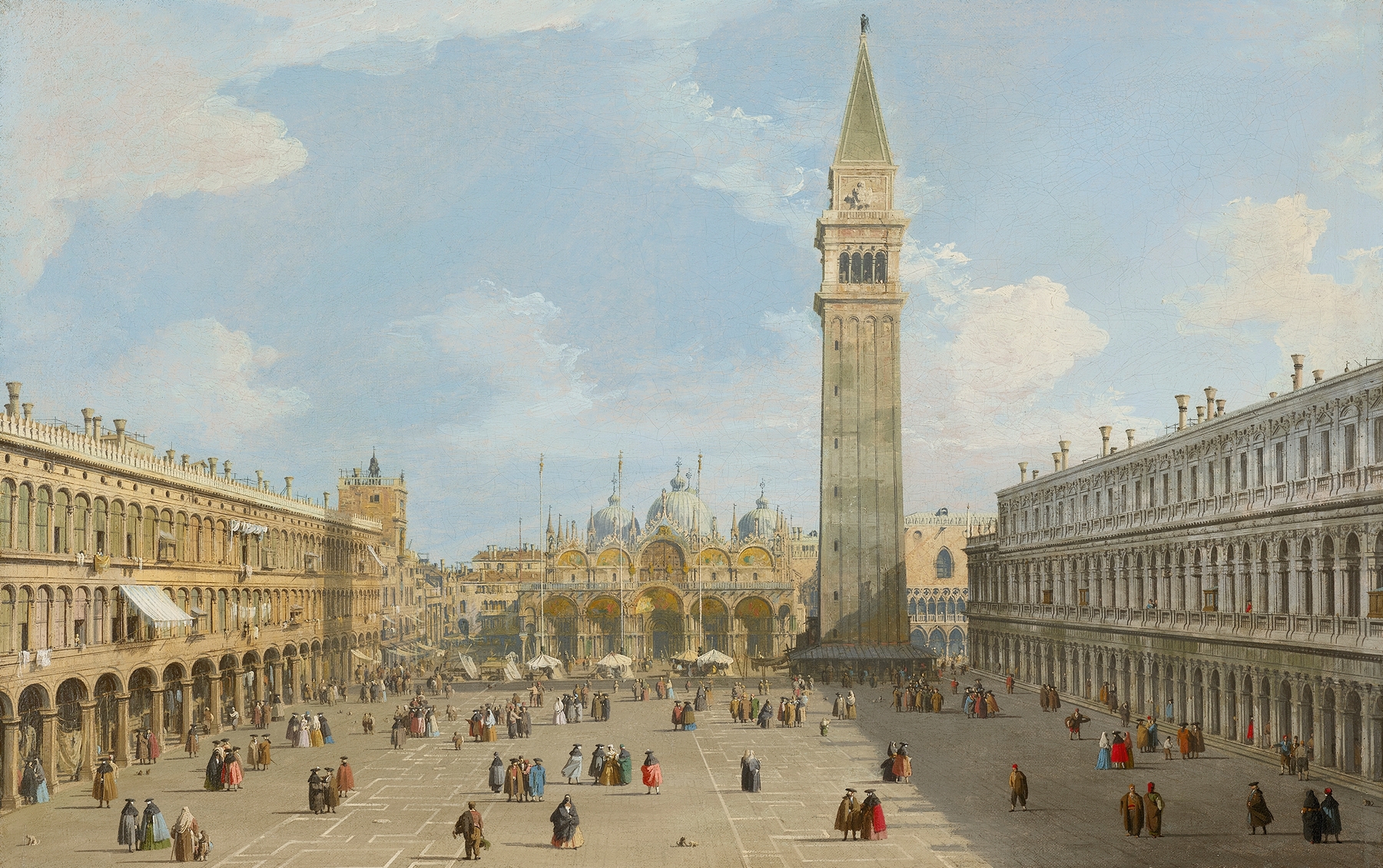
The Piazza San Marco, Venice, looking east towards the basilica — History & Analysis
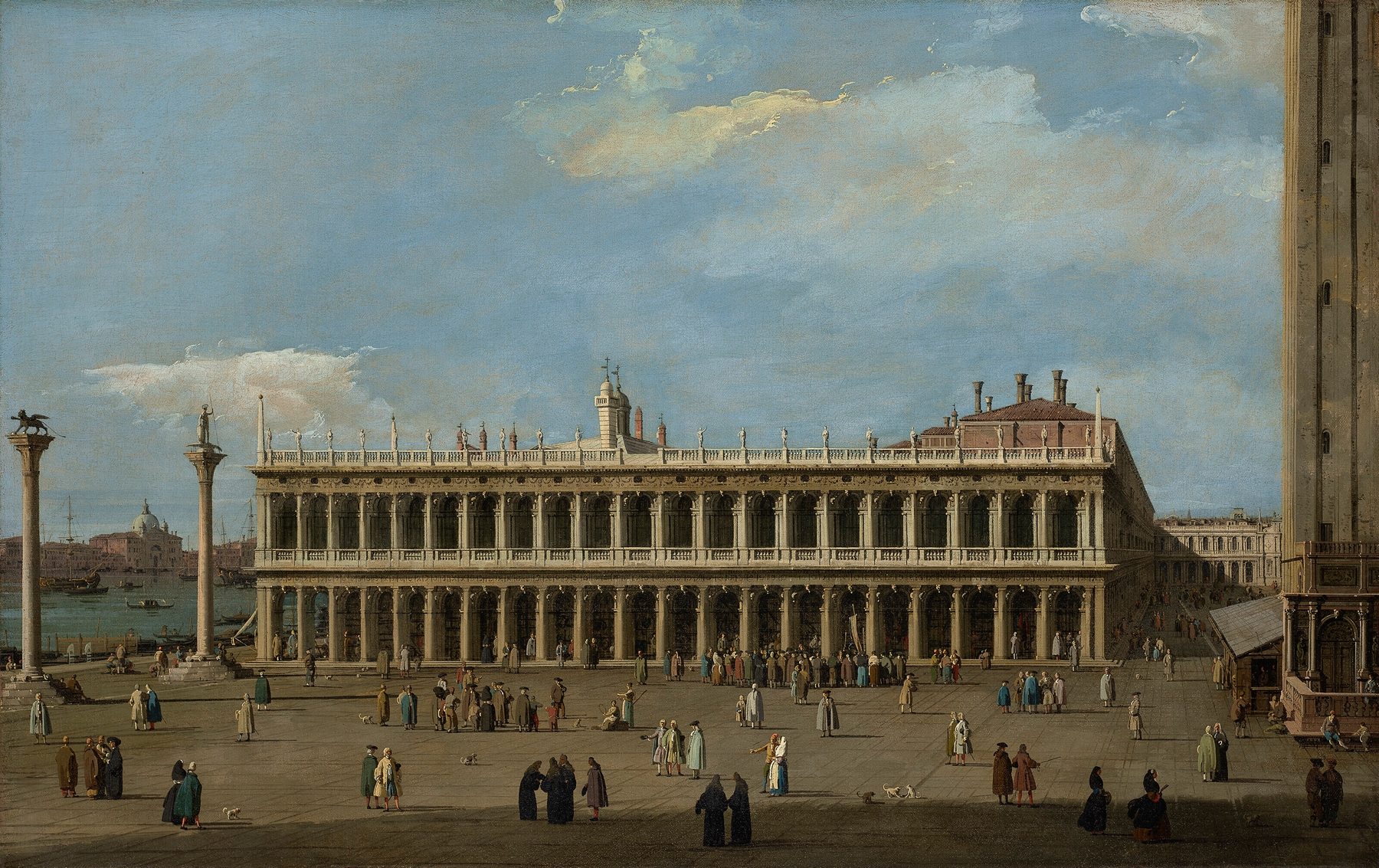
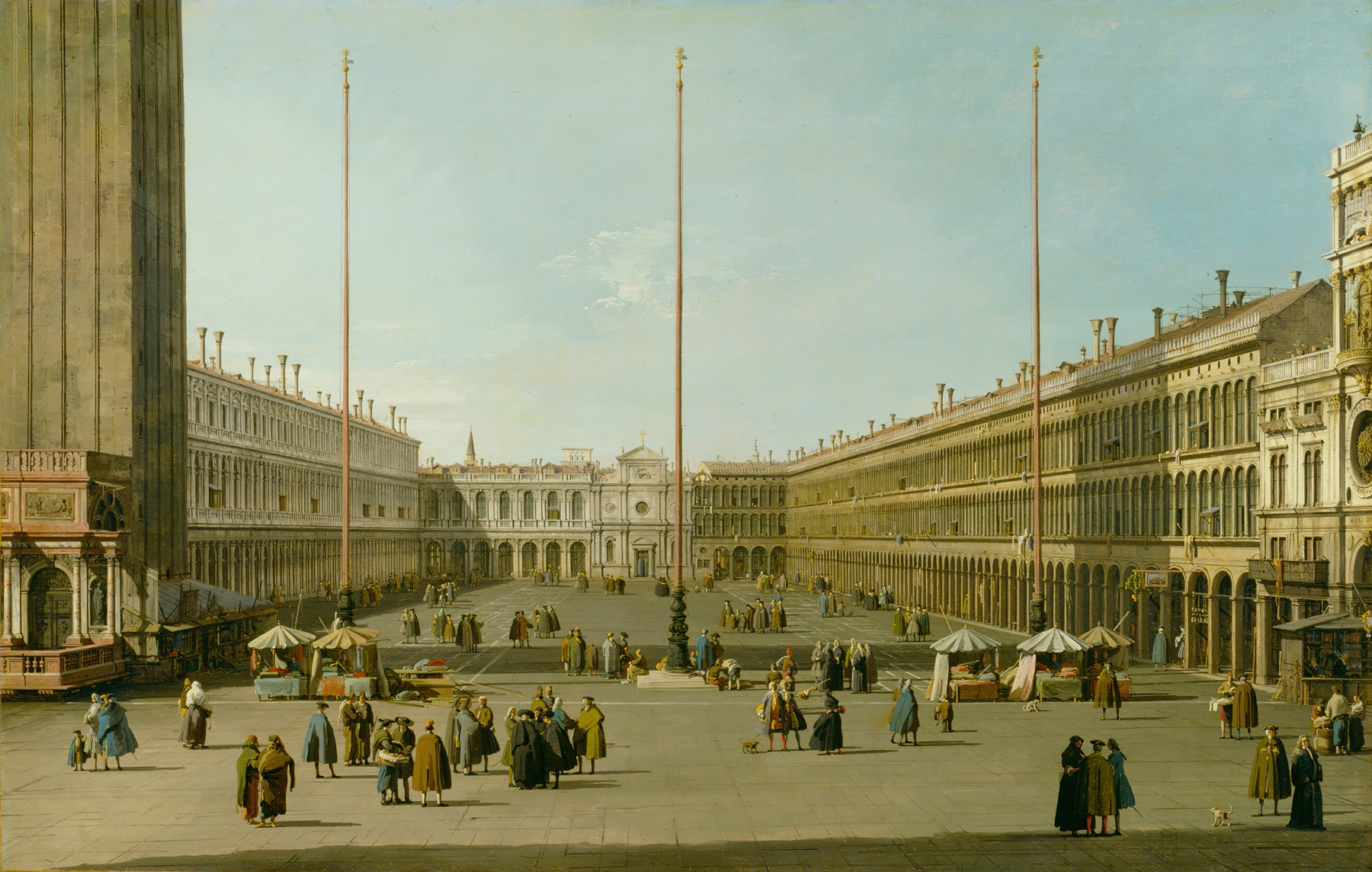
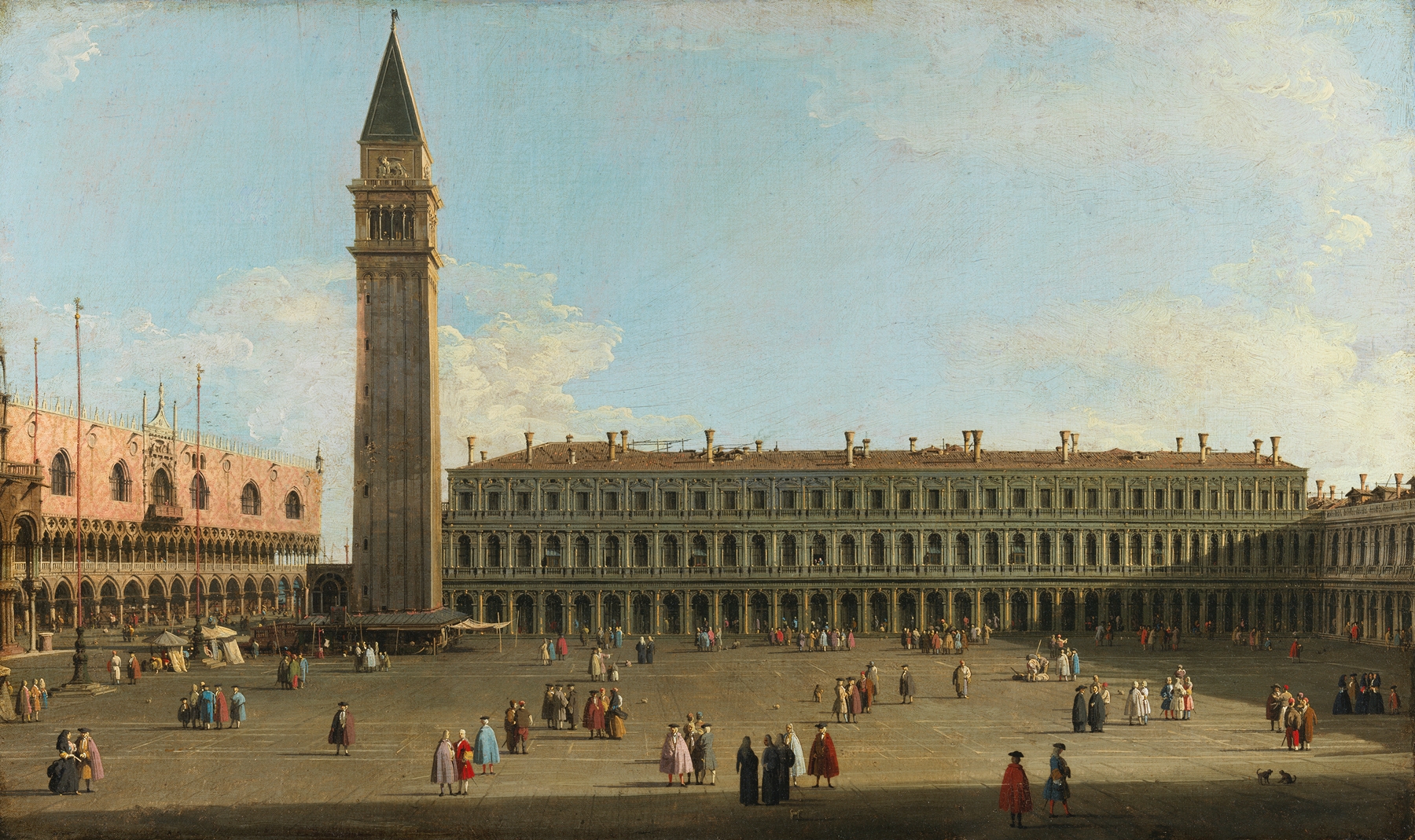
Could beauty survive in a century of chaos? This question lingers like a whisper on the windswept Piazza San Marco, where the ethereal glow of architecture stands resolute against the tumult of time. Look to the right at the majestic Basilica di San Marco, its intricate mosaics glinting under the sun. The vibrant hues of gold and blue breathe life into the scene, drawing your gaze toward the soaring arches that cradle the heavens above. Notice how the meticulously painted details of the buildings, rendered with Canaletto's precision, create an illusion of depth that invites the viewer to step into this bustling Venetian square. The play of light and shadow enhances the drama, with the soft illumination casting gentle reflections upon the cobblestones—the very fabric of this historical moment. Yet, the painting reveals tensions that lie beneath its surface beauty. The bustling figures, each absorbed in their own pursuits, evoke a sense of individual isolation amid the collective vibrancy. Some people are engaged in conversation, while others appear lost in thought, suggesting a deeper narrative of human experience. The juxtaposition between the grandeur of the basilica and the everyday life of the Venetians hints at a longing for transcendence in a world often overshadowed by chaos and uncertainty. Canaletto painted this work during the 18th century, a time when Venice was both a bustling center of artistic innovation and politically fragile. The artist's keen ability to capture the essence of his surroundings coincided with the rise of tourism and the Grand Tour, a period that saw many Europeans seeking beauty and inspiration in Italy. This painting reflects not only the splendor of Venice but also Canaletto’s quest to immortalize a city grappling with its own evolution amidst the tides of history.