Return of ‘Il Bucintoro’ on Ascension Day — History & Analysis
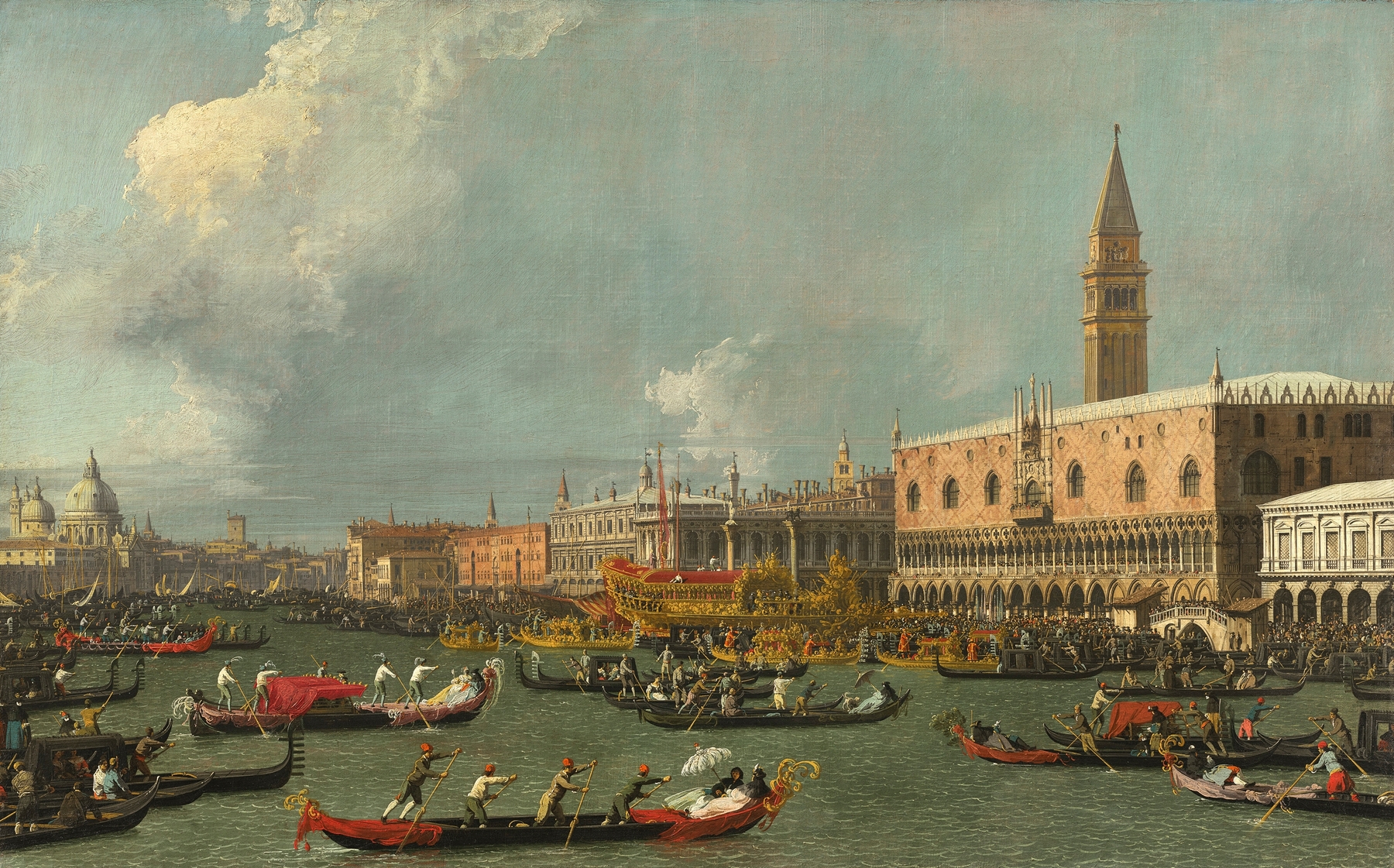
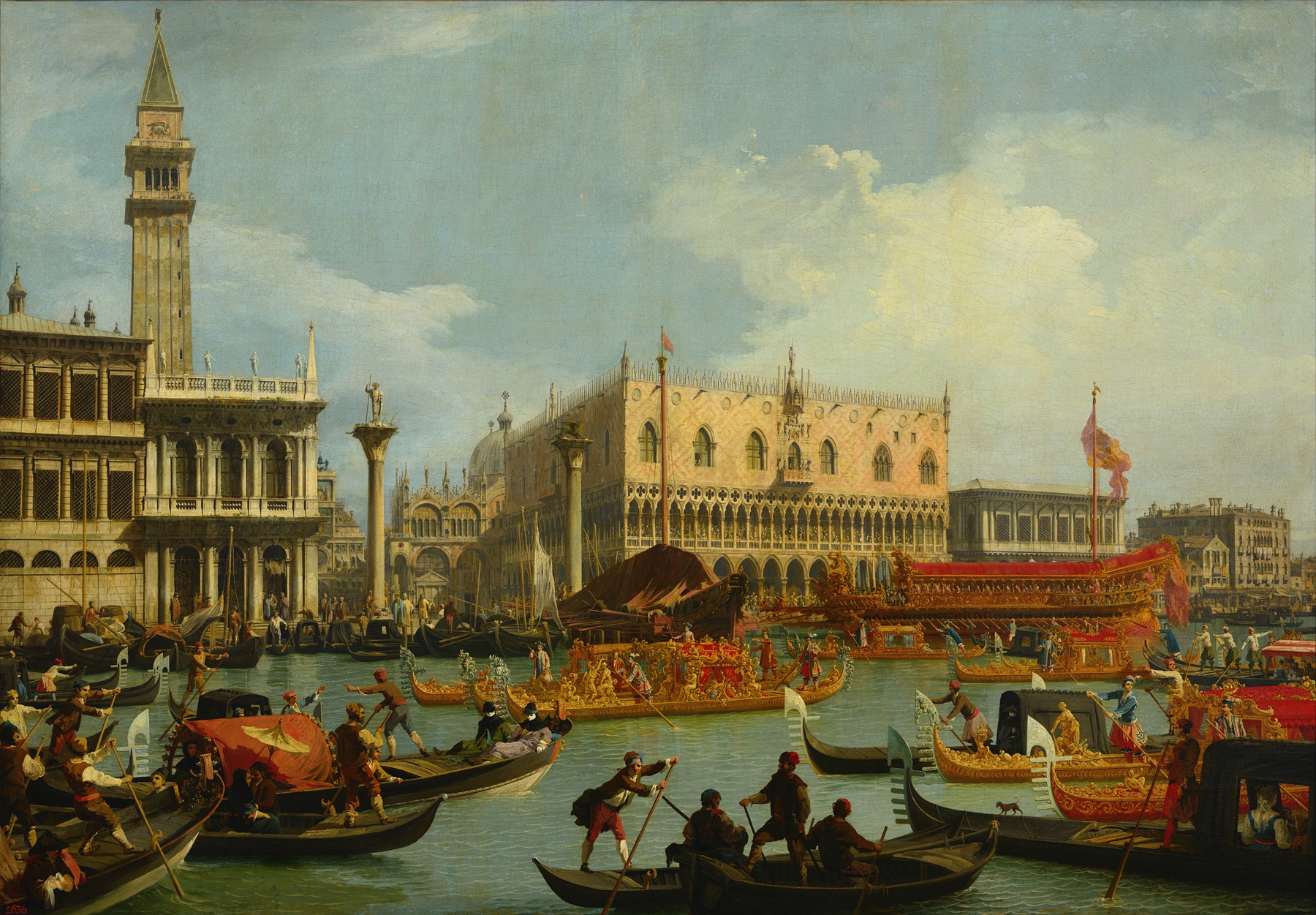
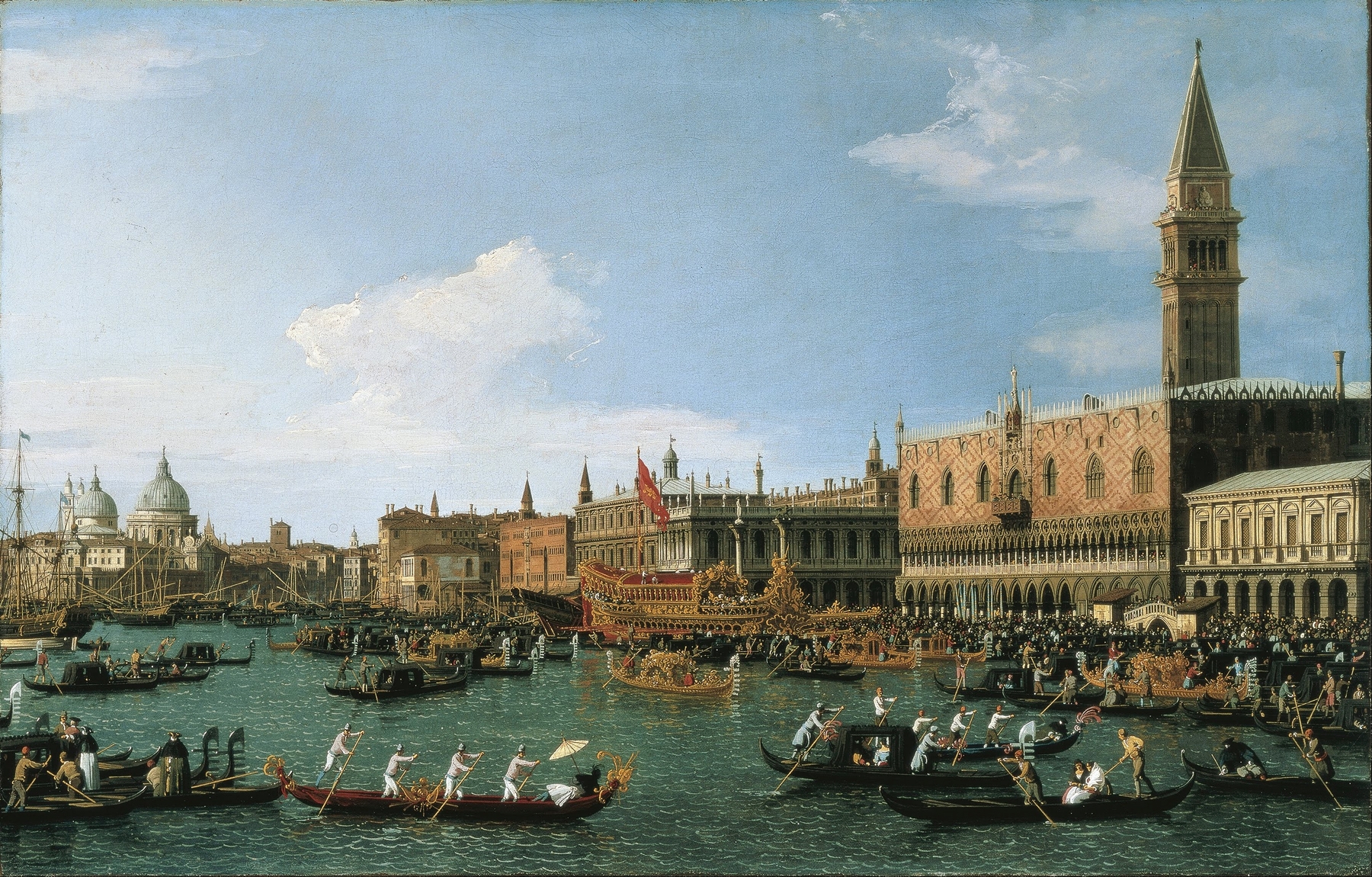
Who listens when art speaks of silence? In a world where the vibrant echoes of history meet the stillness of decay, this painting invites us to confront the passage of time. Look to the left where the grand vessel, *Il Bucintoro*, is docked, its ornate details illuminated by the warm, golden light of a Venetian day. The careful brushwork reveals the elegant figures gathered along the quayside, their postures frozen in reverence and anticipation. Notice how the shimmering reflections ripple across the water’s surface, mirroring the ornate architecture that frames this moment — a striking contrast to the muted, weathered textures of the buildings in the background. The painting is ripe with layered meanings; the opulence of the ceremonial barge juxtaposed against the crumbling facades suggests a tension between splendor and decay. Here, the hustle of a festive occasion slightly obscures the undercurrents of melancholy that run through the scene, as if the celebration itself acknowledges the ephemeral nature of beauty. The figures, caught in a moment of collective joy, silently hint at the inevitable passage of time, where even the grandest of traditions may one day fade into obscurity. Between 1745 and 1750, Canaletto painted this work in Venice, during a period when he was gaining acclaim for his architectural landscapes. This era saw the artist balancing the demands of his patrons with his own artistic vision, as Venice grappled with the realities of decay and renewal. Against this backdrop of cultural richness and historical significance, *Return of ‘Il Bucintoro’ on Ascension Day* stands as a testament to both celebration and the quieter truths that linger in its wake.