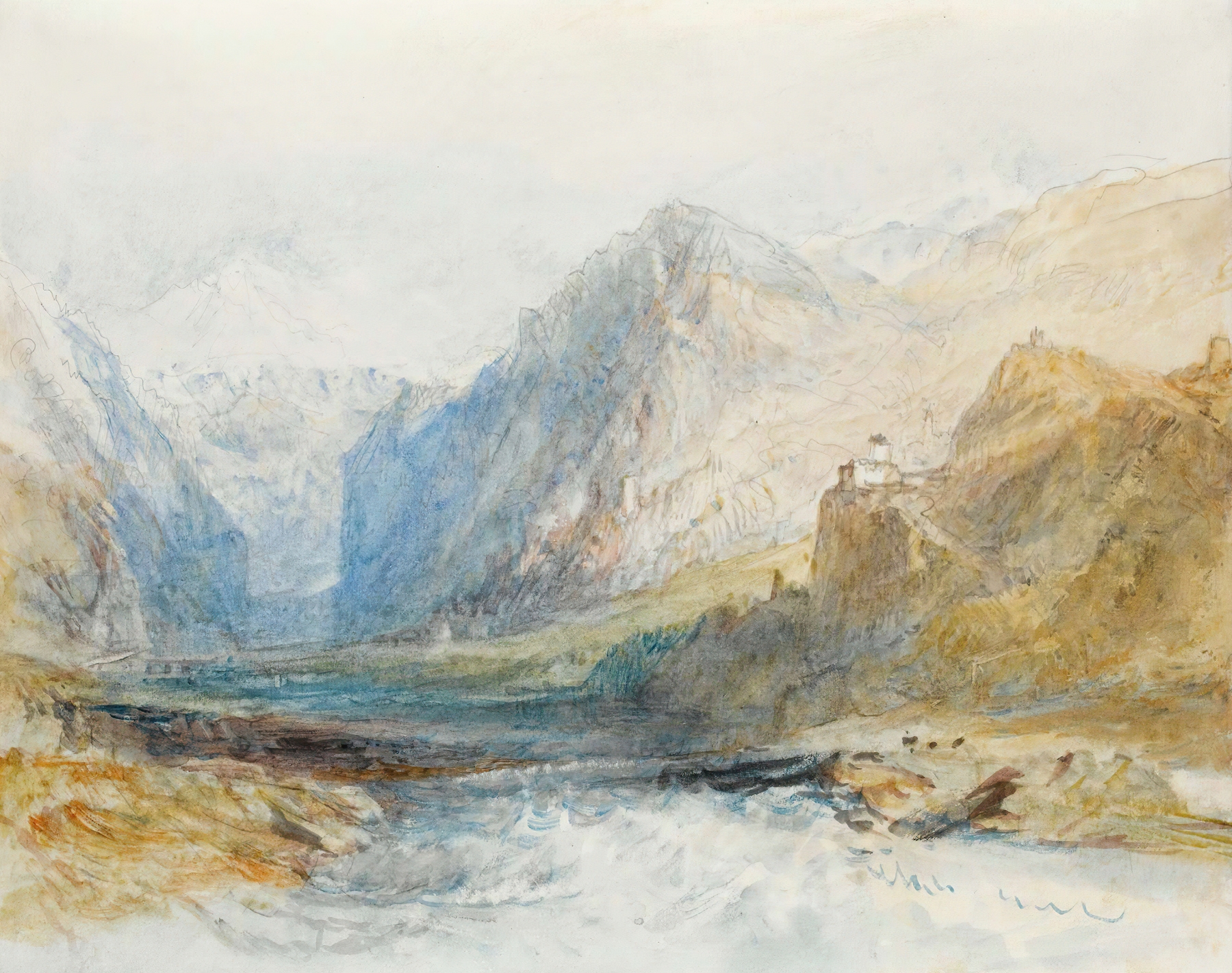
The Domleschg Valley, Looking North To The Gorge At Rothenbrünnen — History & Analysis
“Sometimes beauty is just pain, disguised in gold.” The layers of vibrant landscapes can draw us in, yet also serve as reminders of the obsession that compels us to marvel at nature's paradox. In this vivid portrayal, one cannot help but sense the duality of delight and melancholy. Focus your gaze on the dynamic interplay of colors that span the canvas. Notice how the warm golden hues embrace the rugged terrain, almost illuminating the dark crevices of the gorge. Turner’s brushwork creates a sense of movement; the clouds swirl above, seemingly engaged in a dialogue with the earth below. The valley stretches into the distance, inviting the viewer to venture further, while the bold strokes evoke both awe and trepidation. The emotional tension resides in the contrast between the serene beauty of the landscape and the violent forces that shape it. The gorge, both inviting and foreboding, symbolizes nature’s dual nature—its enchanting allure often intertwined with instabilities. This nuance captures the artist's struggle with obsession; he presents a world that is at once breathtaking and treacherous, compelling us to confront our own vulnerabilities. Created in 1840, this work emerged during a period when Turner was increasingly drawn to the sublime aspects of nature, reflecting contemporary Romantic ideals. Living in London, he was grappling with personal and professional changes, including the loss of loved ones and shifting tastes in the art world. In this context, *The Domleschg Valley* reveals not only the masterful representation of the landscape but also the inner turbulence that drove Turner's artistry.