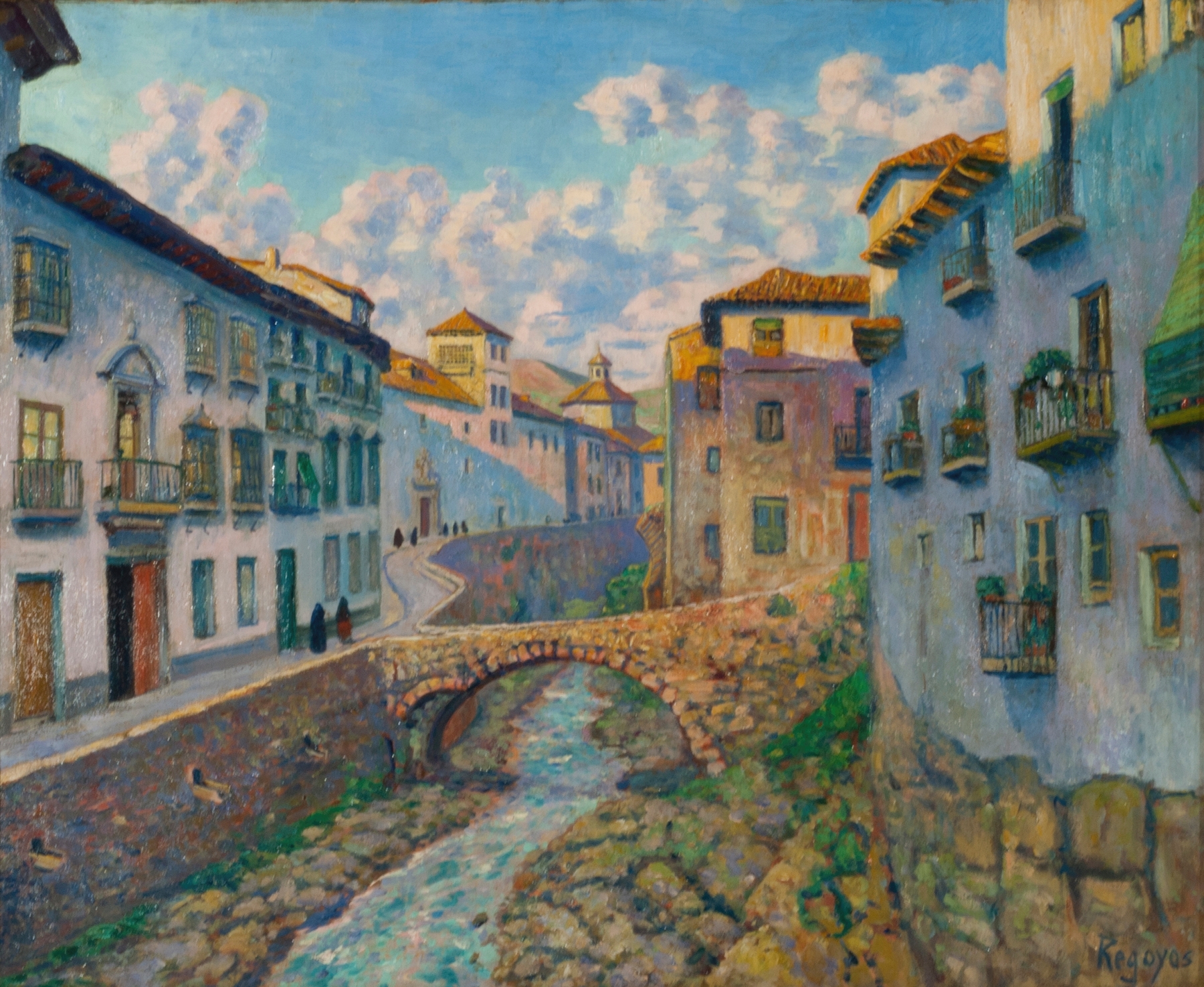
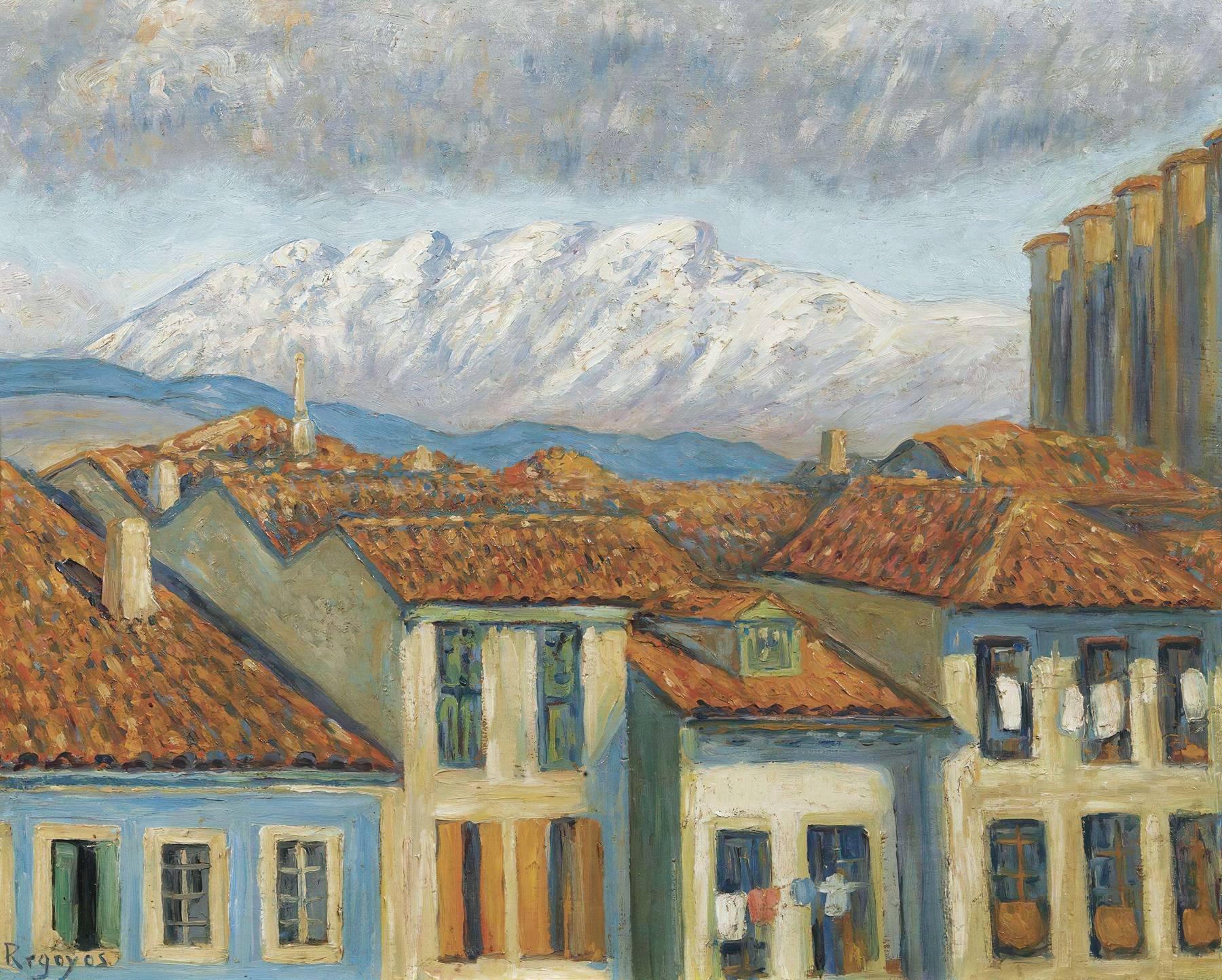
The Downpour. Santoña Bay — History & Analysis
Who listens when art speaks of silence? In The Downpour. Santoña Bay, a striking stillness lingers amid the tumult of nature, where movement and tranquility dance in a delicate balance. Look to the center, where the horizon shimmers beneath a veil of rain, visually anchoring the seascape. The muted blues and grays merge with hints of ochre, breathing life into the stormy atmosphere.
Notice how the brushstrokes evoke a sense of chaos; yet, the water remains eerily calm, reflecting the drama above with a stillness that enhances its power. The outpouring clouds appear to swallow the light, but subtle glimmers peek through, suggesting hope amid the tempest. Delve deeper into the emotional tension captured in this moment. The contrast between the dark, brooding sky and the serene bay suggests vulnerability against nature's fury. Elements of movement, from the gusting winds to the cascading rain, echo the uncertainty of life's storms.
The absence of human figures adds to this introspective quality, inviting viewers to contemplate their own relationship with nature's forces and the silence that underlies such grandeur. In 1900, while The Downpour. Santoña Bay was conceived, Darío de Regoyos was immersed in the vibrant Spanish artistic community, influenced by Impressionism and the natural world around him. His focus on capturing the transitory effects of light and atmosphere was a reflection of the broader avant-garde movement, as artists were increasingly drawn to explore emotional depth through landscape. This painting emerges not only as a testament to his skill but also as a narrative of the tempestuous spirit of its time.