El tajo de Ronda — History & Analysis
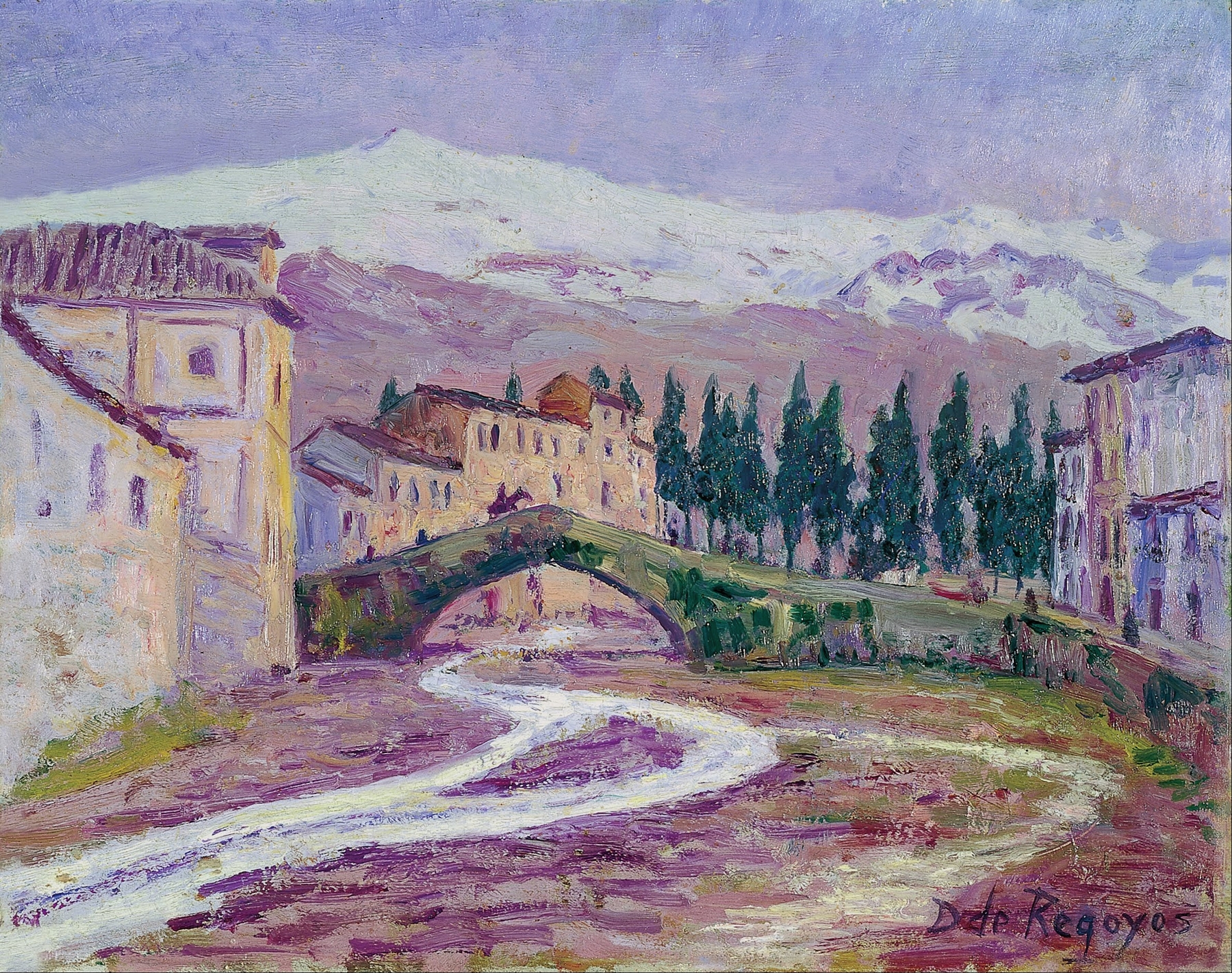
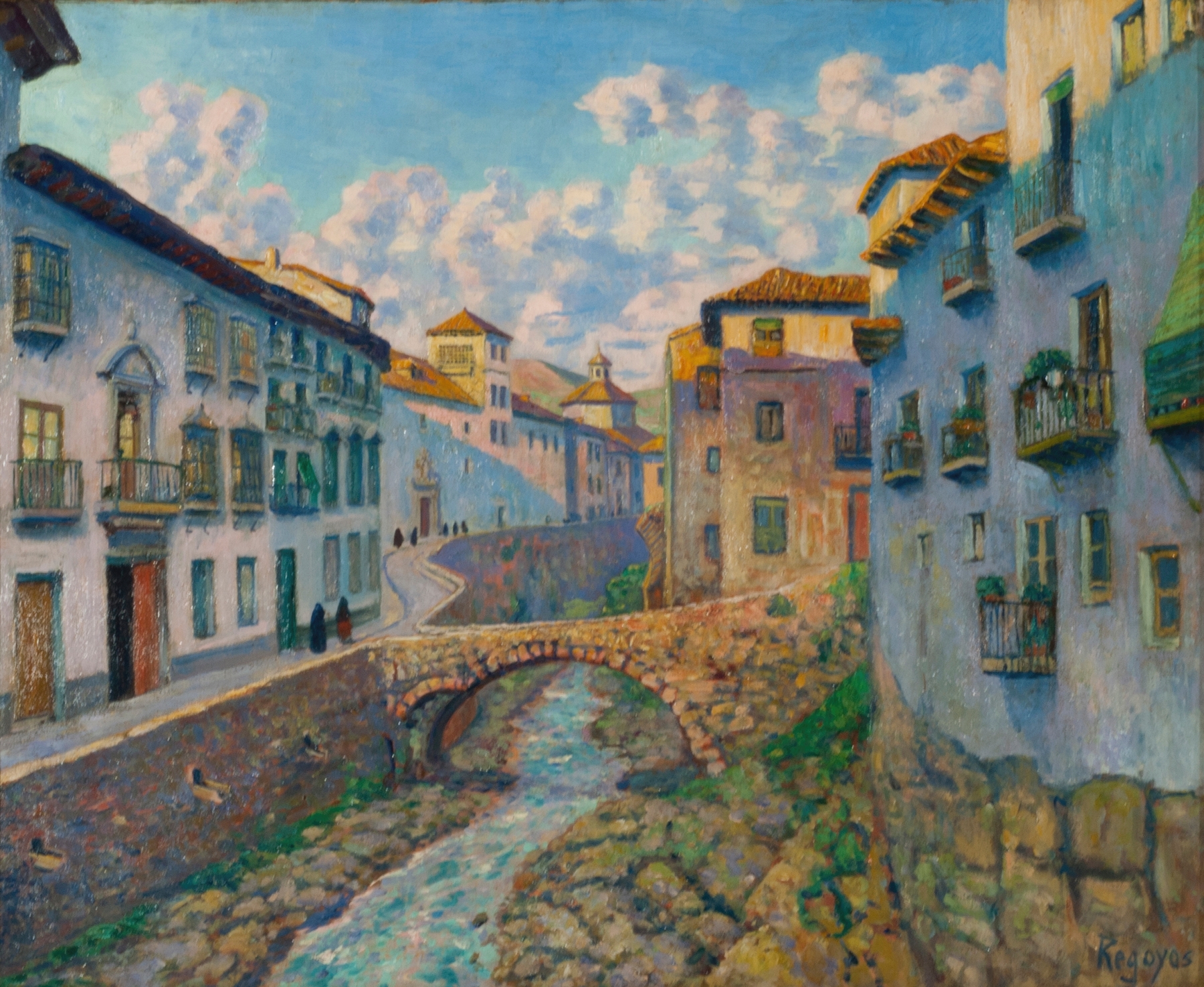
When did color learn to lie? In the hands of a master, shades become truths and deceptions entwined, speaking of divinity hidden within the earthly. Look to the left at the deep blues and greens that cradle the rugged cliffs of Ronda, each stroke of paint capturing the rocky embrace of nature. The stark contrast of the pristine white bridge stands out against the dramatic backdrop, drawing the eye towards the intricately woven landscape.
Notice how the sunlight dances across the surface, revealing the textured layers and the artist's deft brushwork that breathes life into stone, water, and sky. Deeper meanings emerge in the contrasts present in the work. The serene beauty of the landscape juxtaposes the overwhelming presence of the bridge, symbolizing humanity's endeavor to connect disparate worlds. The color palette evokes a divine essence, suggesting the intersection of nature's raw power and human ingenuity, prompting a reflection on our relationship with the environment.
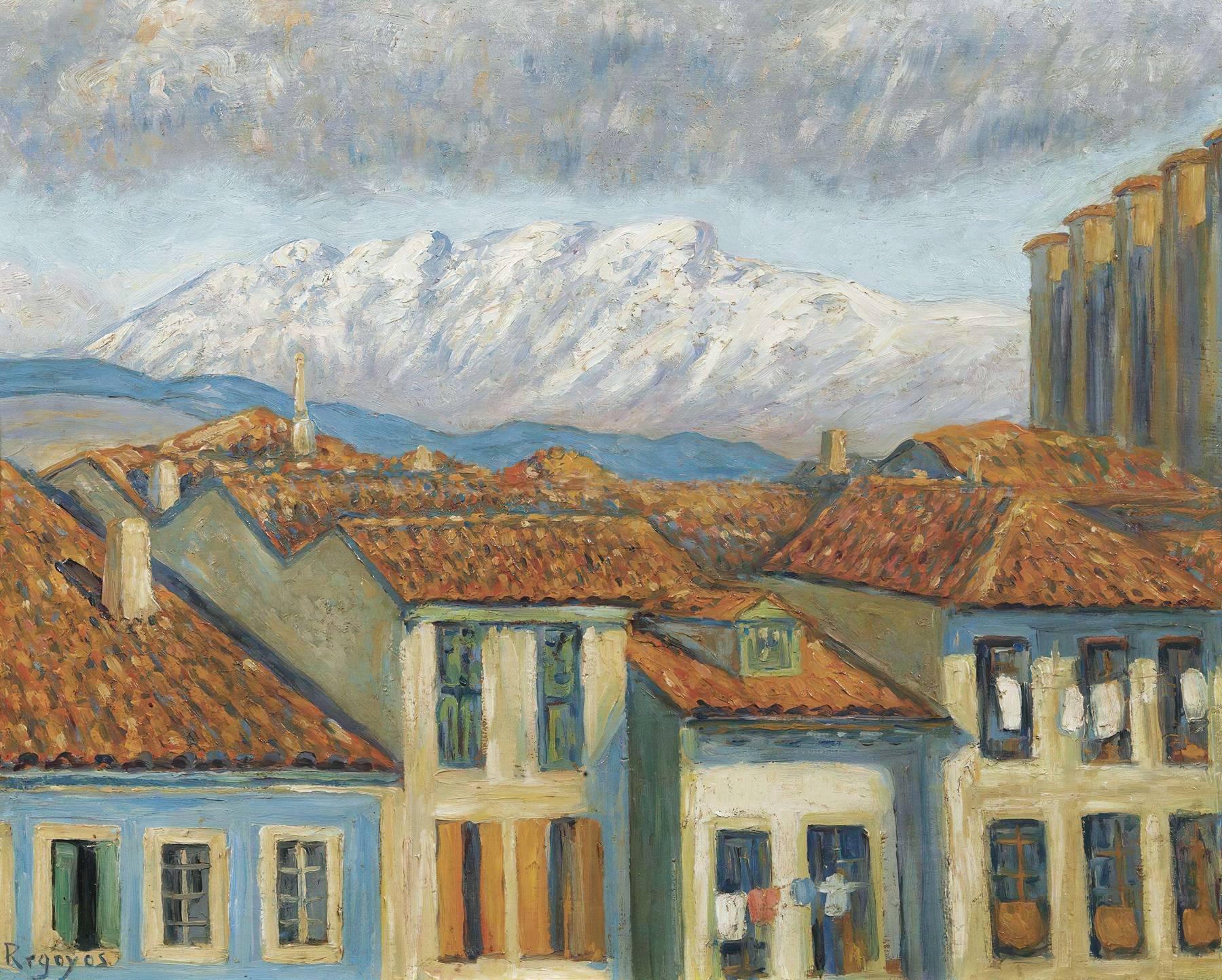
Darío de Regoyos painted this work around 1895, inspired by the breathtaking vistas of the Spanish town of Ronda. During this period, he was deeply engaged with the emerging Symbolist movement, which sought to convey emotional and spiritual experiences through color and form. Regoyos' exploration of landscape reflected not only his personal journey but also the broader artistic shifts taking place in Europe, as artists began to reimagine the natural world through their unique lenses.