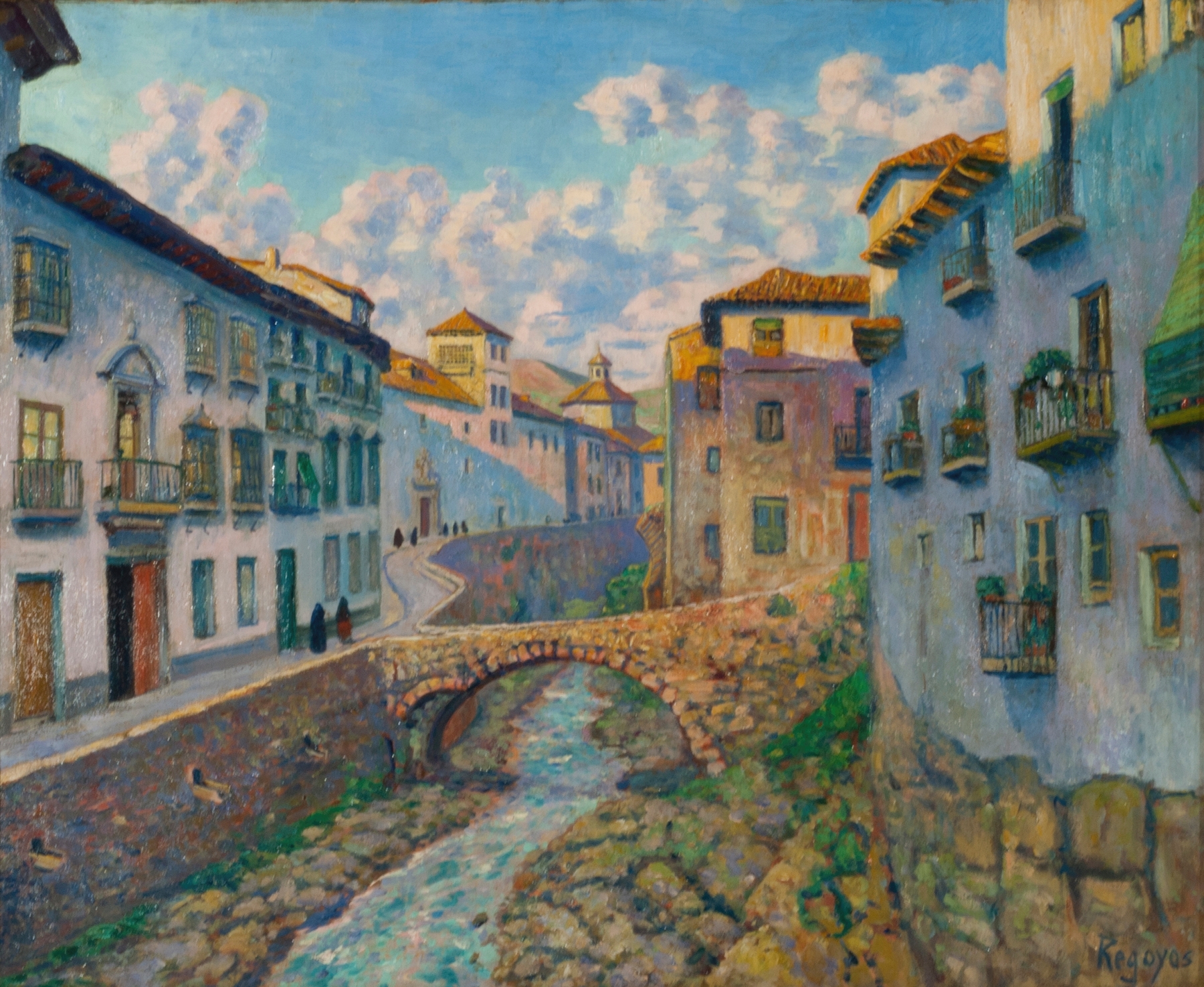
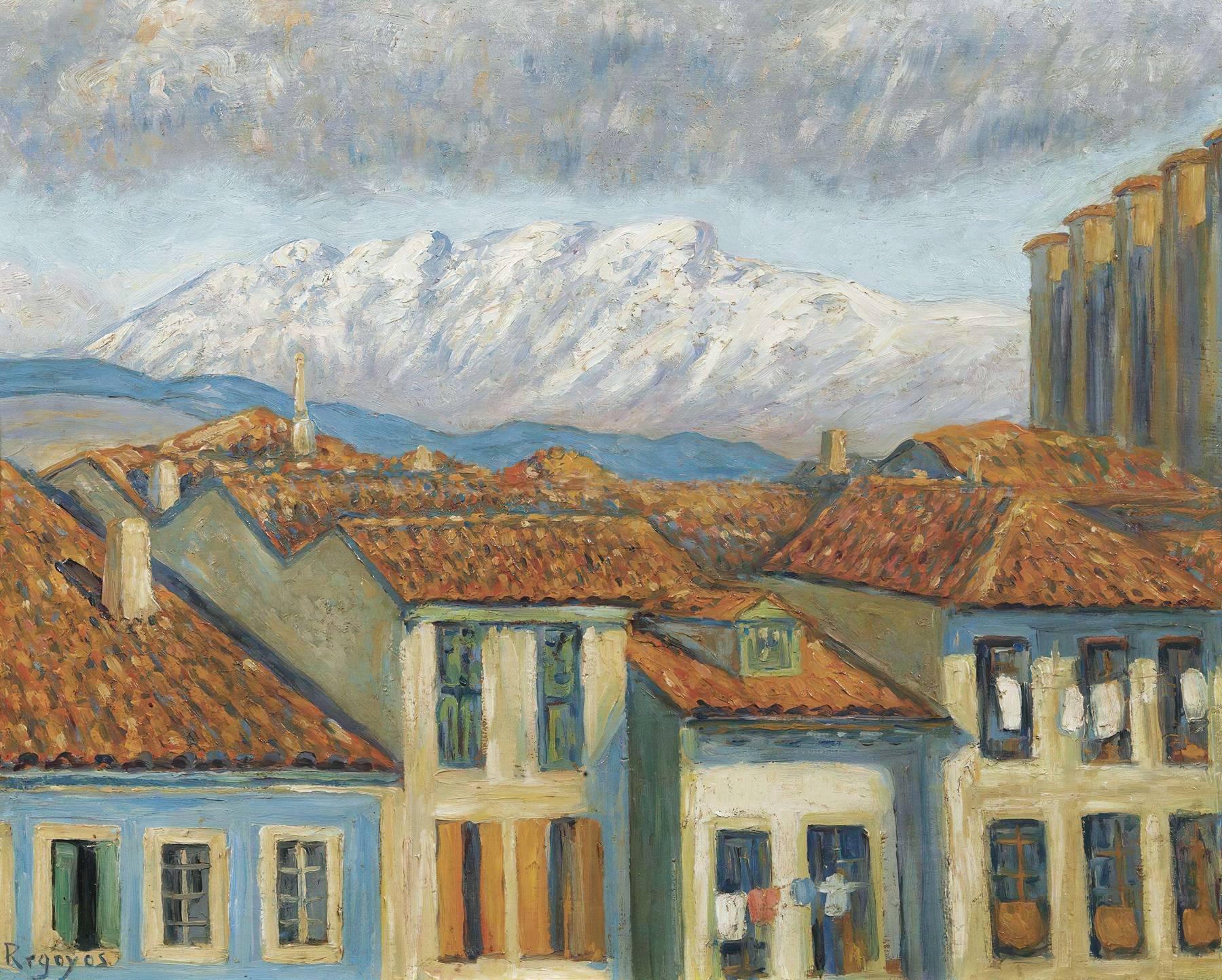
Vendredi Saint en Castille (Good Friday in Castile) — History & Analysis
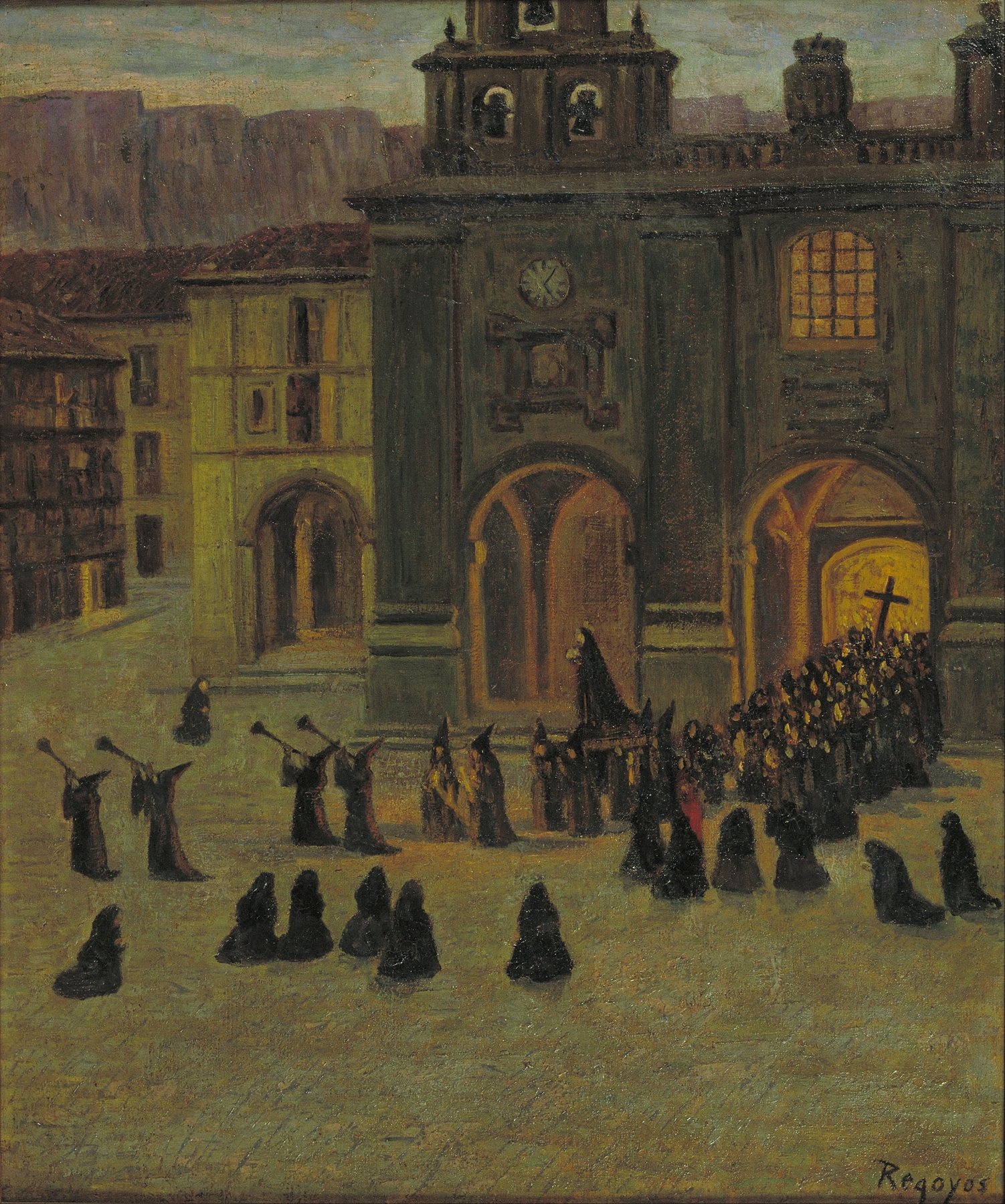
“Every silence here is a confession.” In the hushed moments of Good Friday, the air hangs heavy with unspoken fears and a somber reverence that envelops the scene. The weight of tradition blends with an unsettling anticipation, capturing the fragile balance between faith and trepidation. Look first at the figure in the foreground, a solemn man draped in dark garments that seem to absorb the dim light. His bowed head and closed eyes suggest introspection, drawing your gaze deeper into the painting.
The muted palette of browns and grays conveys a sense of mourning, contrasting with the muted flickers of candlelight that dance around the figures. Notice how the light creates pools of illumination, highlighting the textures of the fabric and the intricate details of the surrounding architecture, which looms large and austere. Amidst the figures, a palpable tension emerges; the juxtaposition of the crowd's stillness against the vibrant flickers of flame evokes a fear of the unknown. The subtle expressions in the faces of the onlookers reflect a collective anxiety, their emotions held tightly within the confines of their dress.
This contrast between silence and the looming shadows reinforces the deeper meaning of this moment—how faith can coexist with uncertainty. Created in 1904 during a period of introspection in Spain, the artist painted this work amidst a cultural resurgence in regionalism and modernism. Regoyos was influenced by the Symbolist movement, seeking to convey emotions and spiritual sentiments through his art. In a world grappling with political unrest and social change, this piece captures the essence of communal fear and devotion, making it a profound reflection of the times.