Pancorbo: Passing Train — History & Analysis
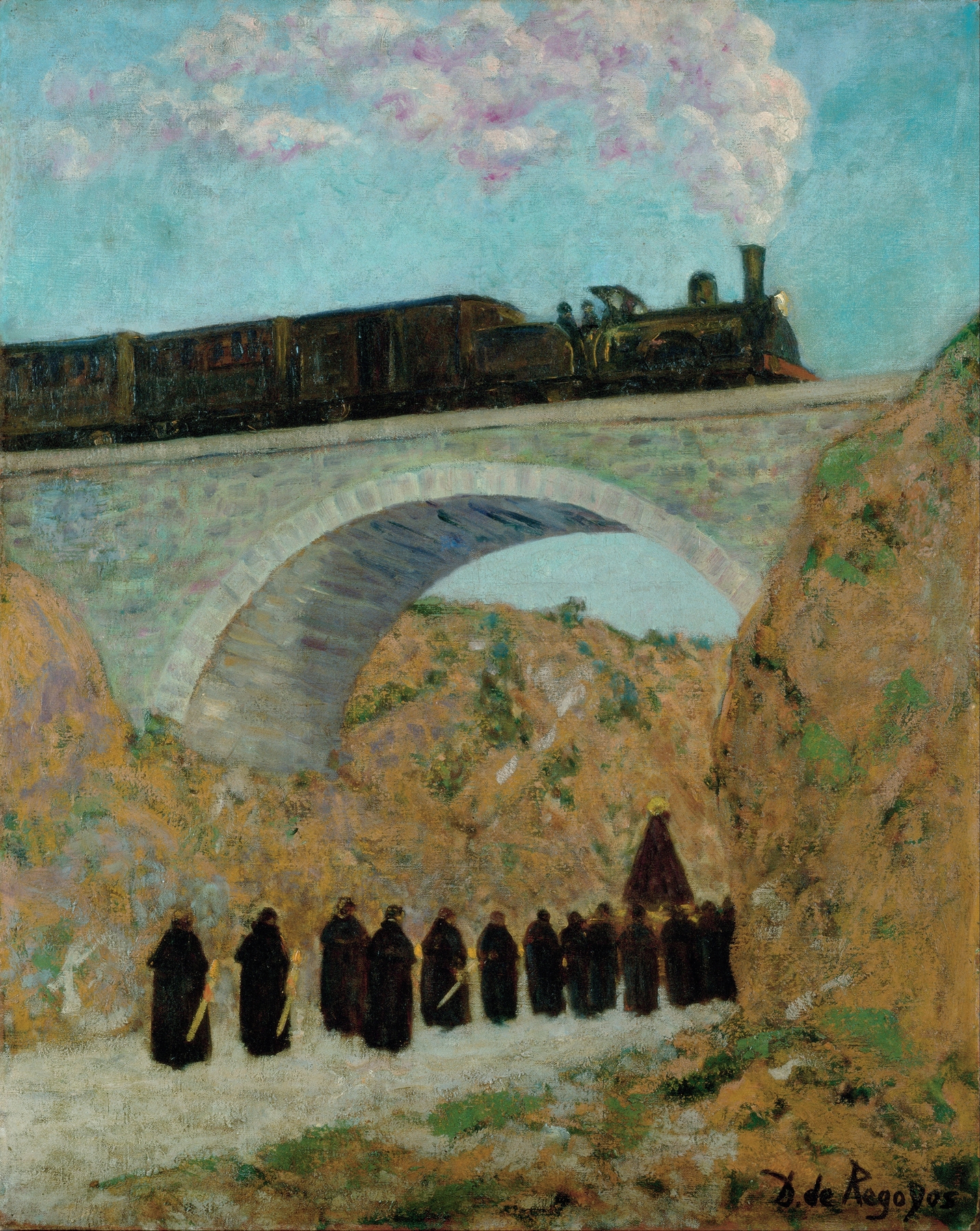
What secret hides in the quiet of the canvas? In Pancorbo: Passing Train, the viewer is invited to contemplate the stark contrasts between the bustling life of the train and the stillness of the surrounding landscape. Look to the left at the train, its powerful presence cutting through the serene panorama. The bold strokes and vivid colors of the locomotive create a sense of urgency against the soft, muted hues of the rolling hills and distant mountains.
Notice how the light falls upon the tracks, glimmering like a thread that weaves together the fleeting moment and the eternal backdrop of nature. The composition captures the eye, drawing it along the curve of the train as it disappears into the horizon. Within this scene lies a profound juxtaposition: the swift passage of human innovation stands in stark contrast to the tranquil, timeless nature surrounding it. The train, a symbol of progress, suggests the relentless march of modernization, while the undulating hills embody the enduring essence of the earth.
This tension creates a dialogue about the truth of existence, evoking feelings of nostalgia and contemplation about what is lost in the wake of advancement. In 1901, the artist captured this moment while living in Spain, amidst the rise of modernism that was reshaping the art world. De Regoyos, influenced by the impressionist movement, sought to depict not just the surface of the landscape but the emotional truths it inspired. His work reflects a period of transition, as technology began to alter the very fabric of life, making us ponder the delicate balance between progress and preservation.