The Dutch Man-of-War ‘De Gouden Leeuw’ on the River Y near Amsterdam — History & Analysis
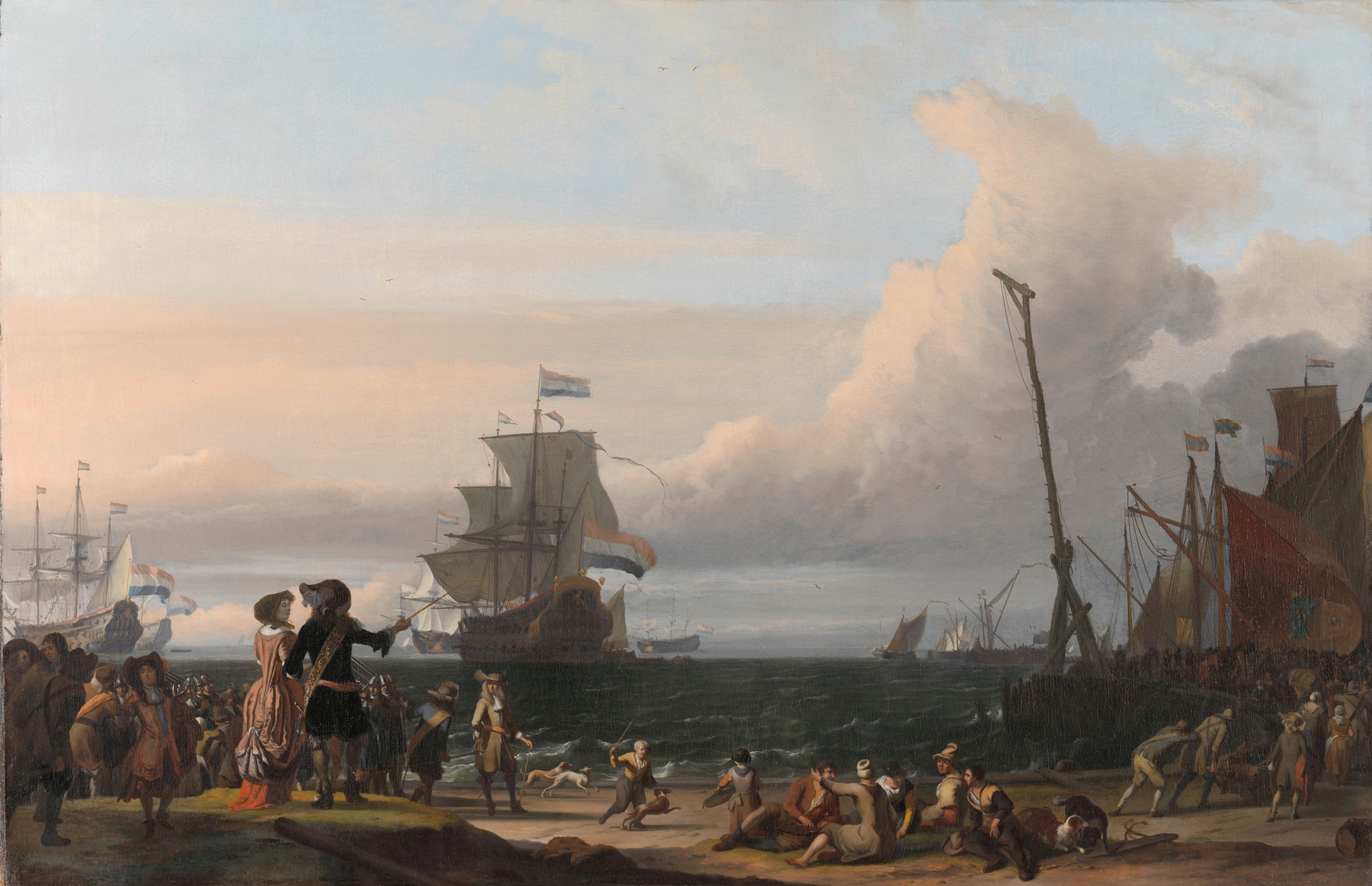
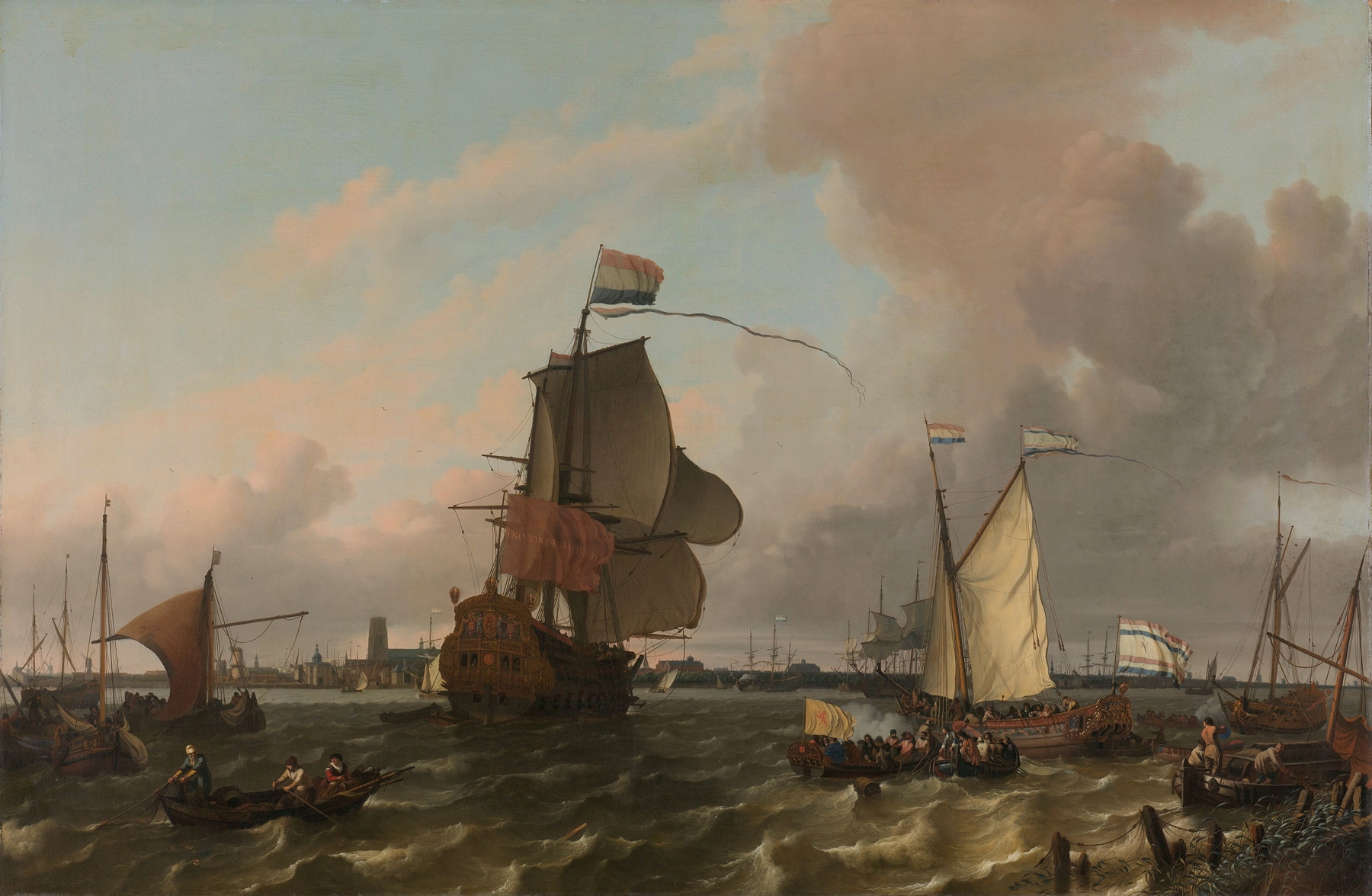
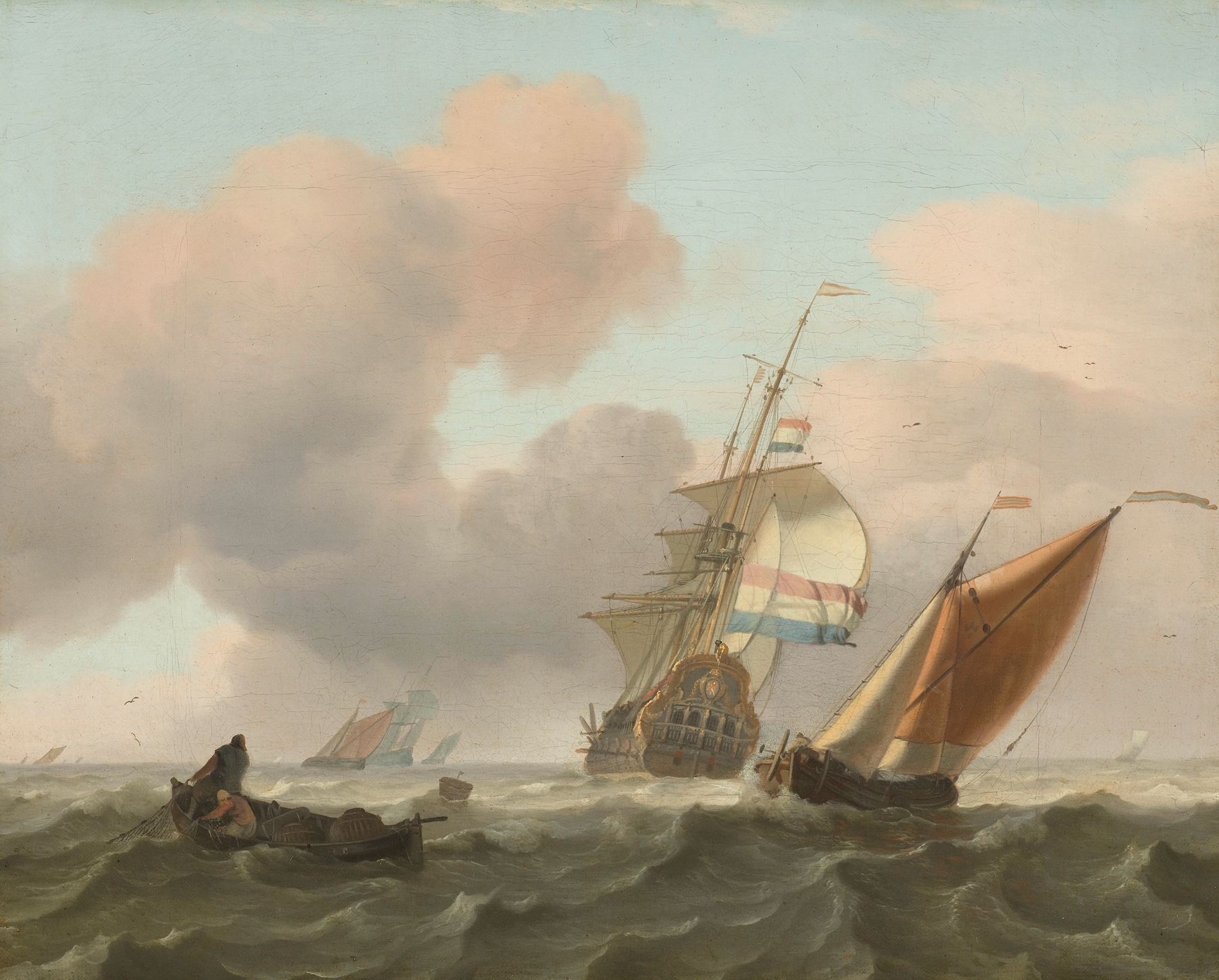
“Art reveals the soul when the world turns away.” Within the delicate strokes of a brush, beauty manifests, capturing the essence of life in motion and stillness. The dance of nature and humanity can often be found in scenes such as this, where the eye is drawn to the intricate interplay of light and shadow upon the water’s surface. Look to the center of the canvas, where the majestic vessel, De Gouden Leeuw, commands attention with its imposing sails unfurled. Notice how the shimmering waves reflect a palette of blues and greens, bringing life to the river as it glides gracefully through the landscape.
The artist’s meticulous attention to detail is evident in the textures of the ship's hull, the luster of the water, and the billowing clouds overhead, all painted with a mastery that invites the viewer to explore every inch. Beneath the surface of this picturesque setting lies a tension between human ambition and the vastness of nature. The ship, a representation of Dutch maritime prowess, contrasts with the tranquil beauty of the river, suggesting a delicate balance of power and serenity. The distant figures on the shore hint at the lives intertwined with the sea, creating a poignant reminder of the reliance on and respect for the natural world that surrounds us.
In 1674, while residing in Amsterdam, Ludolf Backhuysen painted this work during a period of immense maritime expansion for the Netherlands. The Dutch Golden Age was flourishing, and the artist found himself amidst a cultural renaissance that celebrated exploration and trade. This painting not only reflects the era’s naval accomplishments but also encapsulates a deep appreciation for the beauty found in the everyday moments of life along the waterways.