Warships in a Heavy Storm — History & Analysis
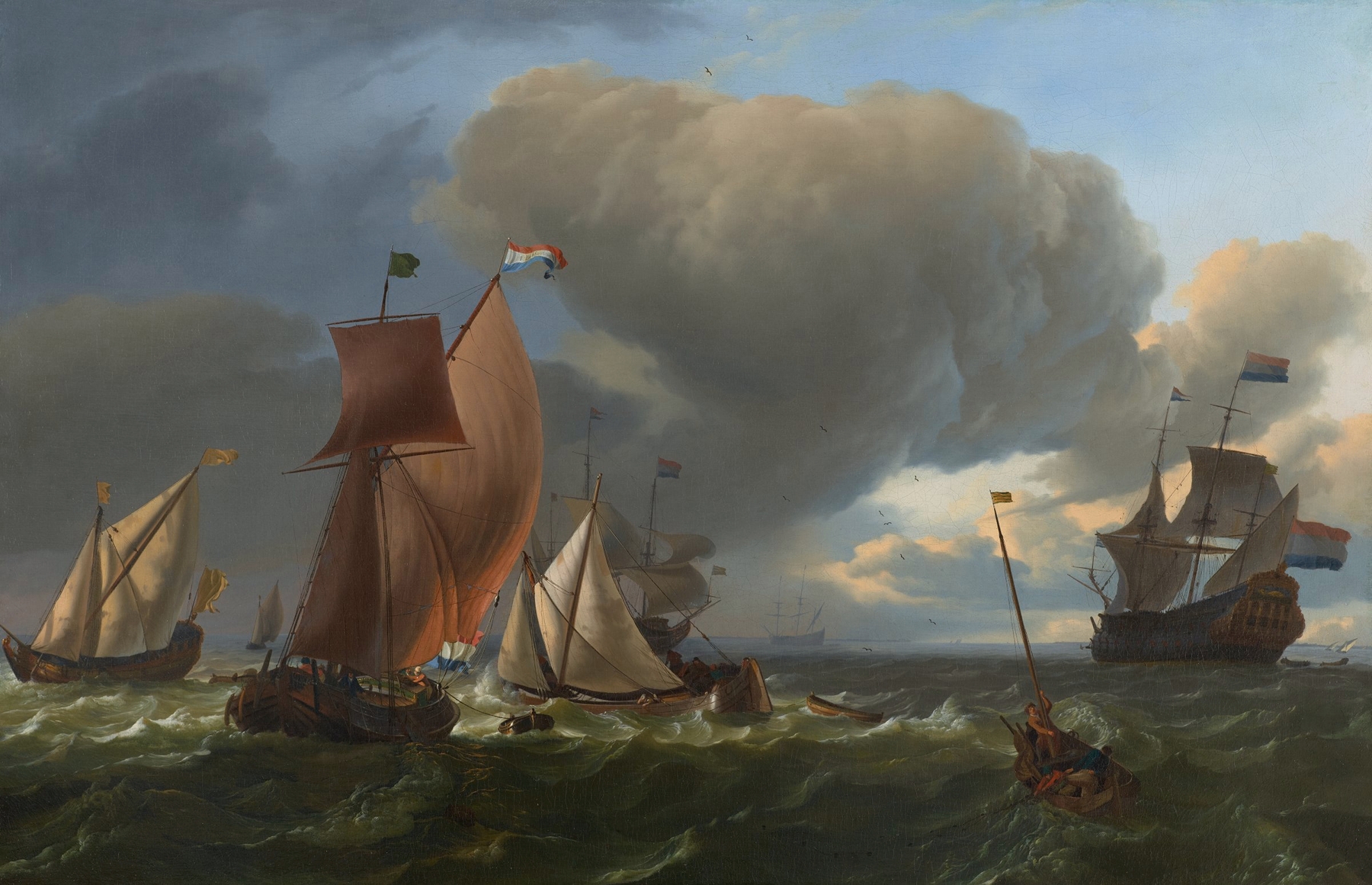
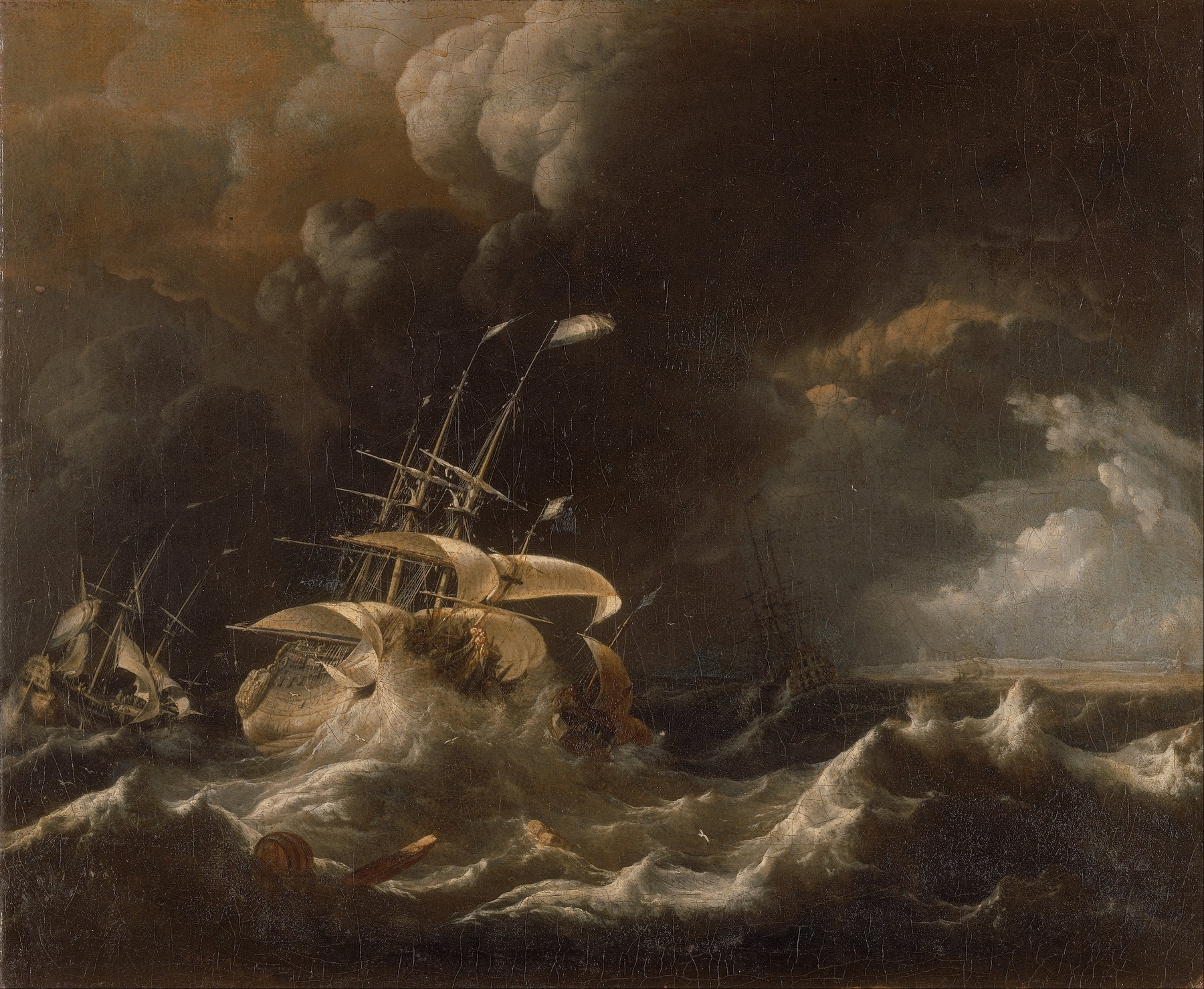
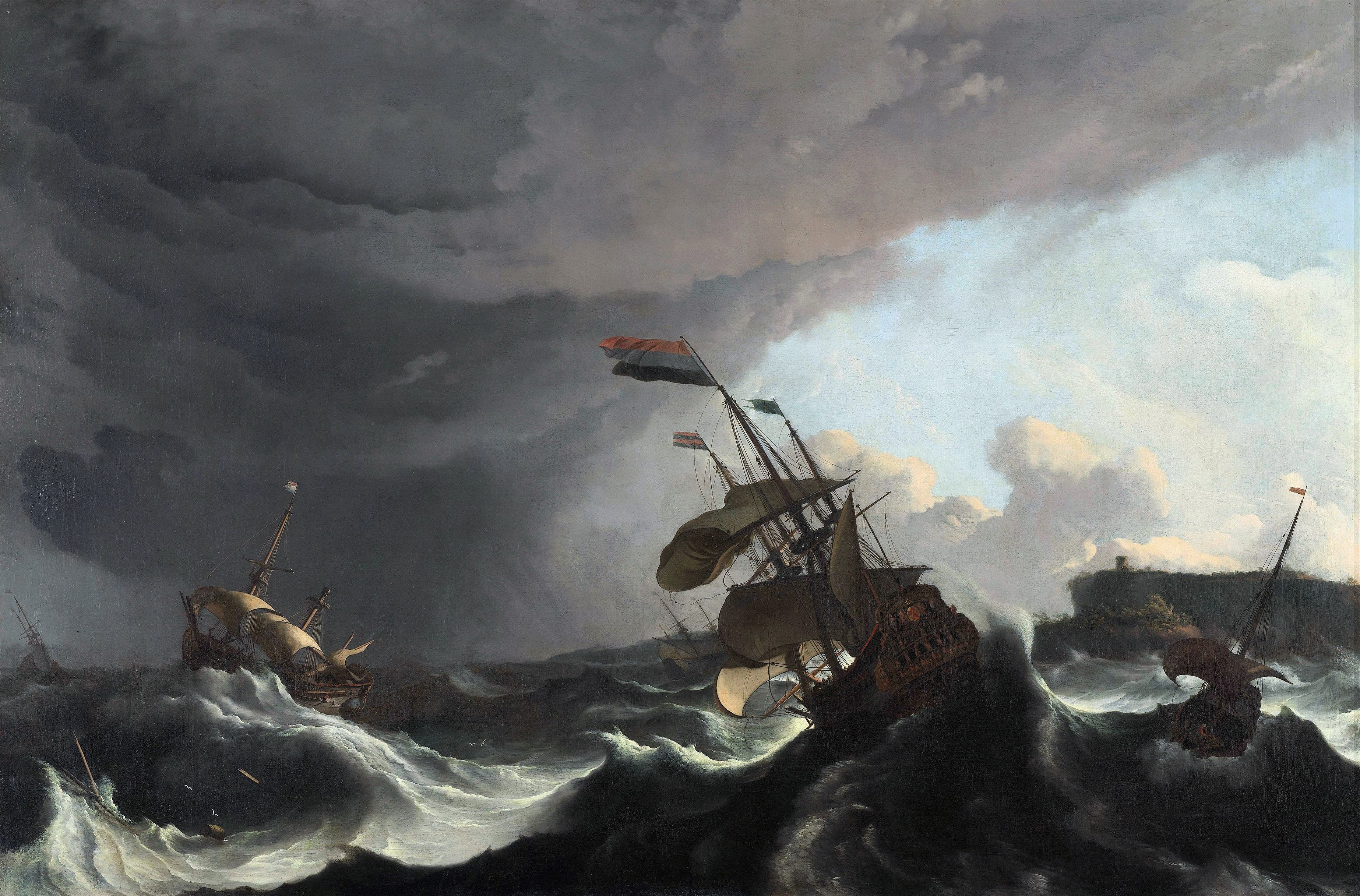
Did the painter know this moment would outlive them? In Warships in a Heavy Storm, destiny intertwines with nature’s fury, capturing a clash not just of man and sea, but of time itself. Look to the center, where the tumultuous waves rise like jagged teeth, eager to consume the gallant vessels battling against them. The dramatic chiaroscuro highlights the ships, their sails taut and straining, painted in deep hues of brown and green, contrasting against the stormy gray sky.
Notice how the light breaks through the clouds, illuminating the scene with a haunting beauty that seems to defy the chaos, drawing the viewer’s eye to the resilience of human endeavor amidst nature’s wrath. Emotionally, this painting conveys the struggle between human ambition and the relentless power of the elements. Each ship, while a testament to human ingenuity, also highlights vulnerability; the rigging is threatened by the storm, and the figures aboard seem both heroic and desperate. The swirling clouds and tumultuous waves remind us of life's unpredictability, while the artist's skillful brushwork evokes a sense of impending fate, capturing a moment caught between hope and despair.
Ludolf Backhuysen painted Warships in a Heavy Storm around 1695, during a period when maritime power was a symbol of national might. Living in the Netherlands, where naval prowess shaped international identity, he was inspired by both the sea’s beauty and its perilous nature. The late 17th century was a time of great exploration and conflict, reflecting an era when such scenes held profound significance for viewers who understood the stakes of human ambition against the untamed forces of nature.