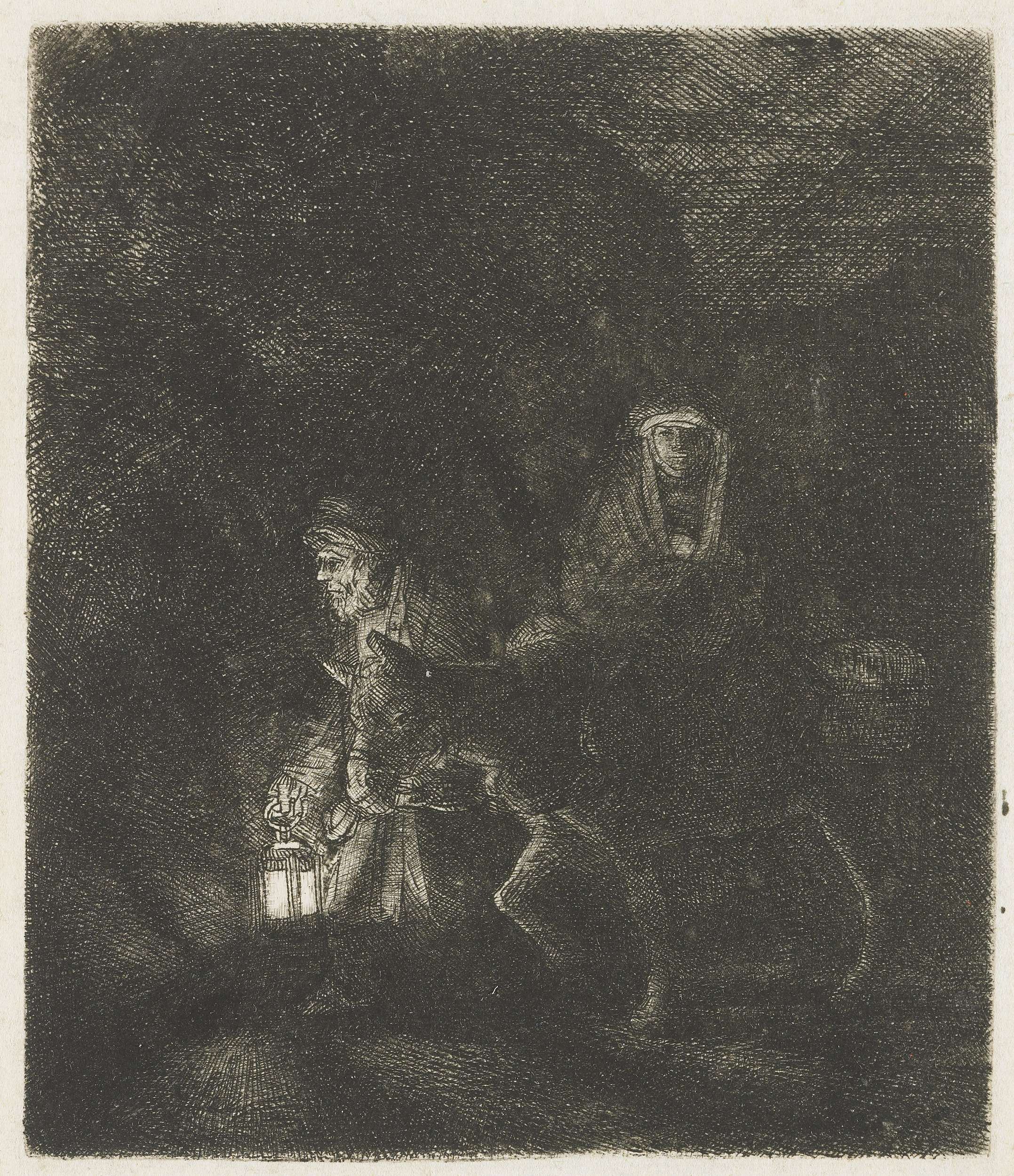
Where does light end, and longing begin? The interplay of shadow and illumination in art has the power to evoke profound emotions, conjuring the weight of absence amid the warmth of presence. Look to the left, where a gentle glow emerges from the figures of Mary and Joseph, cradling the child as they embark on their harrowing journey. The soft, warm light spills across their faces, illuminating their expressions of both resolve and trepidation. Notice how the darkness encroaches from the edges of the canvas, enveloping the scene in an intimate embrace, suggesting the dangers and uncertainties that lie ahead. The rich, earthy tones work in harmony, creating a sense of depth that transports the viewer into this poignant moment. The contrasts in *The flight into Egypt: a night piece* resonate deeply, highlighting the tension between safety and peril. The light symbolizes hope and divine protection, while the surrounding shadows whisper of the lurking threats that accompany their flight. Subtle details, like the gesturing hands of the figures and the tranquil demeanor of the donkey, enrich the narrative, evoking the duality of fear and faith. Each brushstroke captures a fleeting moment of serenity amidst an overwhelming sense of loss and impending change. Rembrandt created this work in 1651 while living in Amsterdam, during a period marked by both personal and artistic turmoil. The artist faced severe financial difficulties and the loss of loved ones, which infused his work with a deep sense of introspection. This piece reflects not only the struggles of his time but also the broader cultural and spiritual conflicts that echoed through Europe, revealing the artist’s profound connection to the human experience.