The flight into Egypt: a night piece — History & Analysis
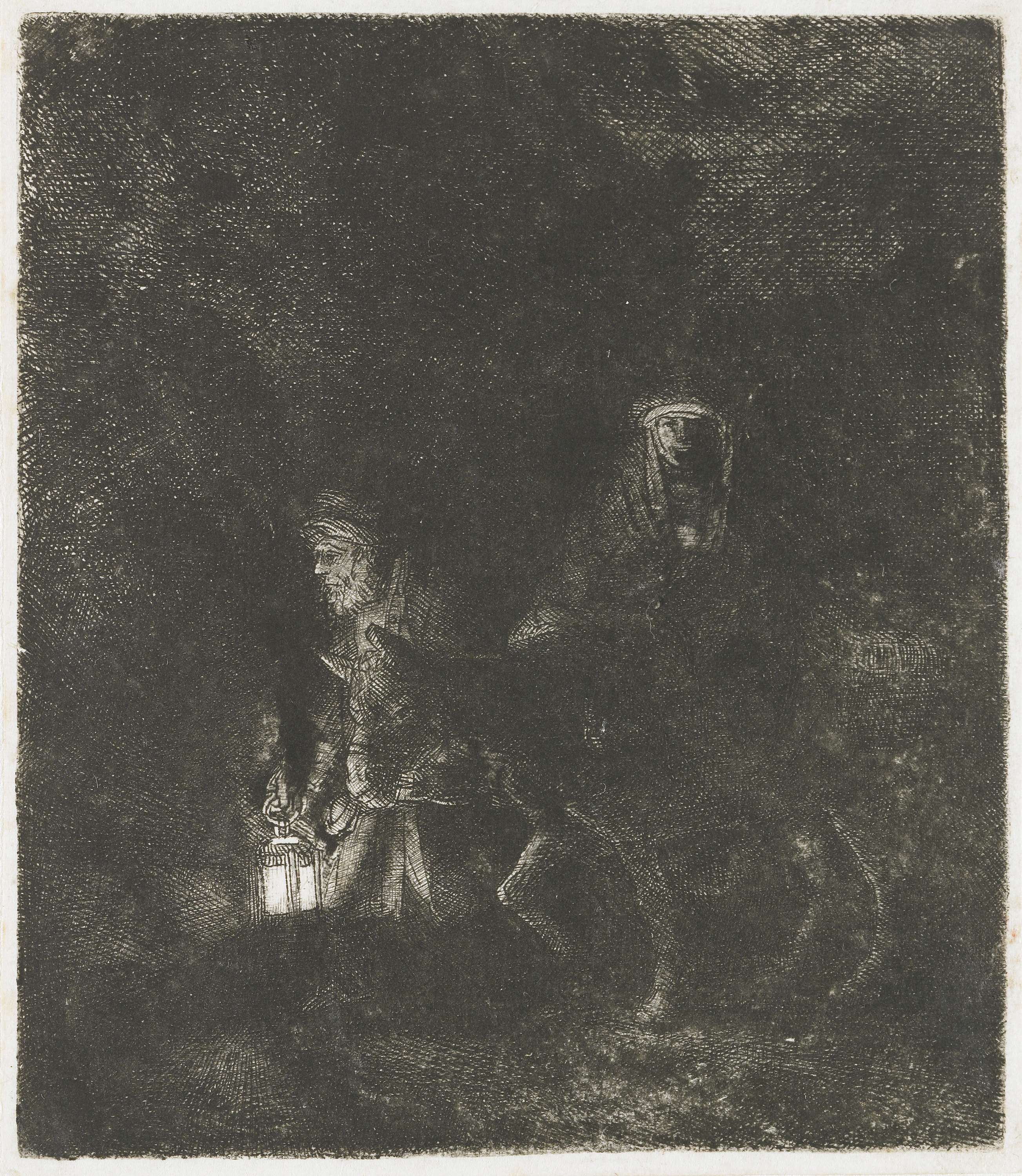
“Every brushstroke is a heartbeat remembered.” In a world teetering on the brink of revolution, there lies a profound connection between artistry and the tempest of humanity’s journey. Look to the center of the canvas, where the figures of Mary, Joseph, and the infant Christ are illuminated softly by a moonlit glow. Rembrandt’s masterful play of chiaroscuro brings attention to their weary faces, capturing a moment both tender and fraught with unspoken fears. Notice how the swirling darkness cradles them, accentuating the light that bathes their expressions in warmth, while the laden donkey, half-hidden in shadow, suggests a burden yet to be revealed.
In this night scene, the contrast between light and dark speaks volumes; the flicker of hope amidst despair resonates deeply. The flowing garments of the figures, rendered with a fluidity that evokes movement, hint at the urgency of their escape. The landscape behind them, sparse and foreboding, amplifies their isolation, sheltering uncounted stories of flight and resilience in a world fraught with change.
In 1651, Rembrandt was grappling with personal losses and navigating a turbulent art market in Amsterdam. Against the backdrop of societal upheaval, his explorations of human emotion and divine commentary drew viewers into the depth of his characters. The flight into Egypt: a night piece serves as both a sanctuary of hope and a stark reflection of the tumultuous times that shaped his creative vision.