The four times of day- Evening — History & Analysis
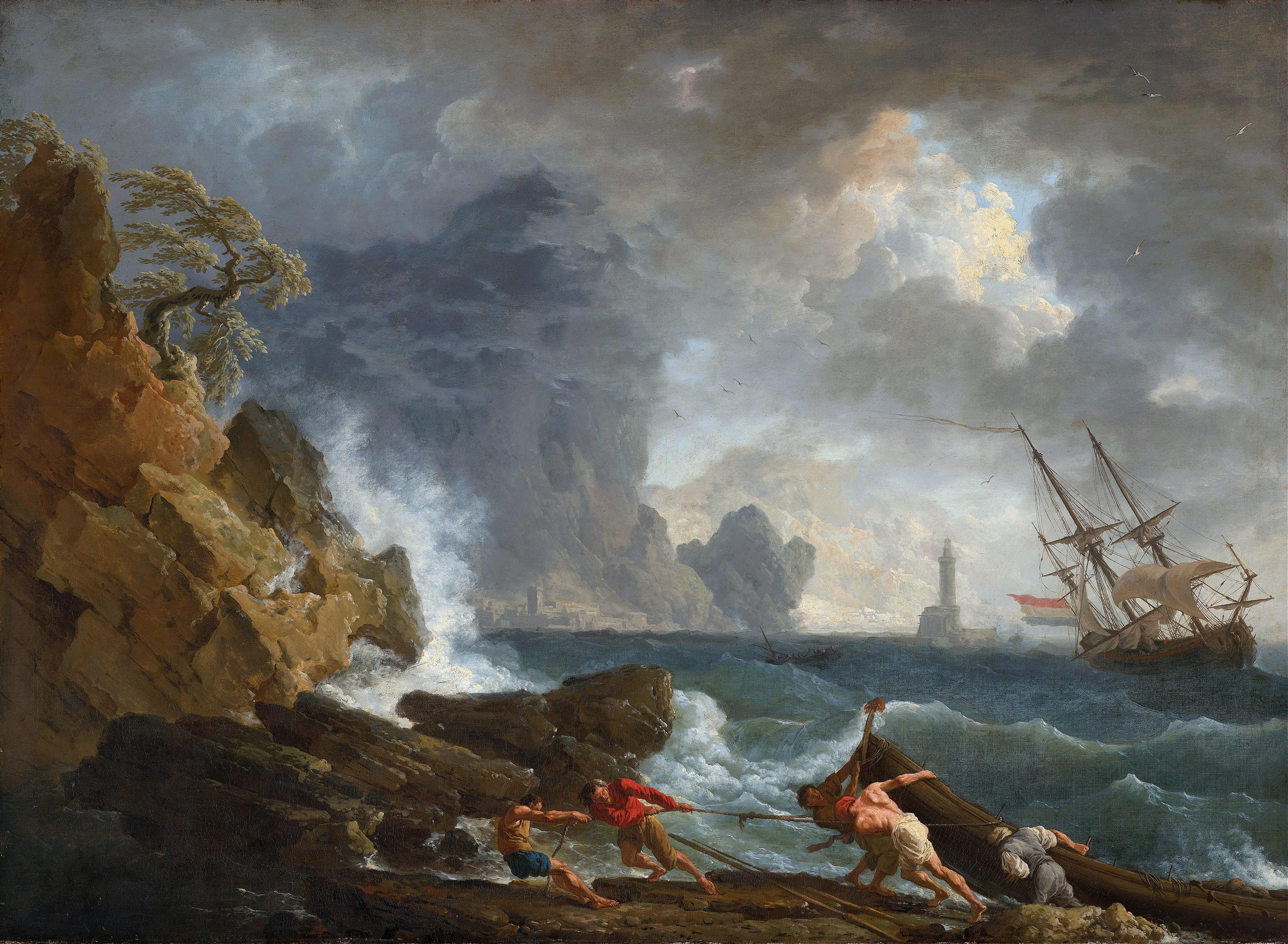
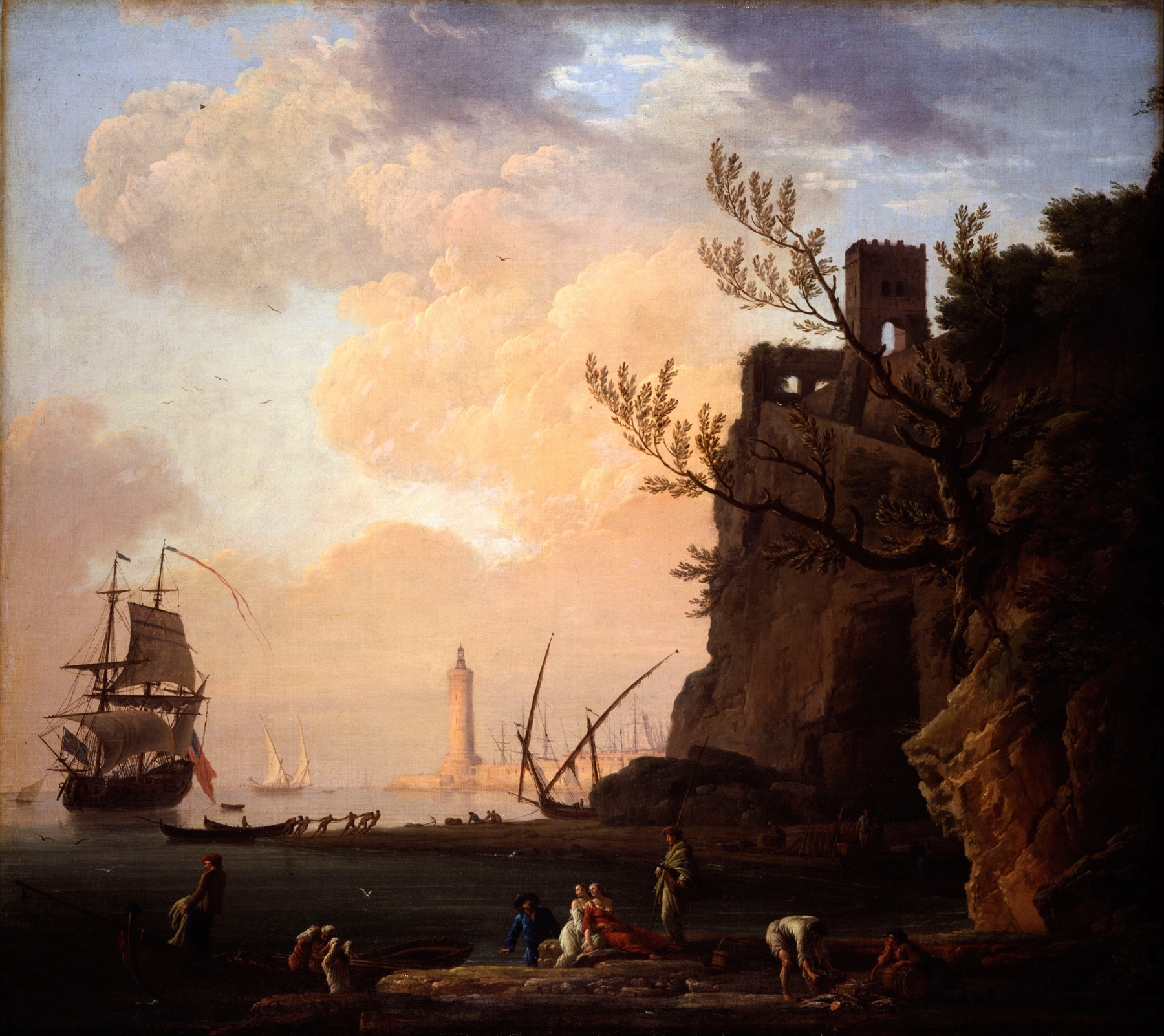
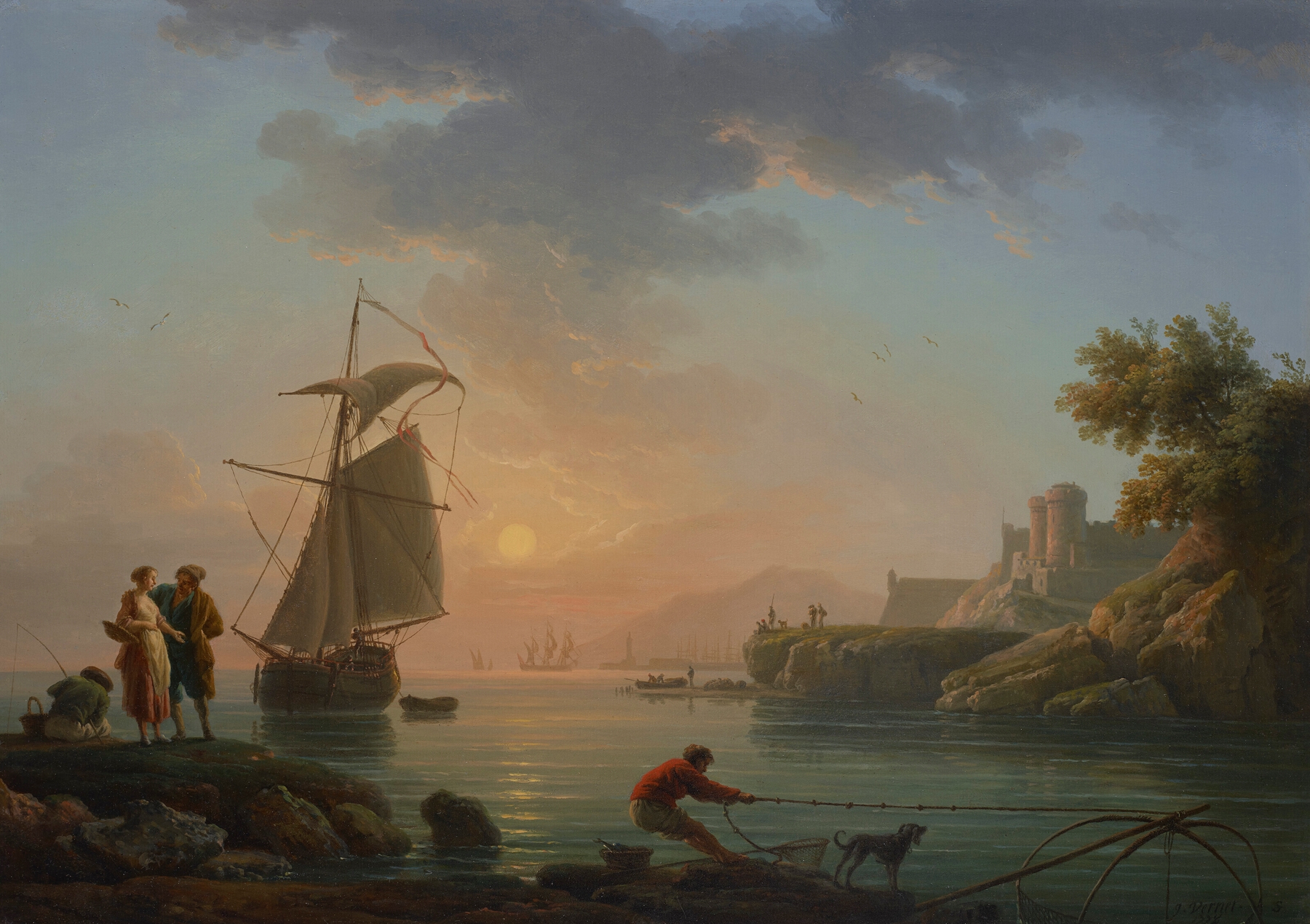
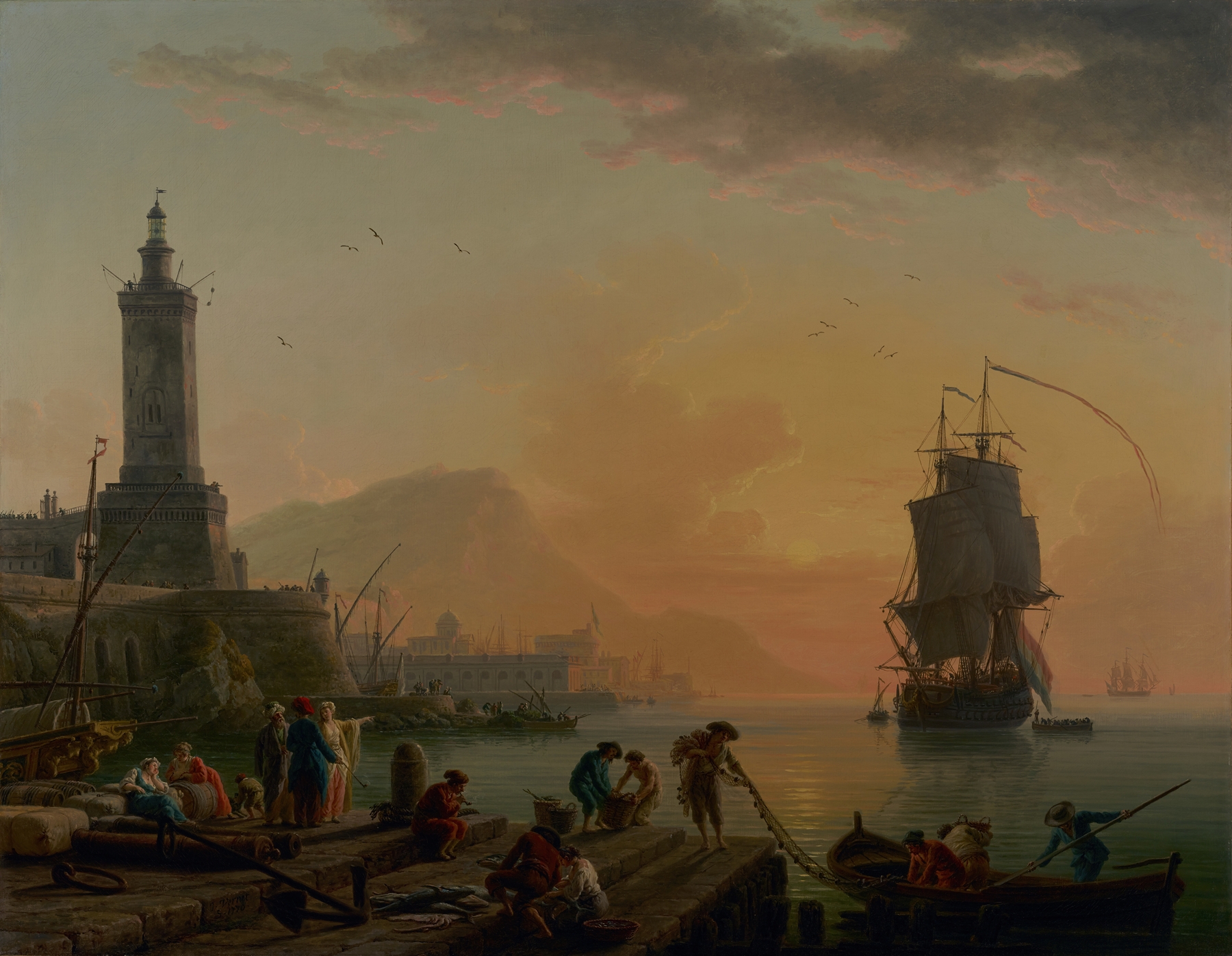
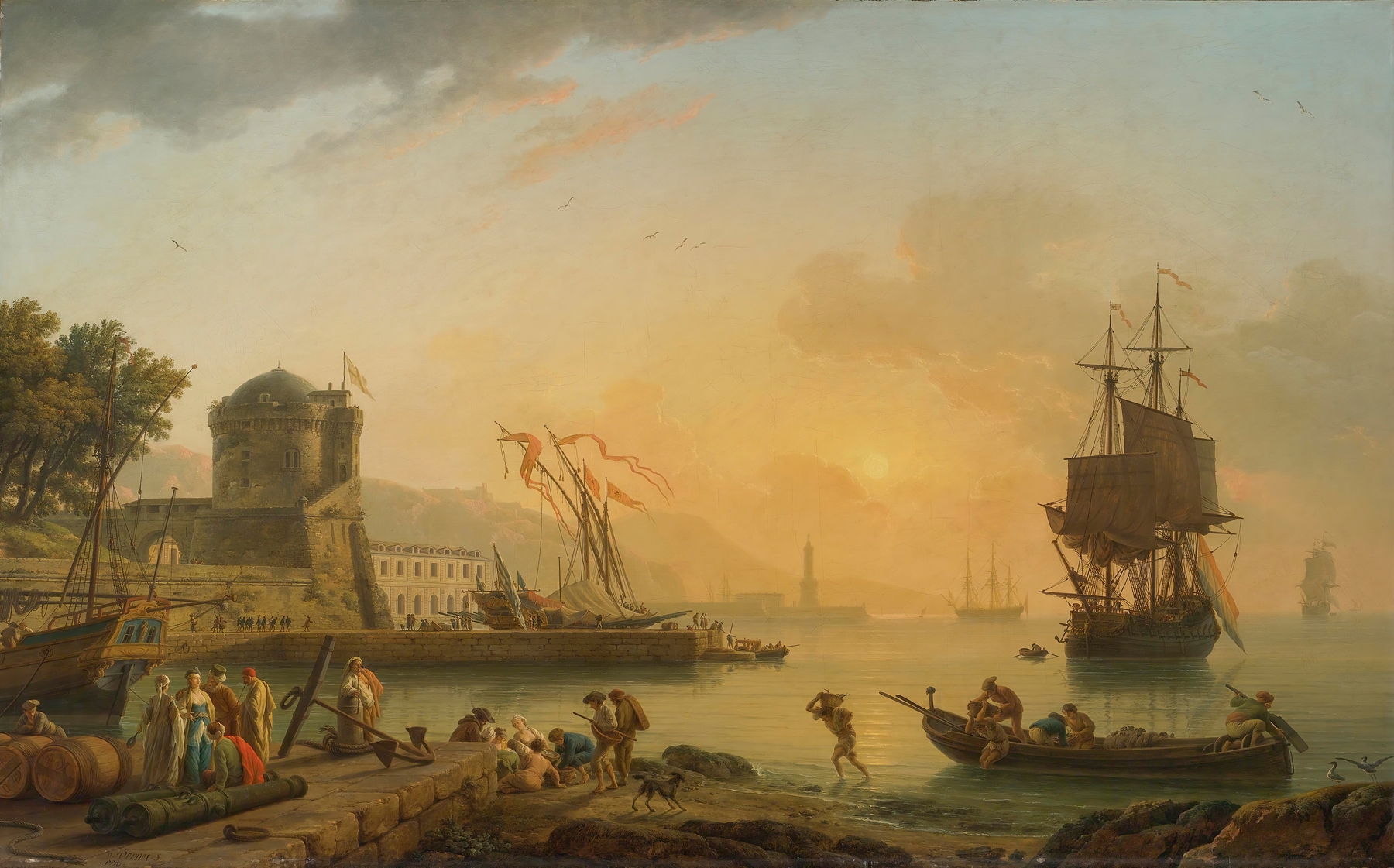
“Every silence here is a confession.” In the twilight, when day slips silently into night, the weight of longing and loss hangs heavy in the air. This moment, captured in The Four Times of Day – Evening, embodies a profound stillness that echoes with the whispers of bittersweet memories. Look to the horizon, where the vanishing sun casts a soft, amber glow over the calm waters. The palette of deep blues and warm oranges creates a mesmerizing haze, inviting the eye to glide across the reflective surface.
Notice how the delicate brushstrokes evoke a gentle breeze, and the subtle waves seem to cradle the fading light. The composition leads you inward, drawing attention to the solitary figures on the shore, who stand in contemplation, their forms cloaked in the rich shadows of dusk. As evening deepens, the contrast between light and dark sparks a sense of introspection. The serene landscape belies an undercurrent of grief; each silhouetted figure appears caught in a web of unspoken emotions.
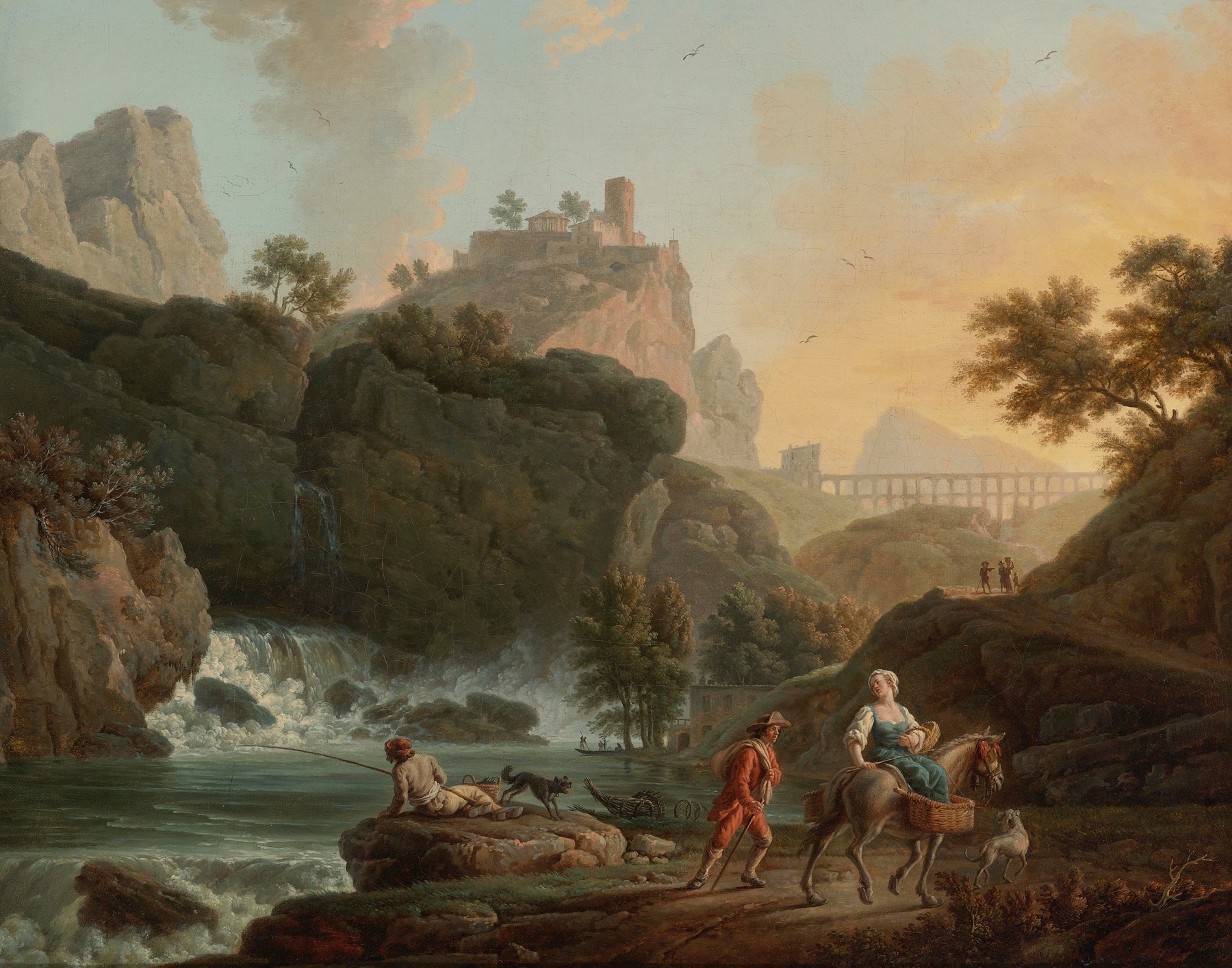
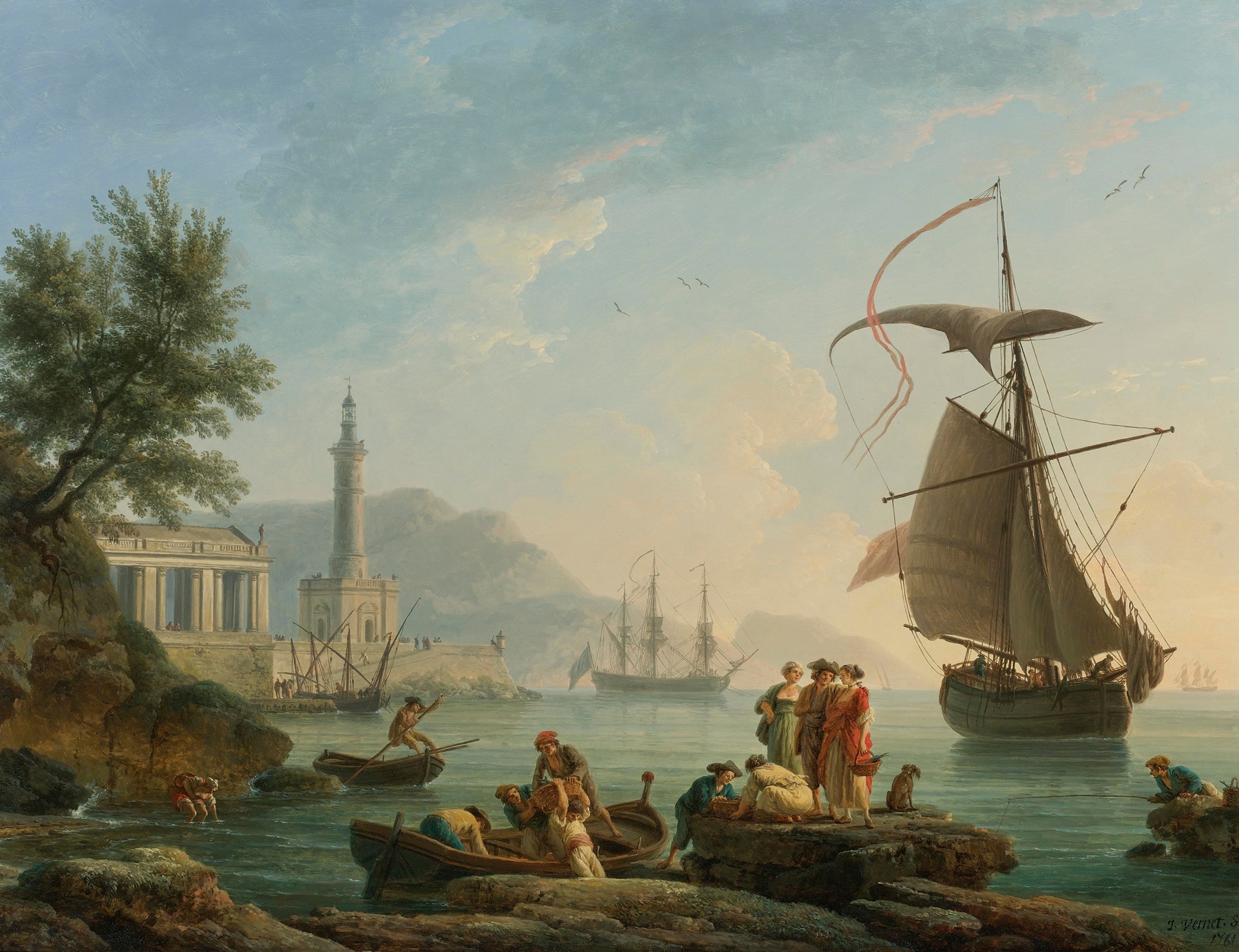
The distant sailboat, just a whisper against the vastness, symbolizes both solitude and the ephemeral nature of time, while the soft transition from day to night mirrors life's inevitable passage and the bittersweetness of reminiscence. In 1757, Vernet painted this work during a time when the Rococo style was giving way to more emotional expressiveness in French art. Living in Paris, he was influenced by the burgeoning Romantic ideals, which sought to convey deeper sentiments. This piece reflects not only his technical prowess but also his profound understanding of the human condition, capturing the essence of twilight—a poignant reminder of our fleeting days.