The Gulf Stream — History & Analysis
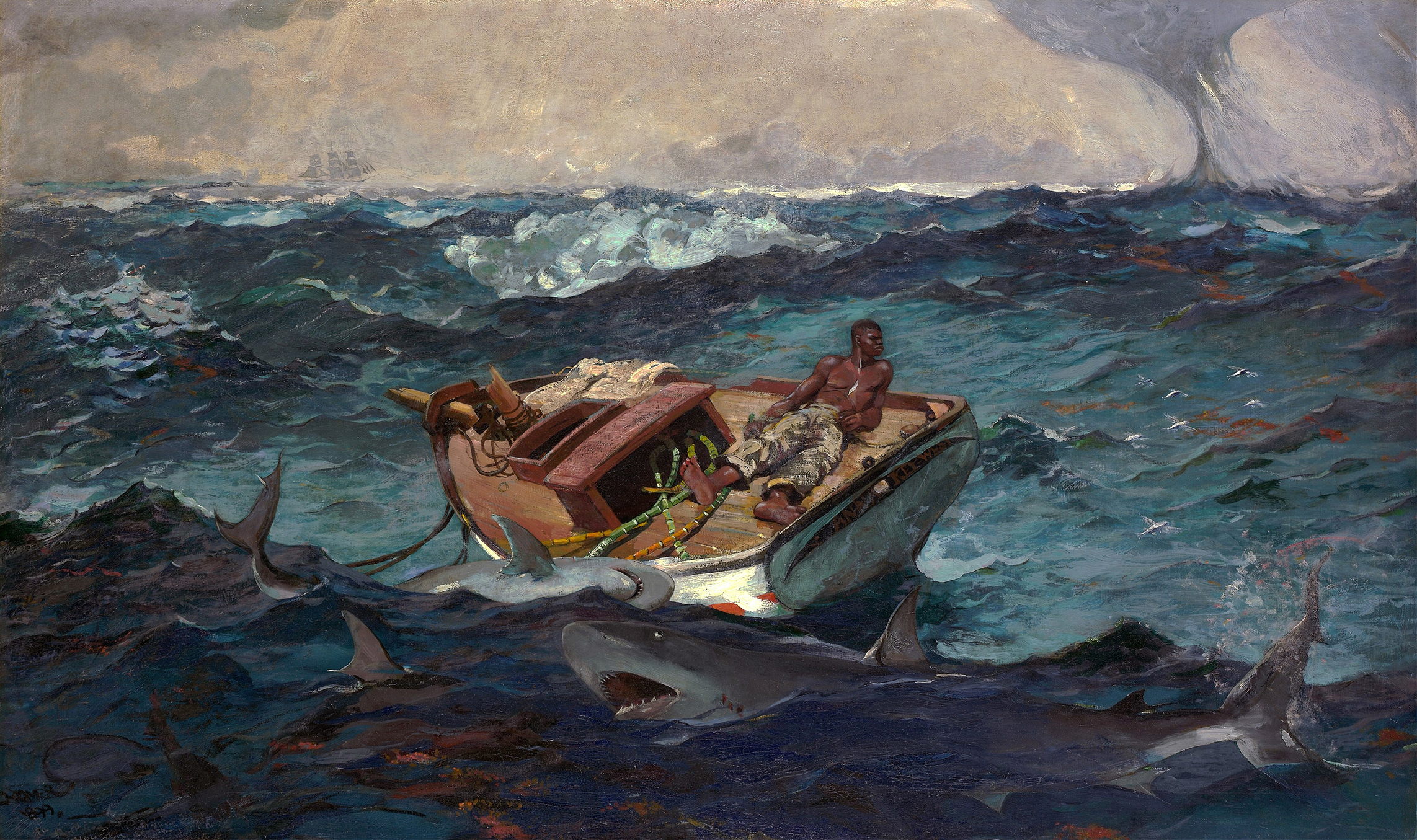
“Under the brush, chaos becomes grace.” In The Gulf Stream, the artist captures a profound sense of longing, where nature’s tempestuous spirit confronts human vulnerability. The viewer is drawn into the aching silence of the open sea, imbued with a yearning that resonates beyond the canvas. Look to the left at the lone figure, a man adrift on a fragile boat, his posture bent and weary. Notice how the swirling blues of the ocean contrast sharply with the stormy sky above, creating an atmosphere thick with impending dread.
The brushwork, vigorous and fluid, breathes life into the waves, each stroke revealing a desperate struggle against the relentless tide. The paler hues of the horizon offer a glimmer of hope, yet they are overshadowed by the dark, ominous clouds that loom overhead. As you delve deeper, examine the details—a tattered sail flapping wildly, fish circling below—symbols of both sustenance and peril. The interplay of light and shadow reflects an emotional tension within this scene: the fragility of human existence against the vast, indifferent forces of nature.
This juxtaposition amplifies the longing, suggesting a search for solace in an unforgiving world, where hope and despair coexist. In the late 19th century, Winslow Homer painted The Gulf Stream during a period of personal reflection and artistic evolution, after moving back to Maine from the bustling art circles of Europe. Emerging from the influence of realism, his work began to embrace a more expressive approach, capturing the rugged beauty of the American landscape while grappling with deeper themes of isolation and resilience. As the world around him underwent rapid change, he sought to depict the timeless struggle of man against nature, creating pieces that resonate with our own yearnings for meaning and connection.