Breaking Storm, Coast of Maine — History & Analysis
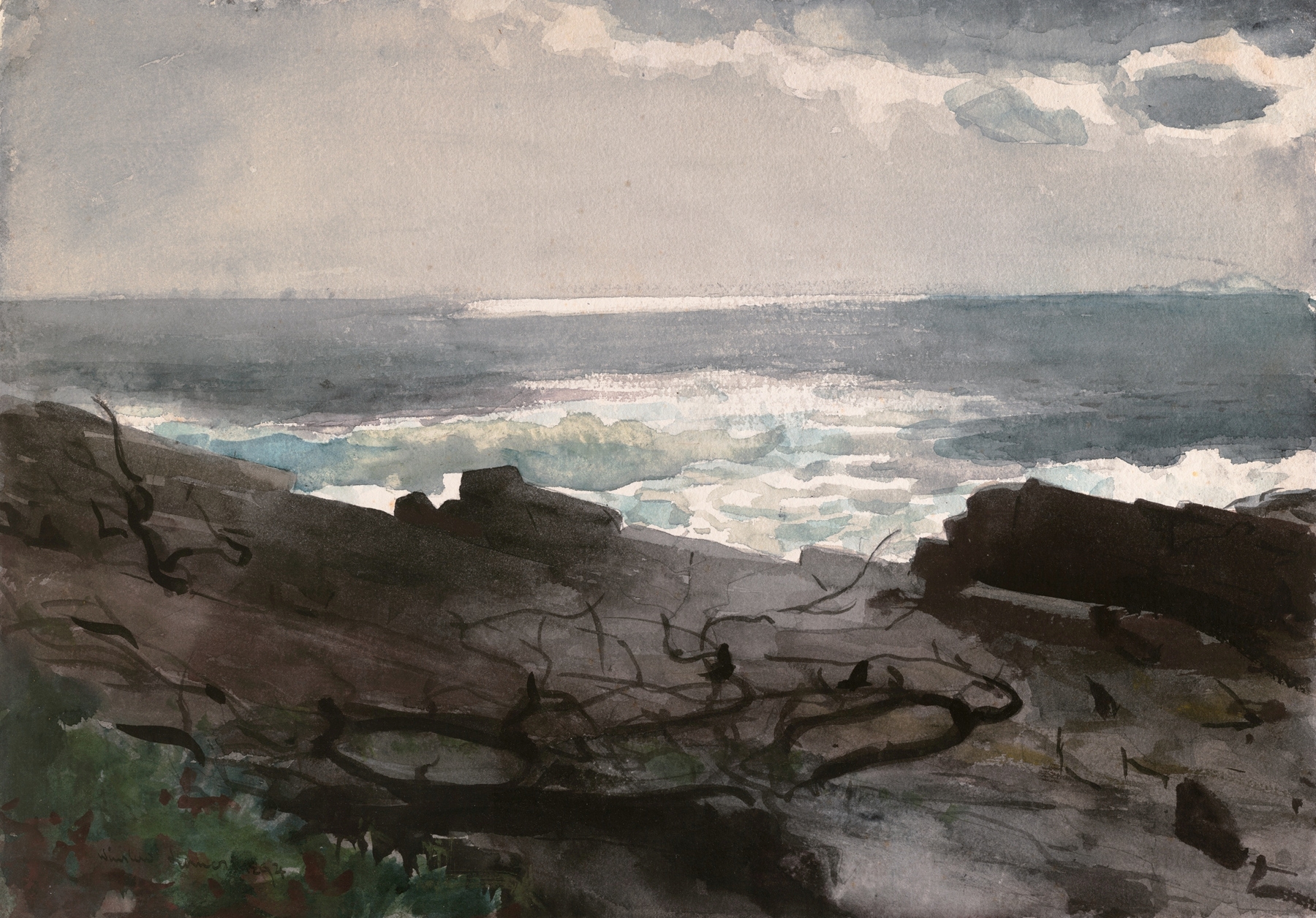
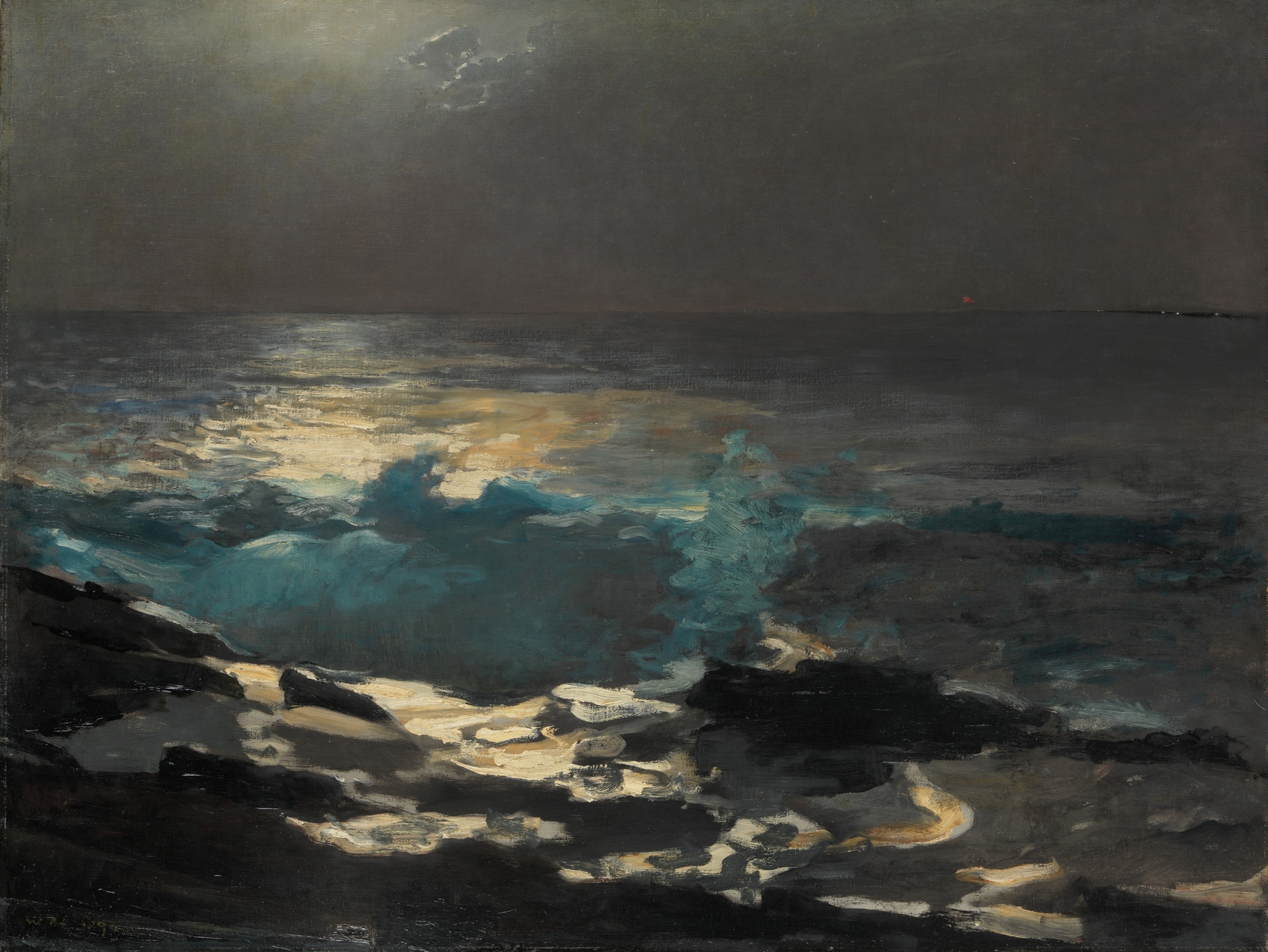
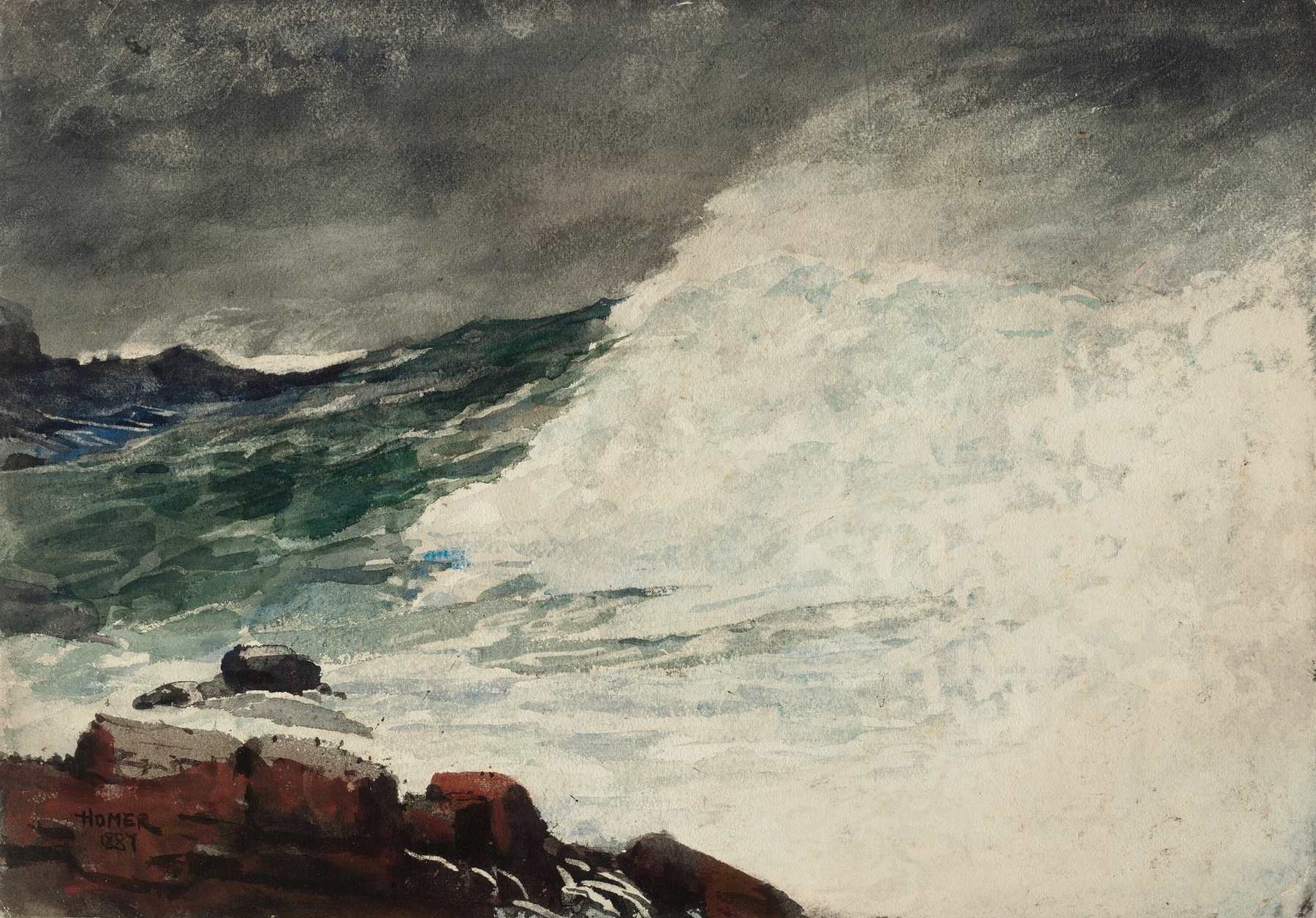
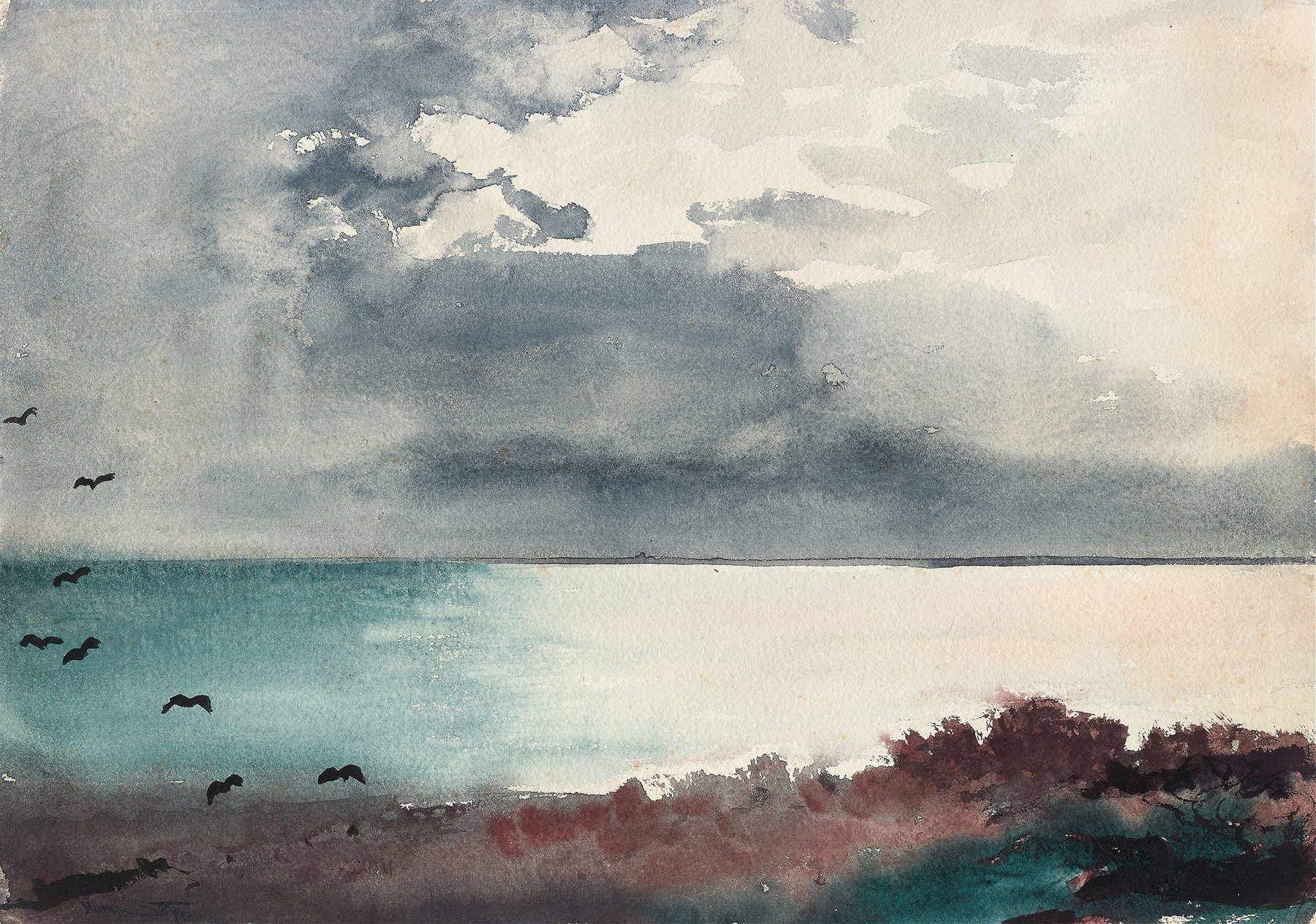
Where does light end, and longing begin? In the midst of nature’s turmoil, a profound sense of rebirth unfolds, suggesting that we can find renewal even in chaos. Look to the left at the dark, tumultuous clouds swirling above the horizon, their weighty presence dominating the sky. Notice how the bright cerulean water contrasts against the stormy backdrop, highlighting the struggle between chaos and serenity.
The brushwork is vigorous and expressive, capturing the urgency of the moment, while the small figures braving the elements against the rocky coast evoke both vulnerability and resilience. The painting resonates with duality; the impending storm represents both threat and opportunity. As the waves crash against the shore, they seem to symbolize life’s relentless challenges, while the light breaking through the clouds hints at hope and transformation. Each stroke carries the emotional weight of anticipation, inviting viewers to contemplate their own experiences of turmoil and renewal.
In 1894, the artist was in the full bloom of his career, working in Maine during a time when American art was beginning to assert its identity. This period was marked by a growing interest in realism and naturalism, both in subject matter and technique. Homer's connection to the rugged coastal landscape provided him with rich inspiration, allowing him to explore the interplay between man, nature, and the ever-shifting elements that define existence.