Blue Spring, Florida — History & Analysis
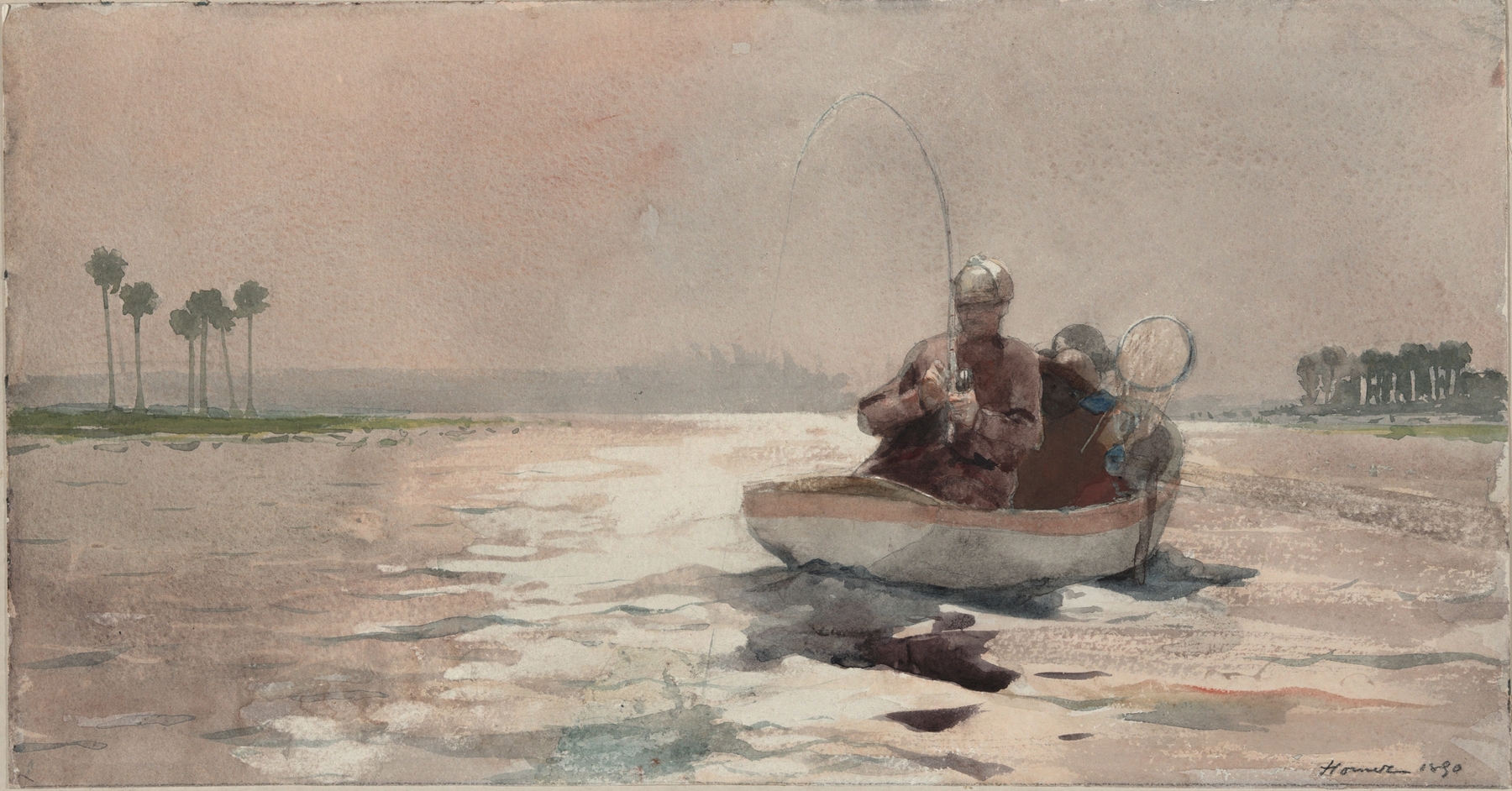
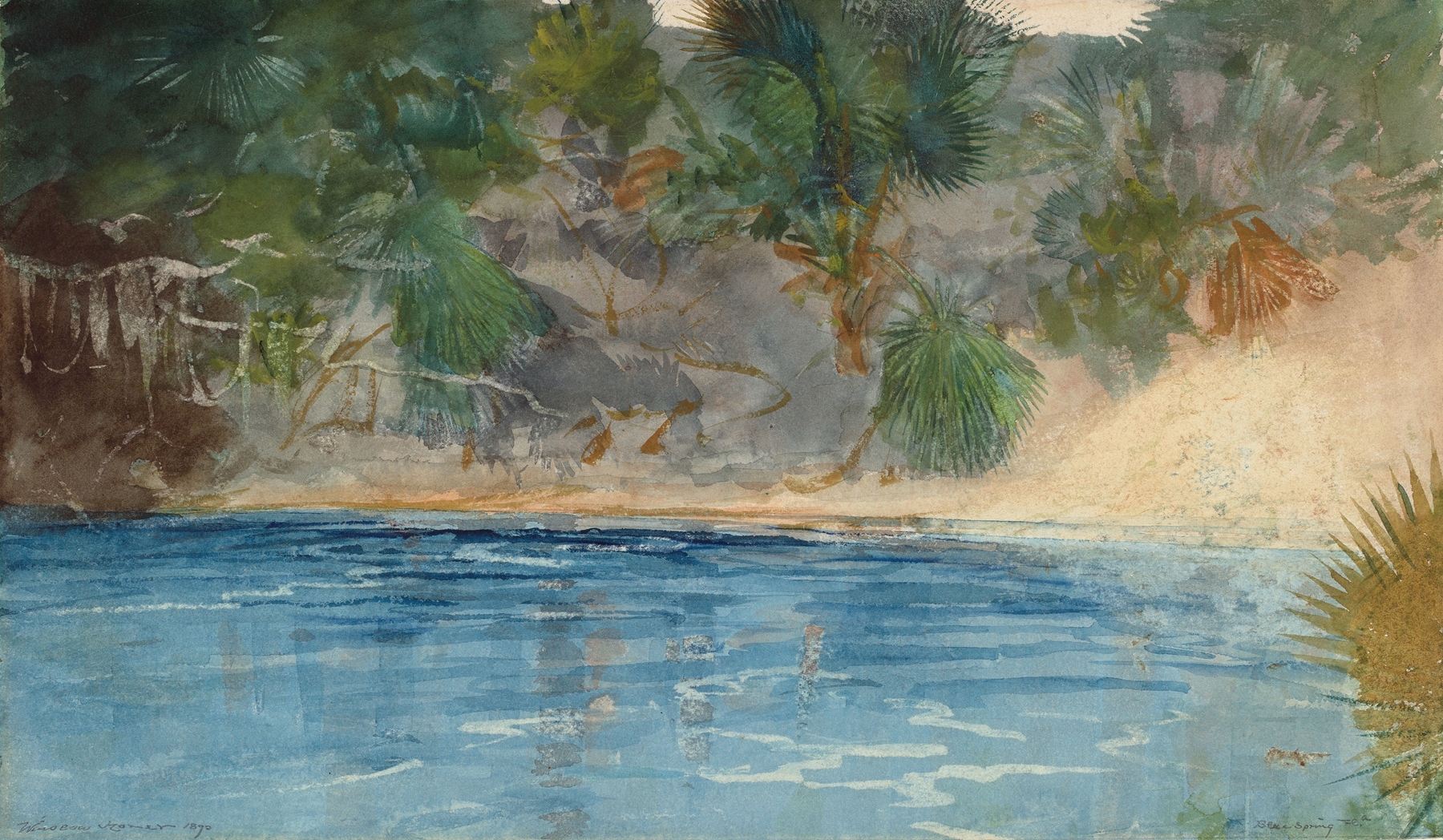
“Sometimes beauty is just pain, disguised in gold.” In Winslow Homer’s Blue Spring, Florida, the viewer is drawn into a world where vibrant movement masks underlying depths of emotion. The flowing water and cascading foliage invite contemplation on the interplay between nature's allure and the struggles that may lurk beneath its surface. Look to the left at the shimmering water, where dappled sunlight dances upon its surface, creating a tapestry of blues and greens. Notice how the gentle brushstrokes evoke both the fluidity of the stream and the vitality of the surrounding vegetation, guiding your gaze through the composition.
The use of light in the foreground contrasts with the darker tones in the background, establishing a dynamic interplay that draws you into the scene, making the viewer acutely aware of the moment frozen in time. Beneath this serene beauty lies a tension between tranquility and tumult. The powerful movement of the water suggests a relentless flow of time, hinting at life’s transitory nature. Additionally, the contrasting colors reflect the duality of peace and turmoil, as the lush landscape stands in stark juxtaposition to the possible struggles of those who inhabit it.
Through these details, Homer encapsulates the complexity of existence, reminding us that serenity often conceals deeper narratives. In 1890, Homer created this piece while living in Prout’s Neck, Maine, where he was immersed in the natural world and his own artistic explorations. This period marked a shift in his work, as he moved from the narratives of war and human struggle to capturing the essence of nature and its impact on the human spirit. The climate of American art was evolving, with a growing appreciation for Impressionism, influencing Homer’s own brushwork and approach to color in Blue Spring, Florida.