
The interior of a forest — History & Facts
A dense stand of trees fills the entire composition of The interior of a forest, their trunks and branches weaving a tangled canopy overhead. To the left, a thick tree trunk rises just inside the edge of the frame, its bark rendered with vertical lines and rough shading. In the center, a cluster of trees with thinner, twisting branches stretches upward and outward, their forms overlapping and interlocking to create a sense of depth.
The right side of the image is dominated by a tall, straight trunk, its surface marked by bold, dark lines that contrast with the more delicate branches around it. Throughout the scene, Rousseau uses a variety of line weights and directions, from sweeping diagonals in the background to short, jagged marks that describe leaves and undergrowth. The background recedes into a dense thicket, with overlapping lines suggesting the mass of foliage and the complexity of the woodland interior.
Subtle tonal variations, achieved through cross-hatching and smudging, evoke the dappled light filtering through the branches above. The composition is balanced by the placement of major trunks on either side, framing the central view into the deeper forest. Small details, such as the angled roots at the base of the trees and the irregular edges of the clearing, contribute to the naturalistic effect.
The entire surface displays the marks of the artist’s hand, with visible strokes and textures that emphasize the drawing’s immediacy and spontaneity. The title points to the subject: a secluded woodland scene, rendered with careful attention to the structure and atmosphere of the forest.
More Artworks by Théodore Rousseau

Valley of the Rouars in the Gorges d’Apremont
Théodore Rousseau

The Forest in Winter at Sunset
Théodore Rousseau

A Meadow Bordered by Trees
Théodore Rousseau
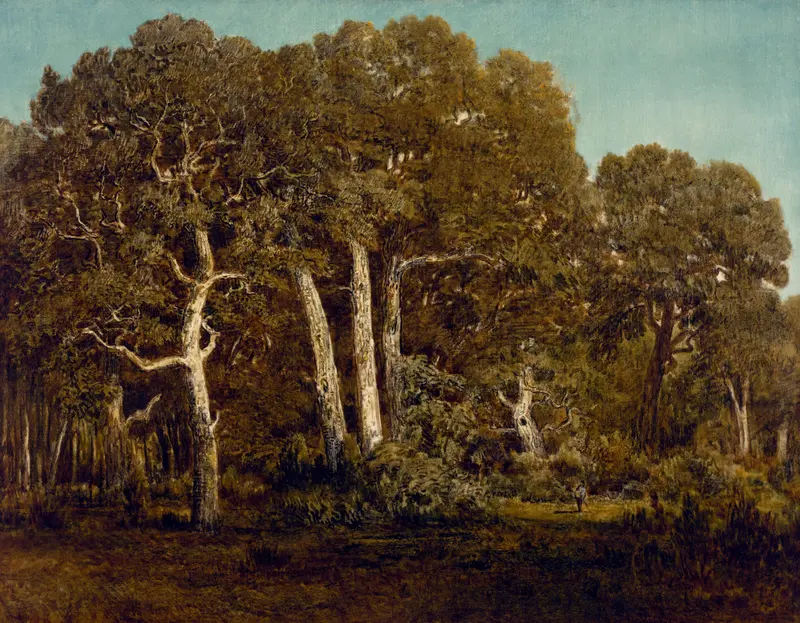
The Great Oaks of Old Bas-Bréau
Théodore Rousseau
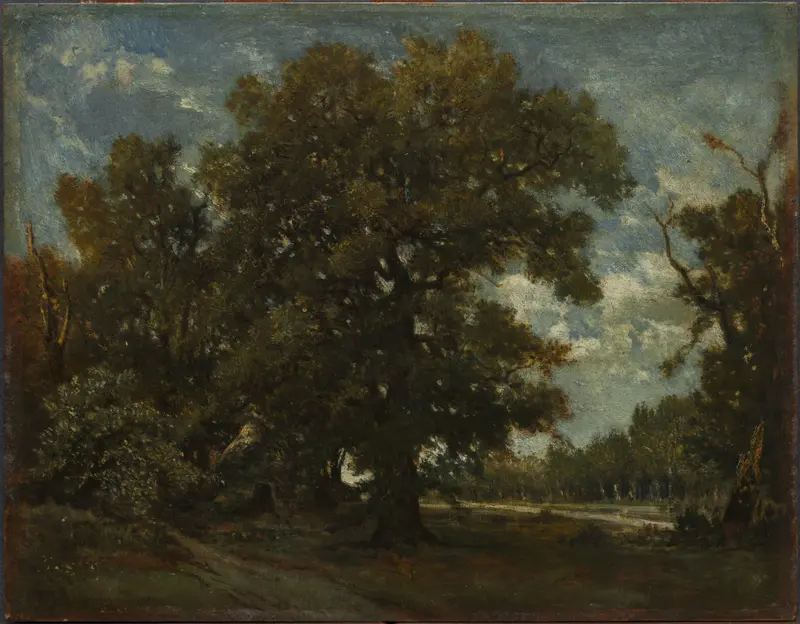
The Oak Tree
Théodore Rousseau
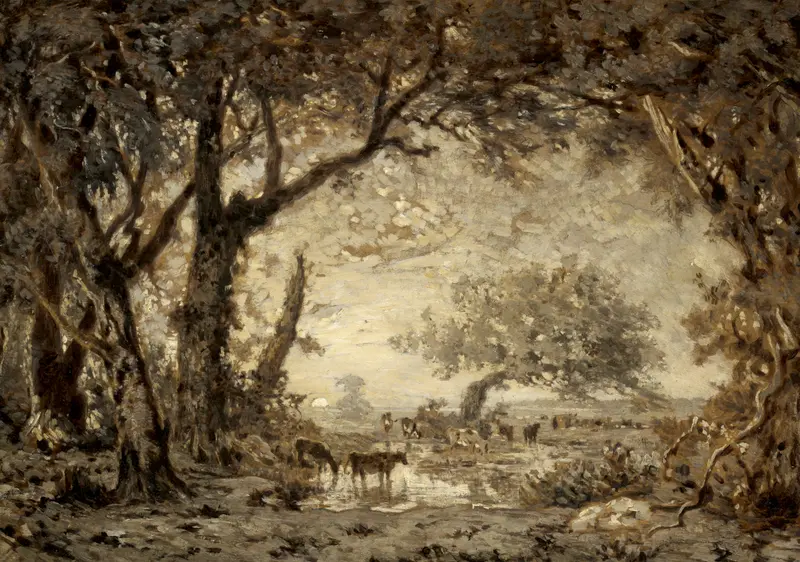
Sunset from the Forest of Fontainebleau
Théodore Rousseau
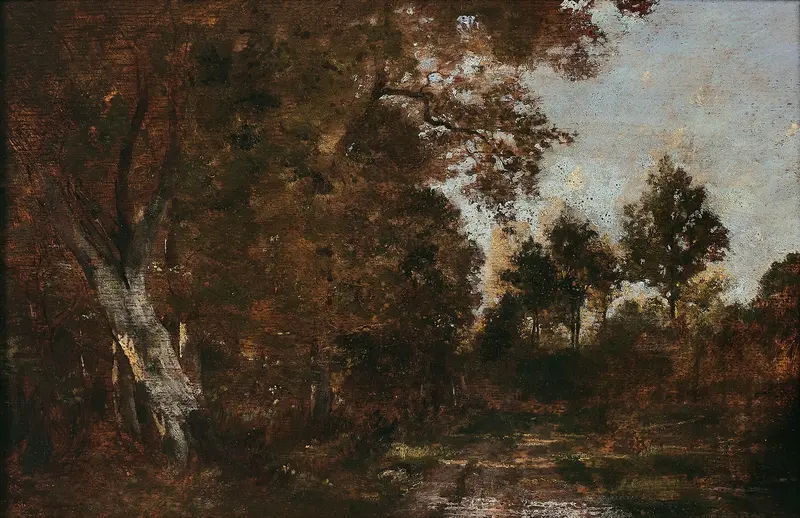
Paysage de sous-bois
Théodore Rousseau
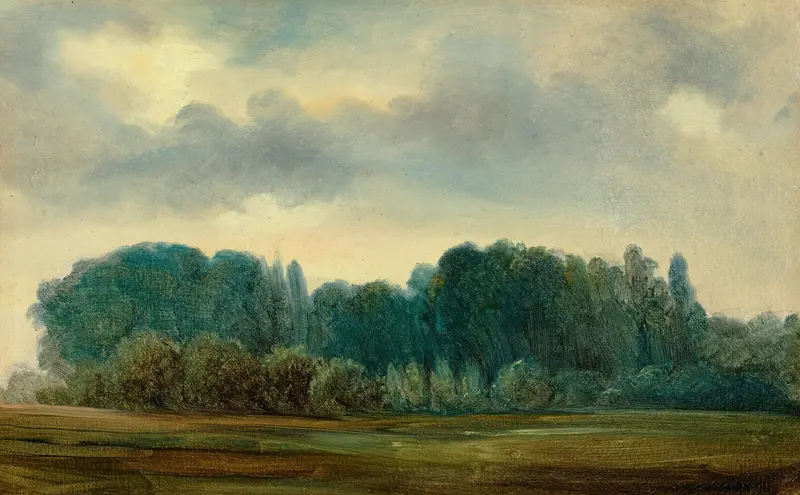
Paysage
Théodore Rousseau
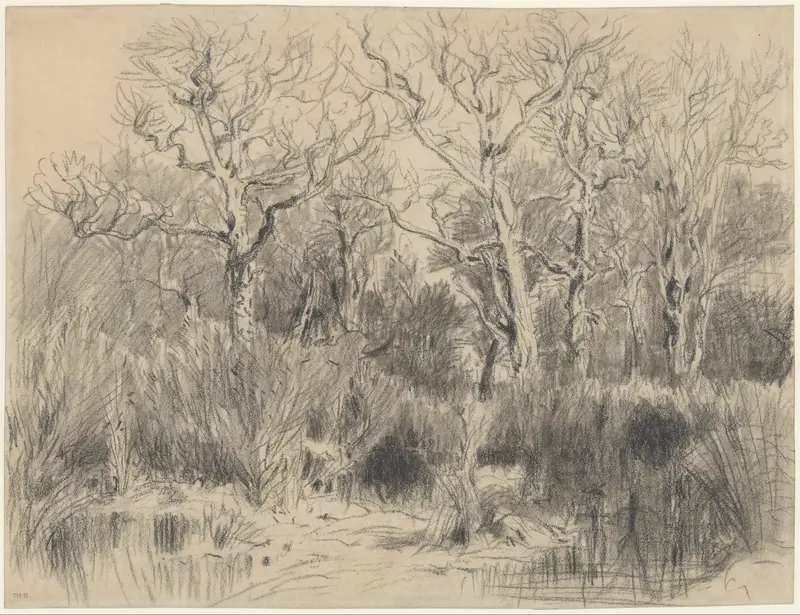
Trees in a Thicket
Théodore Rousseau
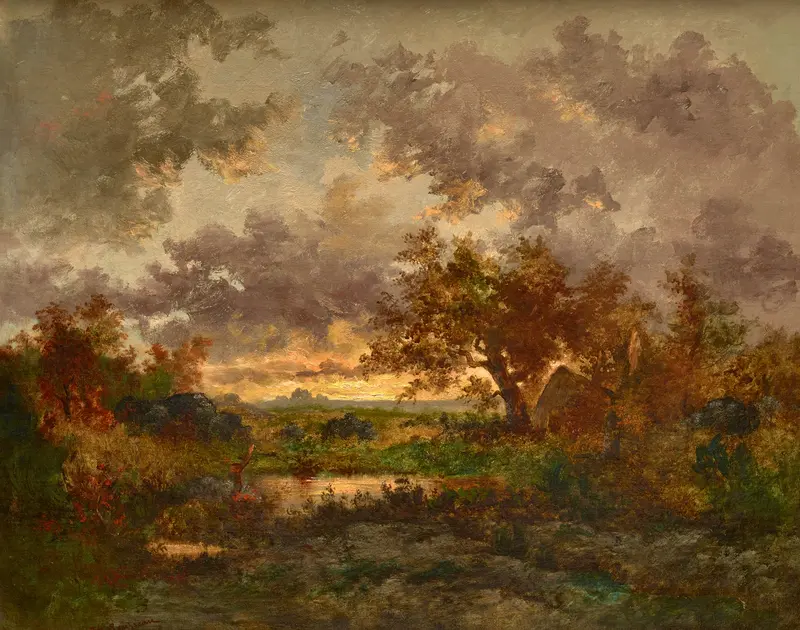
The Charcoal Burner’s Hut
Théodore Rousseau
More Landscape Art

Starry Night
Vincent van Gogh

View of Delft
Johannes Vermeer

Water Lilies
Claude Monet

The Grand Canal, Venice, looking north-west from the Ca' Corner to the Ca' Contarini degli Scrigni, with the campanile of Santa Maria della Carità
Canaletto

Windsor Castle
Canaletto

The Grand Canal looking North-East from the Palazzo Dolfin-Manin to the Rialto Bridge
Canaletto