The Nile — History & Analysis
What secret hides in the quiet of the canvas? In The Nile, the serene waterway acts as a mirror reflecting both the beauty of life and the inevitability of mortality. Look to the right at the small boat gently gliding across the water, its sails billowing softly in a whisper of wind. Notice how the light falls upon the surface of the river, casting shimmering reflections that dance like fleeting moments.
The rich hues of blue and green convey a sense of tranquility, while the billowing clouds above hint at a fleeting storm, suggesting that even the calmest moments are laced with tension. Delve deeper into the painting, and you'll find contrasts that reveal the artist’s intent. The boat, representing humanity's journey, juxtaposes with the vastness of the river, illustrating the ephemeral nature of existence against the backdrop of eternity. The stillness of the scene belies an undercurrent of longing and nostalgia, inviting contemplation of what lies beyond the horizon.
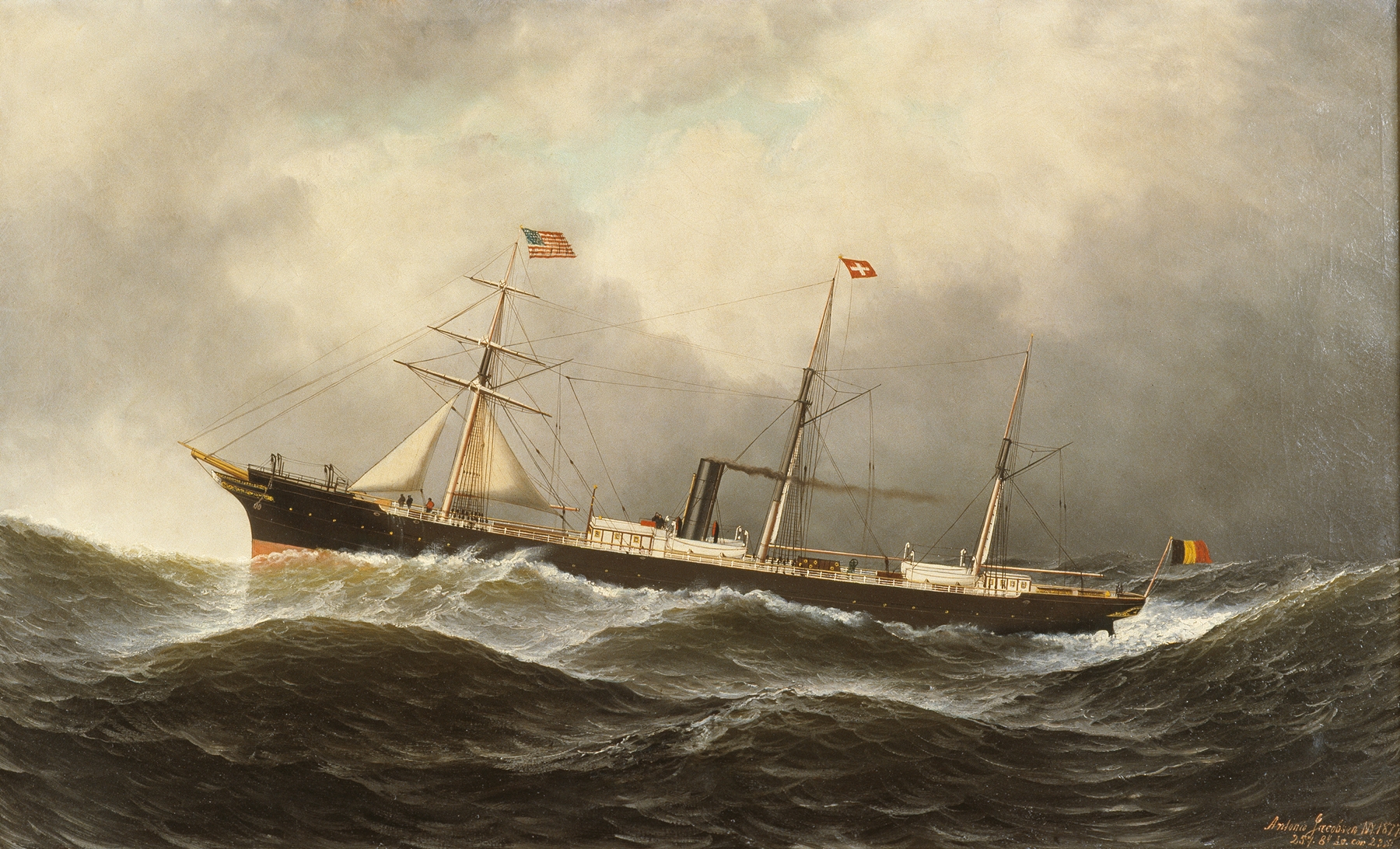
The delicate strokes of the water reveal not just a physical space, but an emotional landscape where dreams and reality intertwine. Antonio Jacobsen painted The Nile in 1881, during a period when he was gaining recognition for his maritime works. Living in the United States while the world was rapidly industrializing, he sought to capture the beauty of nature’s fleeting moments. This painting reflects his fascination with maritime themes, while also hinting at the broader existential questions that his contemporaries were beginning to ponder.