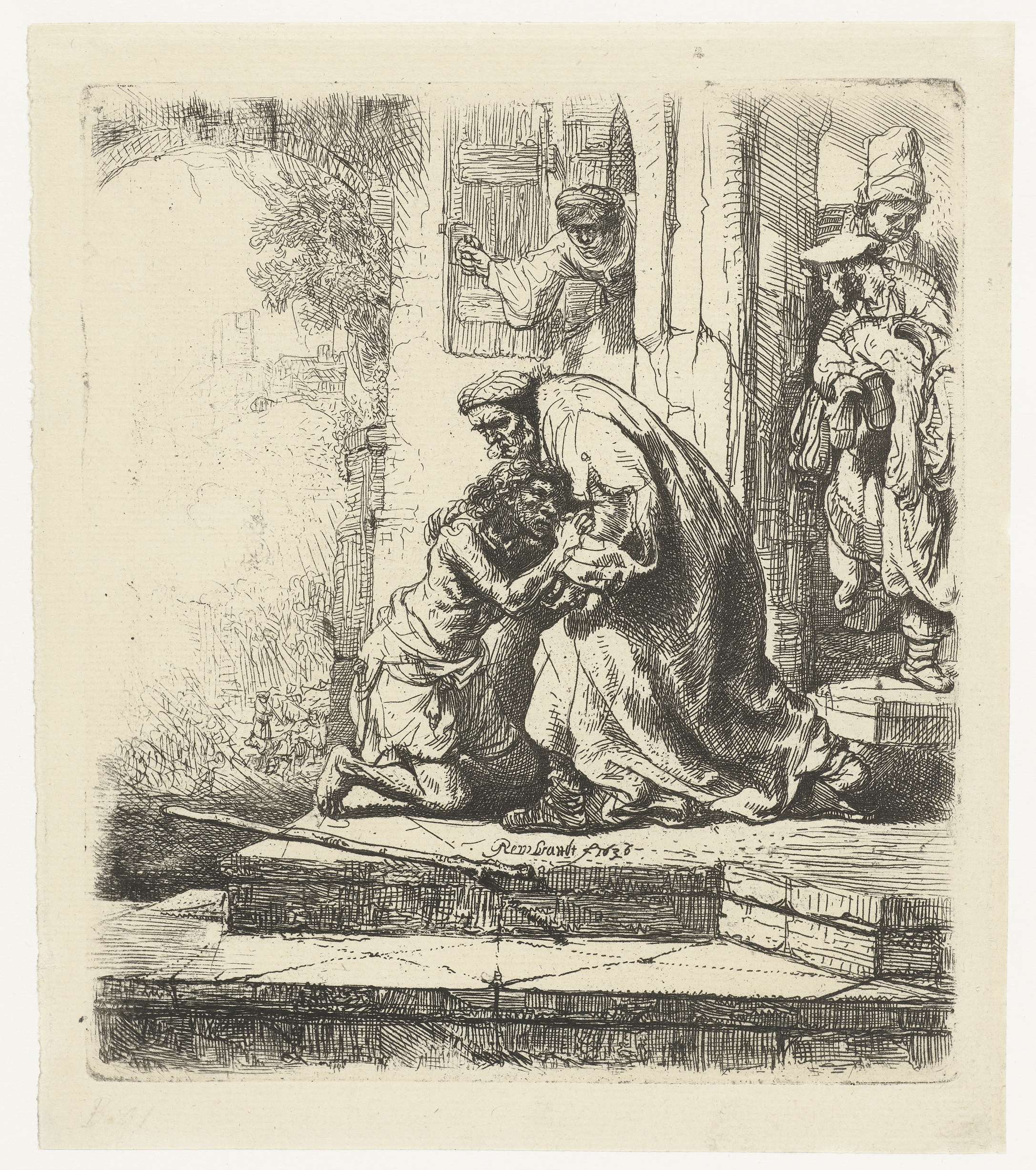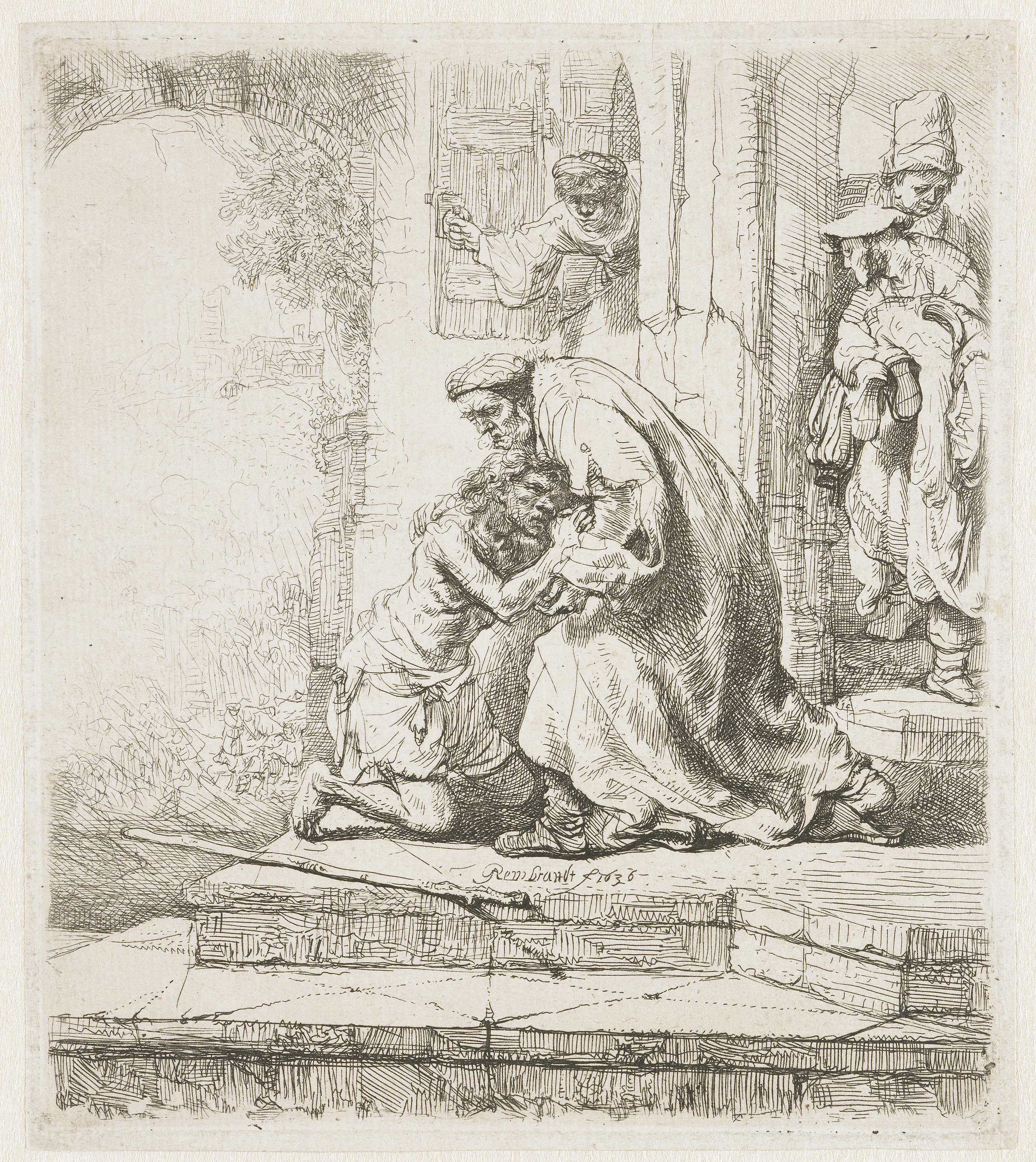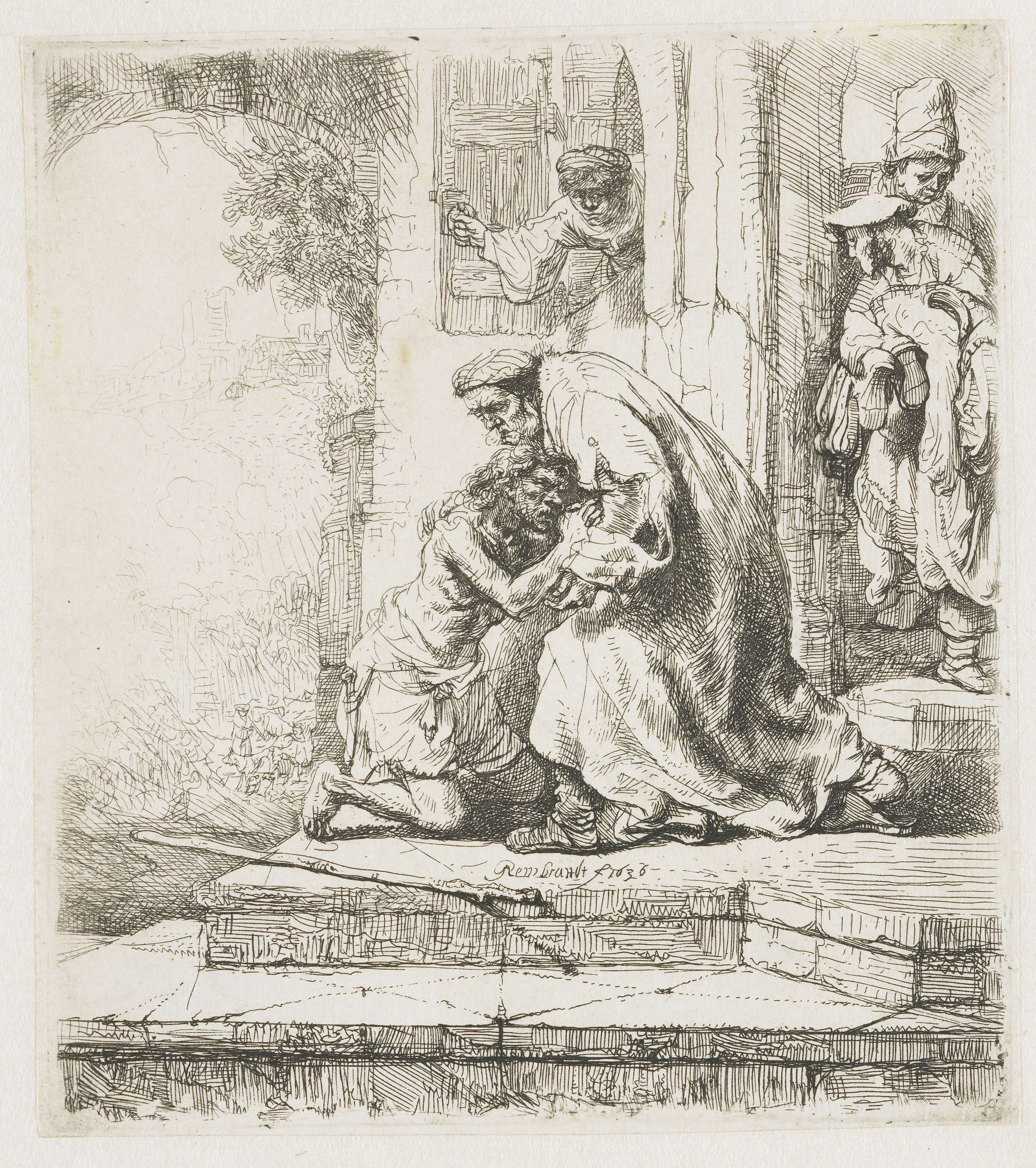
Could beauty survive in a century of chaos? In *The Return of the Prodigal Son*, serene grace emerges from the shadows of a tumultuous time, whispering the timeless power of forgiveness and redemption. Look to the left at the tender embrace between the weary son and his father, where Rembrandt’s masterful use of chiaroscuro creates a divine warmth. The light bathes their figures, accentuating the father’s weathered face and the son’s disheveled, humble appearance. Notice how the muted, earthy tones envelop the scene, evoking both the despair of the son’s journey and the richness of the father’s unwavering love, anchoring the entire composition in a poignant emotional landscape. Delve deeper into the contrasts between despair and joy, poverty and abundance, as you observe the figures surrounding the central embrace. The distant silhouettes of onlookers express a range of emotions—judgment, compassion, and indifference—reflecting society's varied responses to redemption. The son’s bare feet symbolize humility and loss, while the father’s open arms represent unconditional love, uniting these disparate threads into a profound narrative of reconnection. In 1636, Rembrandt was living in Leiden, navigating personal and financial struggles while refining his artistry. This period marked a significant phase in his life, as he sought to capture the complexities of human emotion amidst a backdrop of social and political unrest in Europe. His focus on biblical themes during this turbulent era emphasizes a quest for meaning, revealing a deep empathy that resonates through the ages.