The Rocks of Cape Ann — History & Analysis
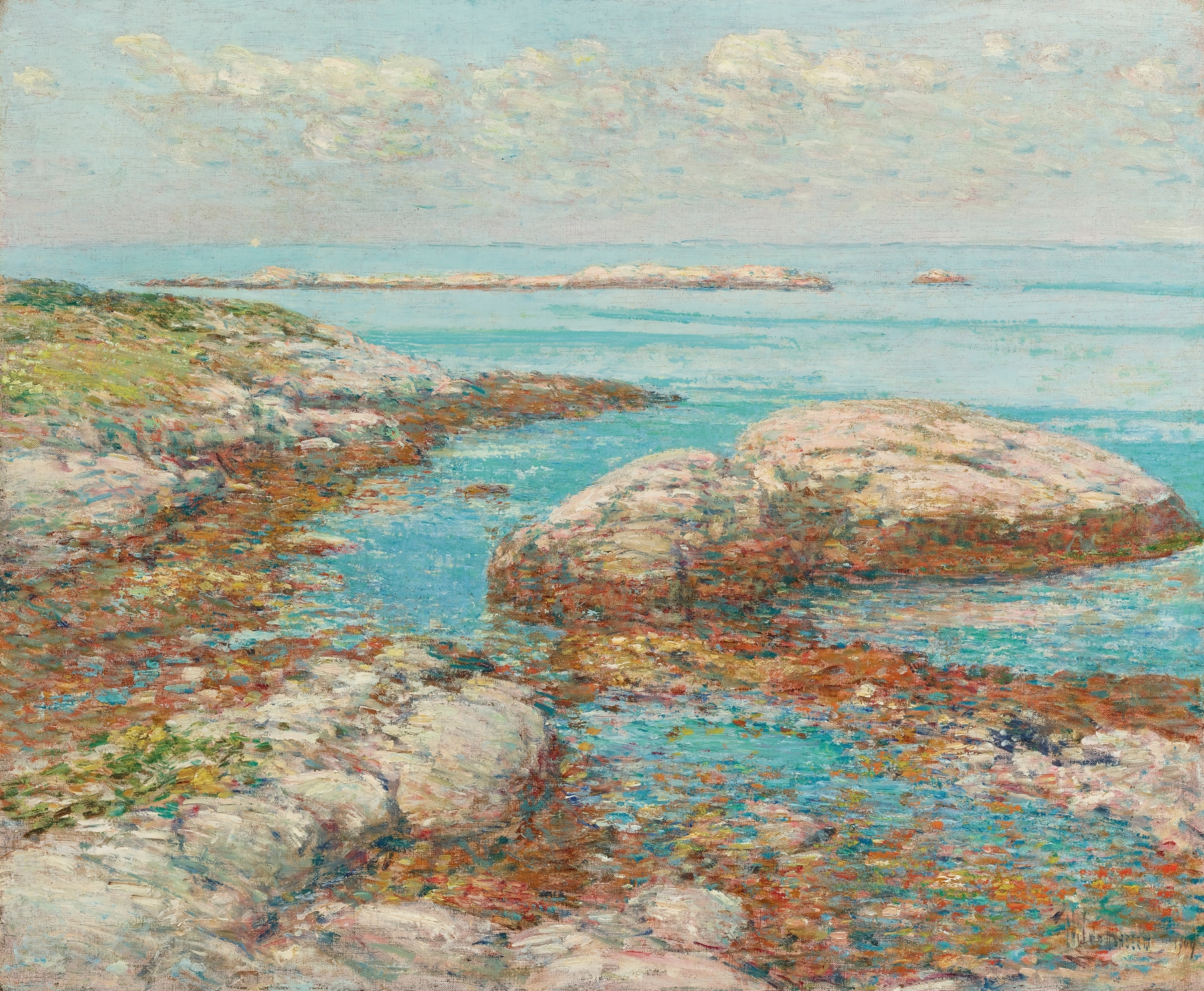
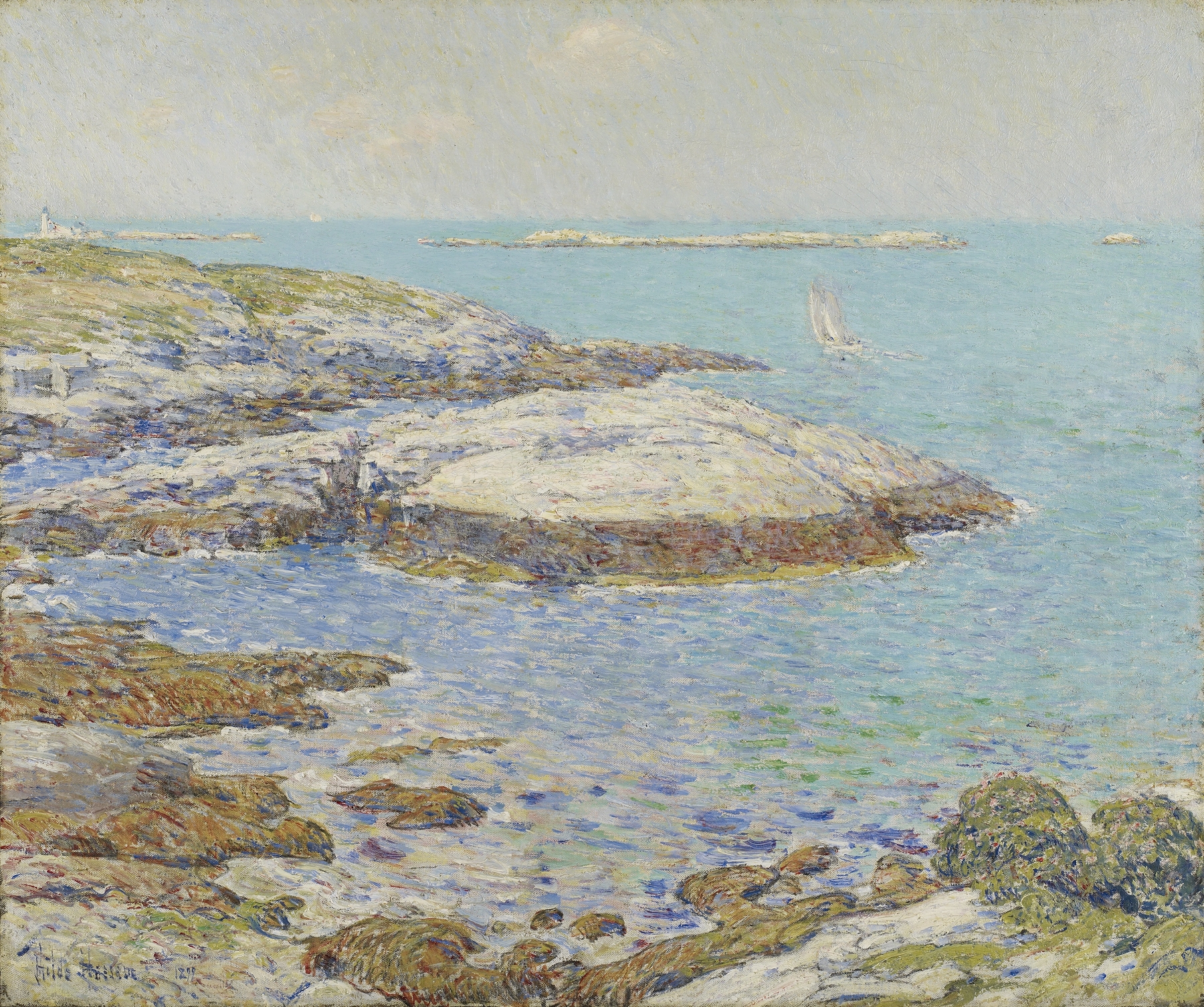
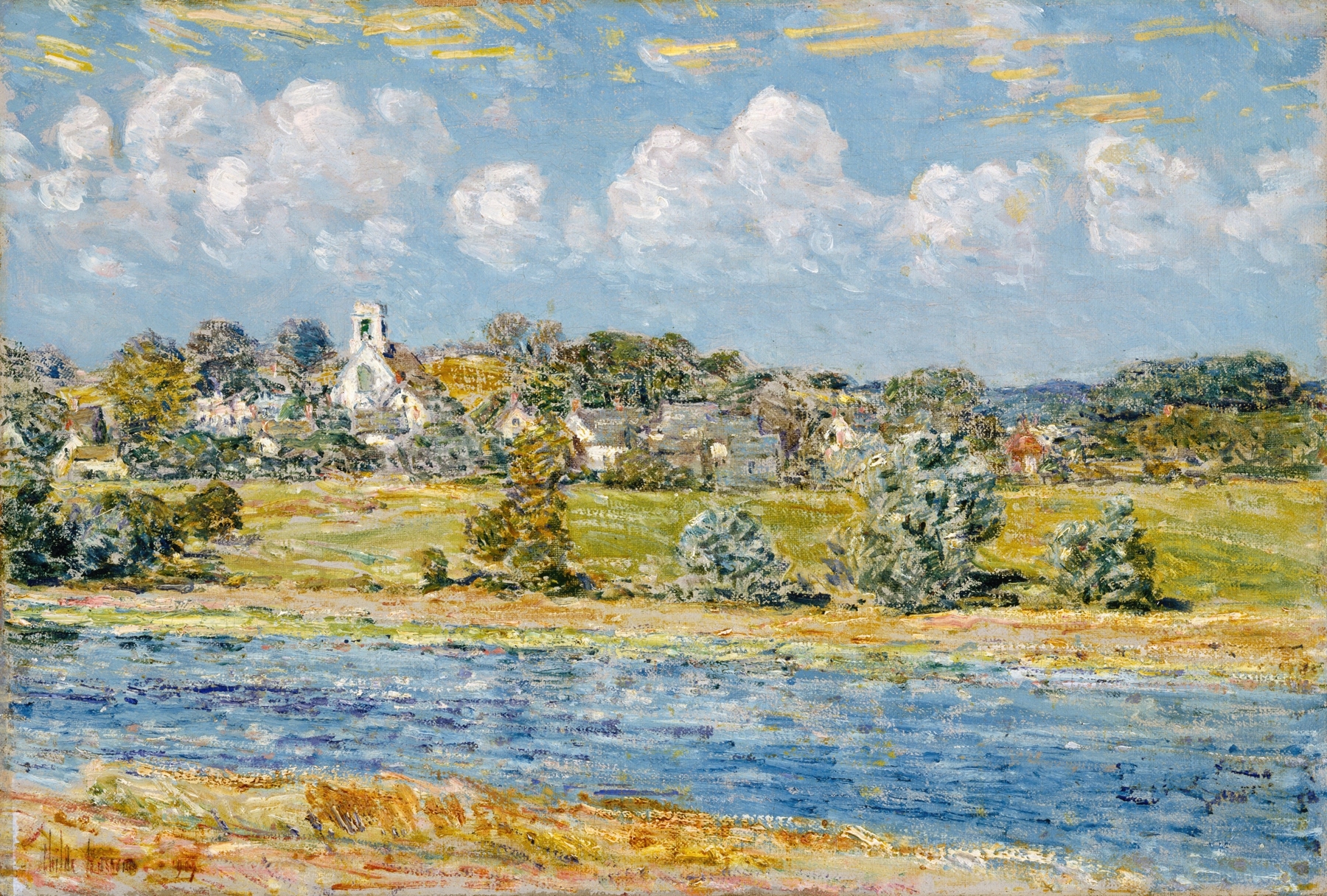
“Under the brush, chaos becomes grace.” In Childe Hassam's The Rocks of Cape Ann, we witness the poignant beauty of decay, transformed into a harmonious composition that speaks to nature's relentless cycle. Each brushstroke embodies the tension between life and deterioration, inviting contemplation of mortality and renewal. Look to the center of the canvas, where jagged rocks jut out from a turbulent sea. The tumultuous waves crash against the shore, their frothy white caps contrasting sharply with the deep blues and greens of the water.
Notice how the warm sunlight dances across the surface, illuminating the textures of the rocks and creating an interplay of shadow and light. The brushwork is both vigorous and delicate, conveying the energy of the scene while maintaining a sense of tranquility. Hidden within the seemingly chaotic landscape are echoes of resilience. The weathered rocks bear witness to time’s passage, embodying endurance against the crashing waves, while the soft, ephemeral clouds suggest transitions in both weather and life.
This tension between permanence and transience invites viewers to reflect on their own experiences of change and decay, revealing a deeper connection to nature’s cycles. Childe Hassam painted The Rocks of Cape Ann in 1918, during a period marked by both personal and global upheaval. Living in New England, he drew inspiration from the rugged coastline, capturing its raw beauty and shifting moods. This era was also characterized by the aftermath of World War I, where themes of nostalgia and longing permeated art, reflecting a society grappling with the realities of loss and the desire for renewal.