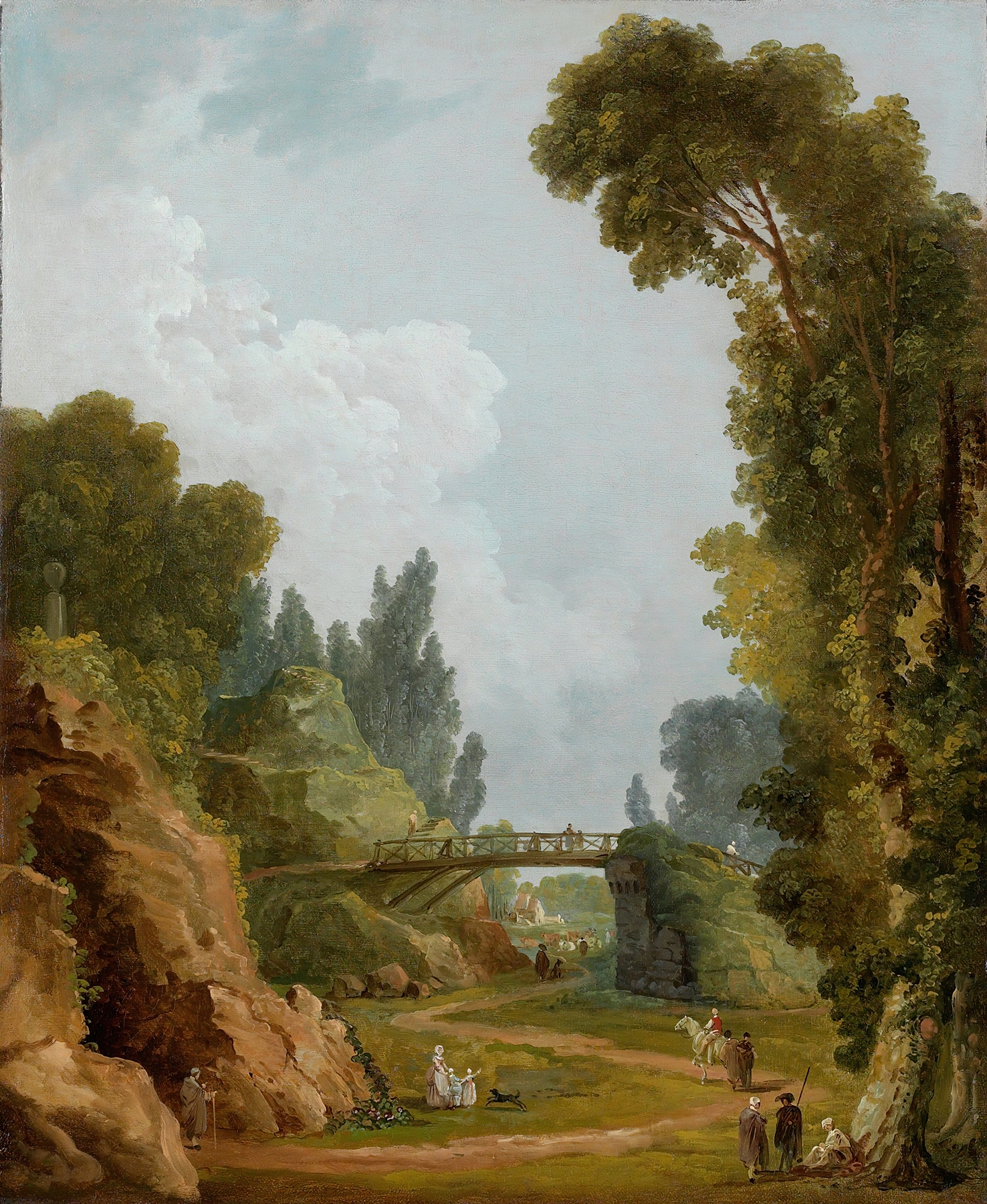
The Rustic Bridge, Château de Méréville, France — History & Analysis
“To paint is to remember what time wants us to forget.” In a world where transience reigns, the brush of the artist becomes an anchor of hope, preserving moments that might otherwise slip away into oblivion. Look to the center of the canvas where the rustic bridge gracefully arches over a shimmering stream, its weathered stones harmonizing with the verdant greens of the surrounding foliage. A gentle play of light dances across the water, illuminating the bridge and casting soft shadows that invite you to explore beyond the frame. Notice how the artist’s deft strokes in the foliage create a lush texture, while the serene sky above hints at a time of tranquility, beckoning the viewer to step into this idyllic scene. Beneath its beauty lies a poignant contrast: the bridge symbolizes connection and continuity, yet it is enveloped by nature’s relentless march toward decay. The juxtaposition of human craftsmanship against the backdrop of wild growth serves as a reminder of the fragility of human endeavors and the enduring power of nature. Each detail, from the scattered stones to the vibrant greenery, resonates with a subtle melancholic hope, urging us to cherish our memories even as they fade away. Hubert Robert painted *The Rustic Bridge* around 1785 during a period marked by shifts in artistic expression in France. Living in Paris, he was surrounded by the Enlightenment’s ideals, which celebrated nature and human ingenuity. This work reflects his fascination with the picturesque, a trend that emerged in response to the rapid changes of the time, including urbanization and the effects of the Industrial Revolution, allowing him to capture and preserve moments of beauty amidst inevitable change.