The Shipwreck — History & Analysis
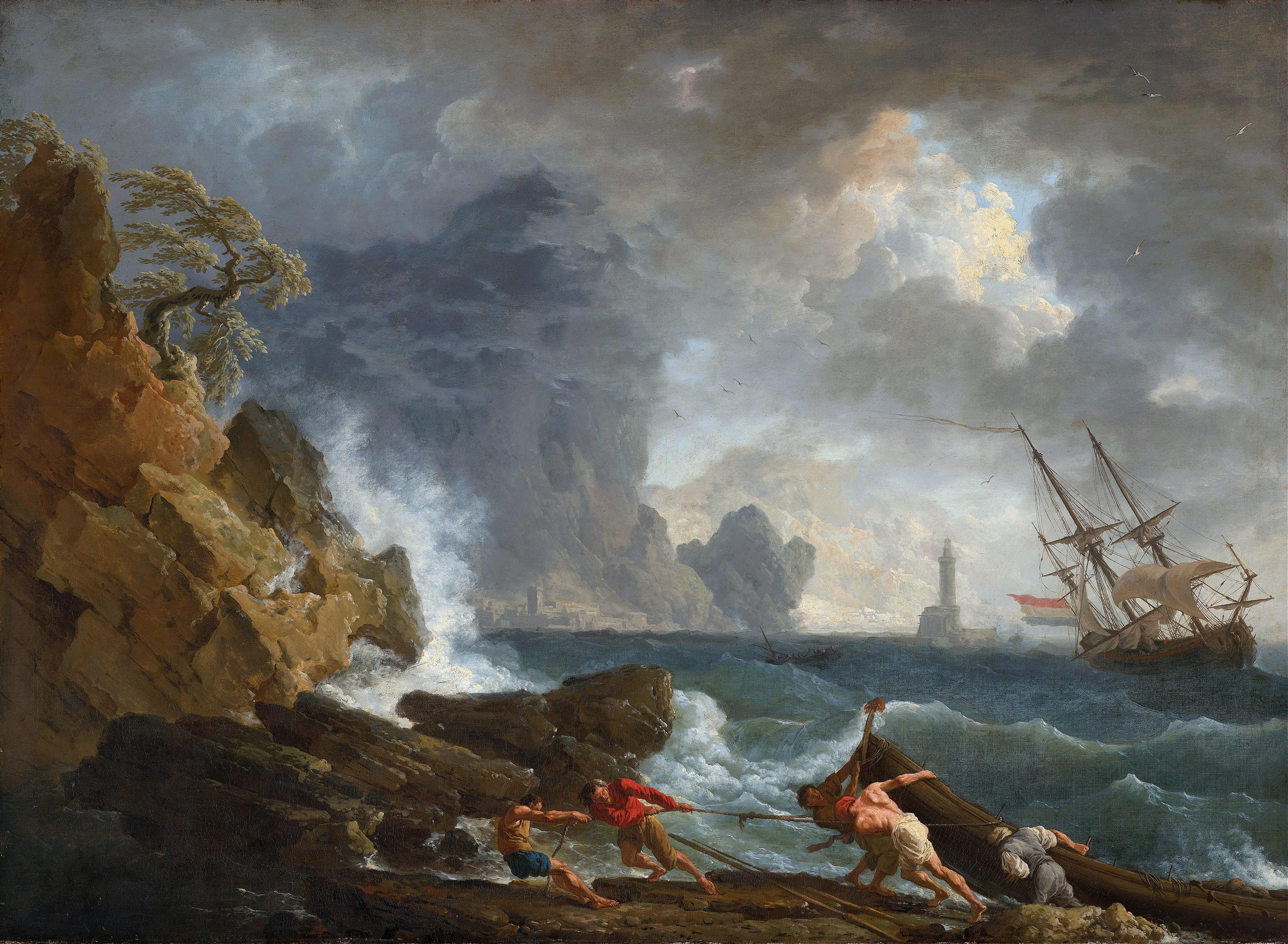
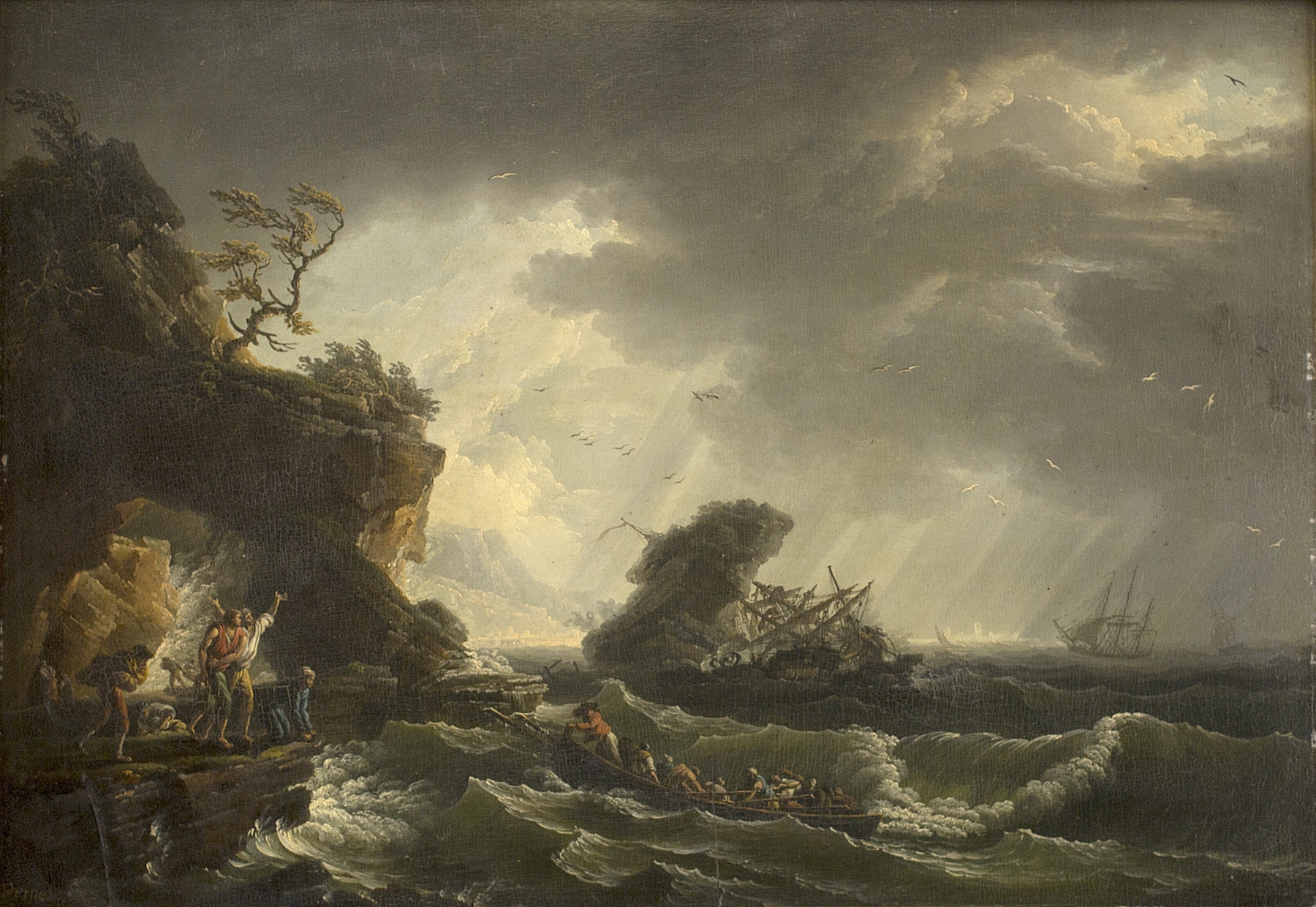
Can paint confess what words never could? In The Shipwreck, fear unfurls its dark wings, capturing humanity's vulnerability against the tempestuous forces of nature. Look to the left at the jagged, turbulent waves, churning with a fierce energy that seems almost alive. The vivid blues and grays swirl together with a chaotic intensity, drawing the eye toward the distressed sailors struggling against this overwhelming sea. Notice how the pale light breaks through the dark clouds, illuminating the flailing limbs of those clinging to remnants of their vessel.
The contrast between the vibrant colors of the water and the somber tones of the ship highlights the dire situation, creating a palpable sense of urgency. In the foreground, a lone figure reaches for help, their desperation stark against the tumult around them. This focal point, marked by the outstretched hand, evokes a haunting resonance—an embodiment of hope amidst despair. The rocky shore, representing safety, looms ominously in the background, a stark reminder of the thin line between salvation and oblivion.
Here, the contrast between man and nature is beautifully poignant, revealing our frailty and the innate fear of being swallowed by the unknown. Created in 1772, Vernet painted this masterpiece during a period marked by fascination with the sublime and the dangers of the sea. Working in France, he sought to balance realism with dramatic expression, capturing the era's artistic movement toward emotional depth and naturalism. As Europe was swept away by the Enlightenment, this piece stands as a testament to the duality of beauty and terror that nature embodies.